

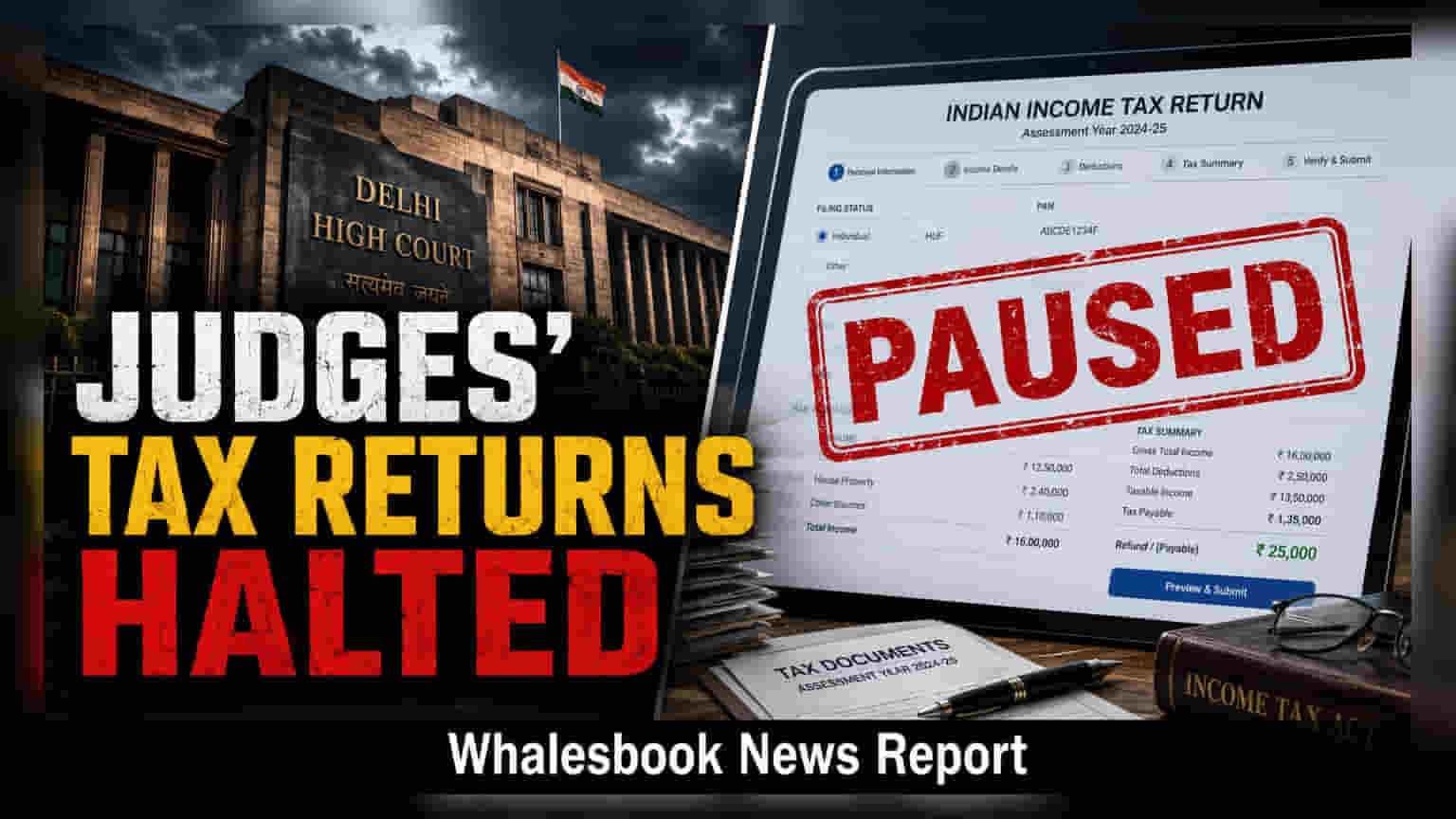
The Delhi High Court has ordered the Income Tax Department to pause processing tax returns for Supreme Court and High Court judges amid a dispute over the taxation of specific allowances. The court has placed all tax demands and refunds on hold until the legal conflict regarding statutory exemptions is resolved. This directive addresses a clash between new tax regime norms and existing judicial service acts.
The Delhi High Court has issued an interim directive to the Income Tax Department, ordering a halt to the automated processing of income tax returns (ITRs) for Supreme Court and High Court judges. This order follows a legal challenge initiated by the Delhi Tax Bar Association, which questions a September 12, 2025, memorandum issued by the Central Board of Direct Taxes (CBDT).
The core of the dispute lies in the tax treatment of judicial allowances, such as rent-free accommodation, conveyance, sumptuary allowances, and leave travel concessions. The CBDT memorandum had brought these allowances under the taxable ambit of the new tax regime. However, the petitioners argue that these perks are statutorily protected and exempt from income computation under the High Court Judges (Salaries and Conditions of Service) Act, 1954, and the Supreme Court Judges (Salaries and Conditions of Service) Act, 1958. The legal contention is that these specific legislative acts override the provisions of the Income-Tax Act.
To manage the operational complexities of this dispute, the court has provided clear administrative instructions. The Income Tax Department had informed the bench that its electronic processing system struggles to isolate specific taxpayer categories, such as judges, without manual intervention. To resolve this, the court has directed the private secretaries of the judges to submit necessary details, including PAN, to the tax authorities by August 18, 2026.
For taxpayers and administrative observers, this case highlights the challenges of aligning older, sector-specific statutory exemptions with the broader, simplified framework of the new tax regime. The court has ordered that any tax demands raised after processing must be kept in abeyance, and no refunds are to be issued until the final outcome of the petition. Any refunds already processed remain subject to the final ruling of the court.
Investors and tax professionals may monitor this case for its implications on the interpretation of statutory exemptions in tax filings. While this matter is specific to judicial allowances, the resolution will provide clarity on how specific legislative protections interact with general tax rules, a common area of complexity in personal tax administration. The immediate monitorable is the data submission process by the August 18 deadline and the subsequent hearings that will determine the final taxability of these allowances.