

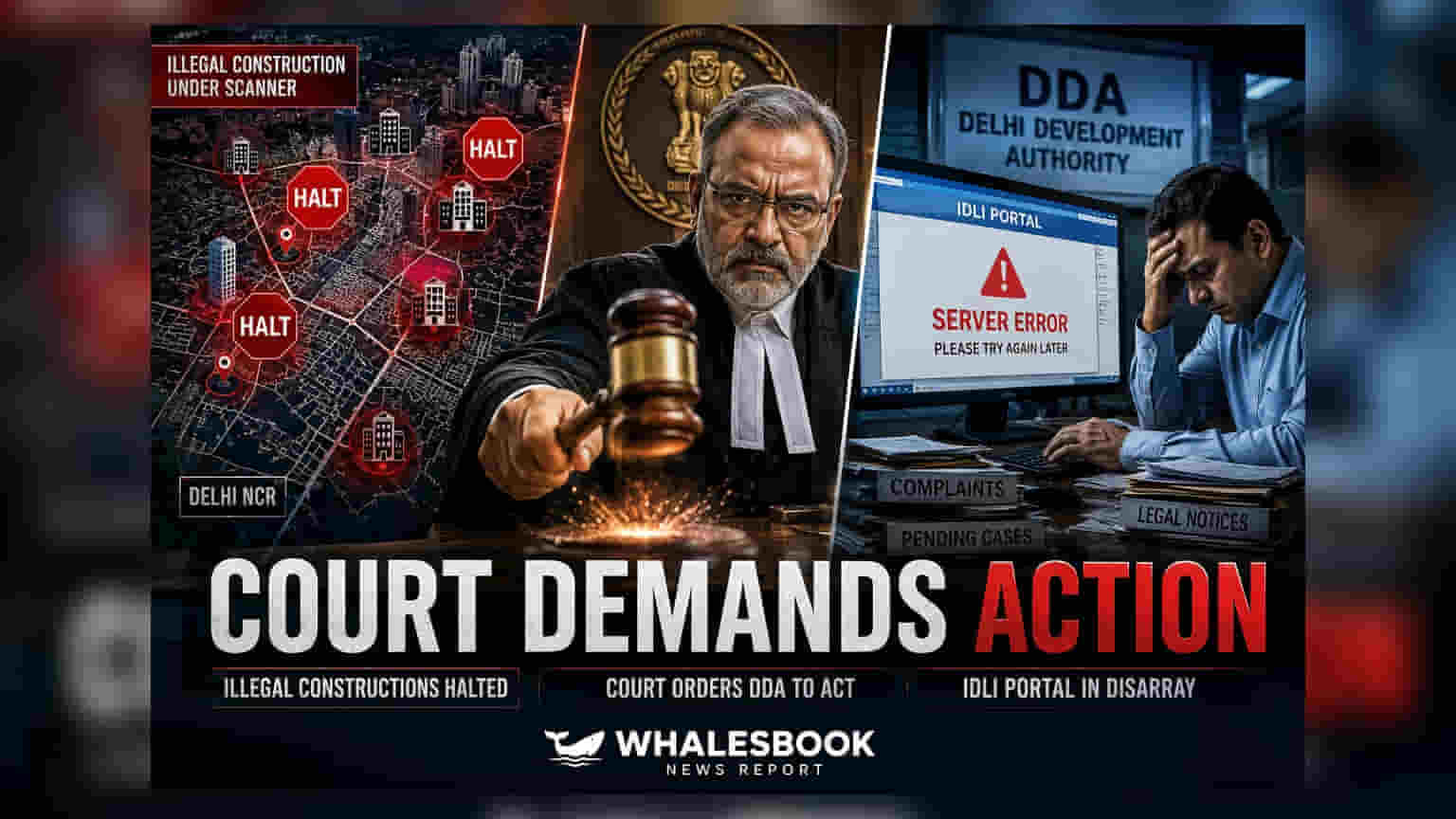
The Delhi High Court has ordered the Delhi Development Authority to clear long-pending commercial property conversion applications. This directive follows significant delays that have halted property transactions across the city and created uncertainty for owners.
What Happened
The Delhi High Court has issued a stern directive to the Delhi Development Authority regarding the massive backlog of applications for converting commercial properties from leasehold to freehold. A division bench, consisting of Justice Prathiba M. Singh and Justice Vikas Mahajan, ordered the DDA to immediately consult with the Union Ministry of Housing and Urban Affairs and the Delhi government to resolve the deadlock. The court has required the DDA’s vice chairman to appear at the next hearing on July 30 and submit a detailed status report on the pending applications.
Why This Matters for Property Owners
For owners of commercial properties, the DDA’s inability to process these requests has effectively frozen their ability to sell, lease, or manage their assets. When a property is leasehold, the government retains ownership, and conversion to freehold is essential for clear title and unrestricted transfer. The court noted that this administrative paralysis has stalled property sales, family settlements, and succession planning. For businesses, the inability to finalize property ownership titles can restrict access to credit and complicate financial planning.
The Background of the Dispute
The legal intervention stems from a petition involving owners at the DLF South Court Mall in Saket, who applied for conversion in 2023. Despite paying the required fees, these owners faced delays, which were further complicated by disputes over the application of retrospective Goods and Services Tax (GST) on these transactions. The DDA had previously attempted to keep these applications in limbo by citing technical failures in its Interactive Disposal of Land Information System (IDLI) portal. The court dismissed this reasoning, ruling that technical glitches are not a valid excuse for indefinitely delaying statutory duties.
Impact on Commercial Real Estate
This situation highlights the regulatory and administrative risks inherent in commercial real estate transactions involving government-leased land. For investors and developers, such delays create "execution risk" regarding exit strategies or property monetization. When administrative processes at public bodies like the DDA come to a standstill, it impacts the liquidity of the commercial real estate sector by preventing the clean transfer of assets. Investors in such properties often face higher costs due to legal fees and the time value of money lost during extended periods of uncertainty.
What Investors Should Track
Property owners and stakeholders should monitor the status report to be filed by the DDA vice chairman ahead of the July 30 hearing. Key developments to watch include whether the DDA establishes a clear timeline for clearing the backlog, how the GST dispute is finally settled, and whether the authority resolves the recurring technical issues within its IDLI portal that have been used to justify these pauses.