 Whalesbook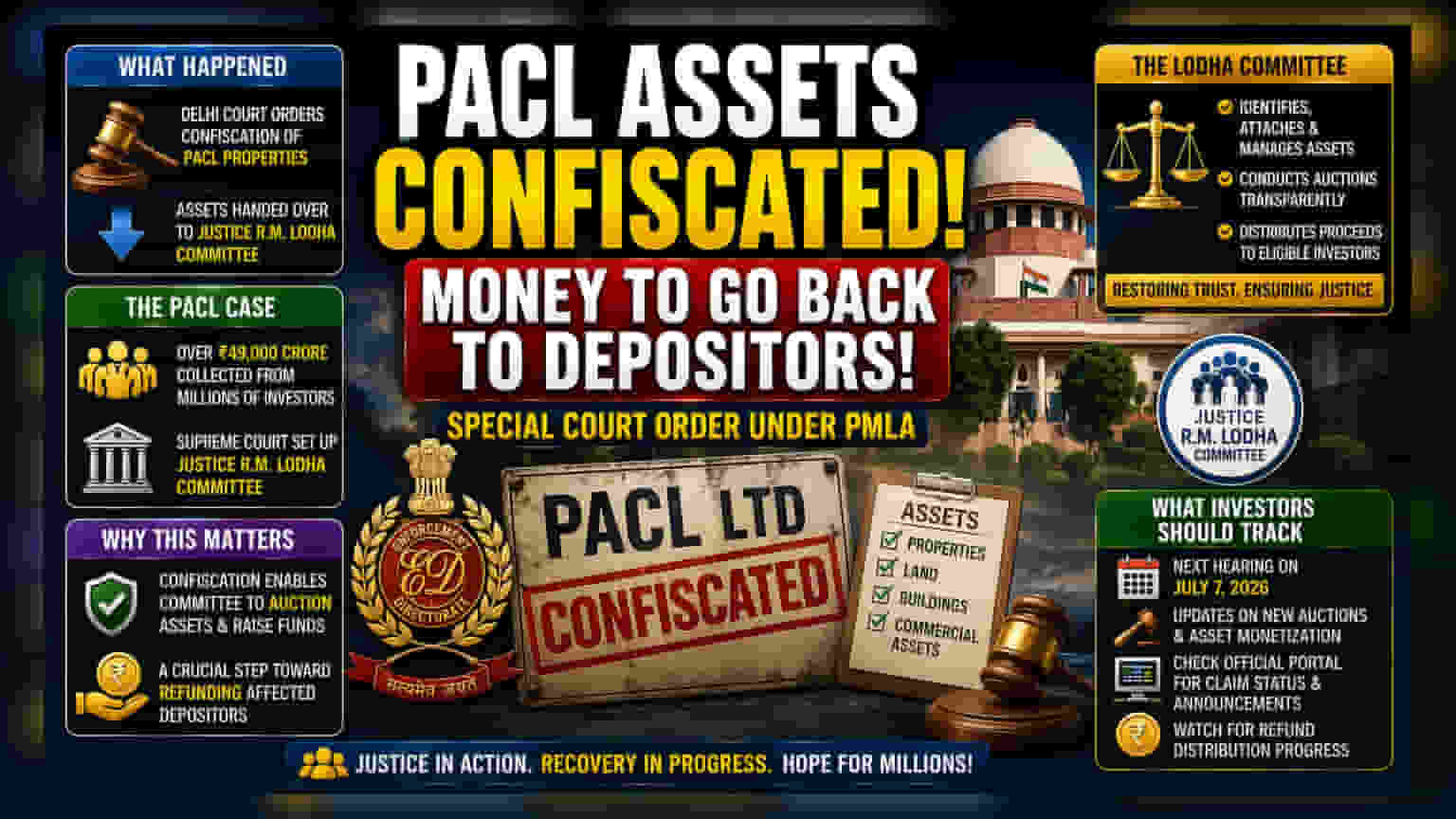


A special PMLA court in Delhi has ordered the confiscation of properties linked to PACL Ltd. The assets are being transferred to the Justice R.M. Lodha Committee, which is managing the process of selling these properties to return funds to millions of investors impacted by the company’s massive investment scheme.
What Happened
A special court in Delhi has ordered the confiscation of properties belonging to PACL Ltd under the Prevention of Money Laundering Act (PMLA). The court’s order directs that these assets be handed over to the Justice R.M. Lodha Committee. This development follows an ongoing investigation by the Enforcement Directorate (ED) into the financial activities of PACL. The primary goal of this move is to speed up the recovery of assets so that money can be returned to the millions of individuals who lost their savings in the company's investment schemes.
The Background of the PACL Case
This court order is part of a long-running legal process involving one of the largest financial fraud cases in India. The PACL scheme, which collected over ₹49,000 crore from depositors across the country, was flagged for regulatory violations. The case eventually reached the Supreme Court of India, which established the Justice R.M. Lodha Committee to oversee the entire restitution process. The committee has been responsible for identifying, attaching, and auctioning PACL’s assets to generate the funds necessary to pay back the affected depositors.
Why This Matters
For the millions of depositors waiting for their money, this court order is a significant procedural step. The confiscation allows the Lodha Committee to take legal control of these properties, which is a required step before they can be officially sold or auctioned. The ED has been actively providing the court with detailed lists of assets and evidence to support the need for these seizures. By formalizing this transfer, the court is clearing the path for the committee to monetize the properties and continue the refund process.
The Role of the Lodha Committee
The Justice R.M. Lodha Committee acts as the central authority for managing the recovery. Since its formation by the Supreme Court, the committee has been engaged in a complex, multi-year exercise of cataloging PACL’s real estate holdings and other assets. The committee’s mandate is to ensure that the sale of these assets follows a transparent process and that the proceeds are distributed fairly to eligible investors who have submitted their claims.
What Investors Should Track
The court has set the matter for further proceedings on July 7, 2026. For those tracking this case, the key monitorables are updates from the Justice R.M. Lodha Committee regarding the timeline for new auctions and the progress of the refund distribution. The official portal of the committee remains the primary source for depositors to check the status of their claims and any announcements regarding the verification or payment process. Investors who have filed claims with the committee may watch for official communications regarding their specific refund status as the committee processes the newly confiscated assets.