 Whalesbook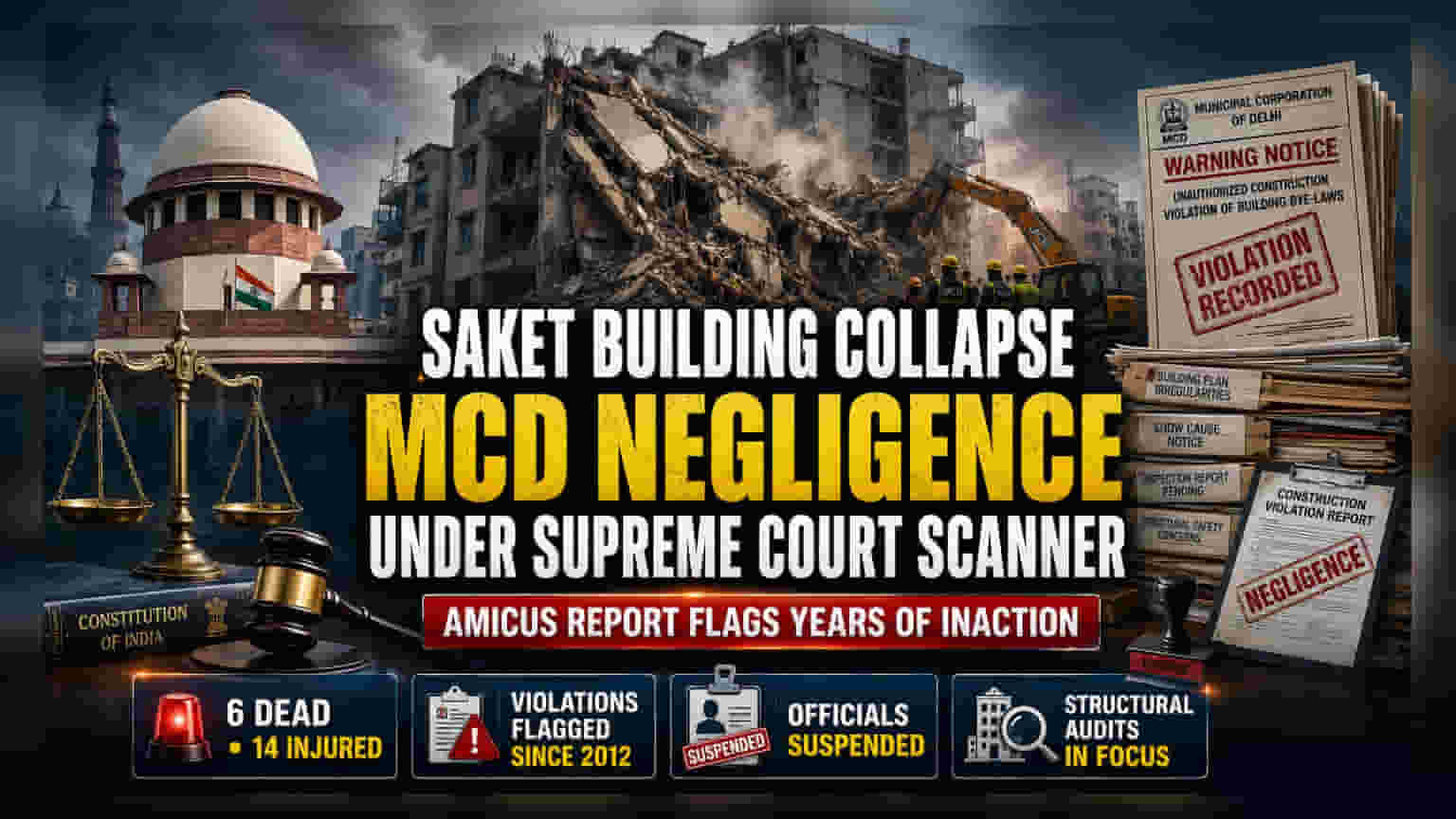


What Happened
A report filed by an amicus curiae with the Supreme Court has accused the Municipal Corporation of Delhi (MCD) of significant negligence regarding the building collapse in Saket on May 30. The incident, which resulted in the loss of six lives and left 14 others injured, has triggered a legal review of how municipal authorities handle building safety and violation reports.
The amicus curiae, senior advocate Ajit Kumar Sinha, submitted the findings to a bench of Justices Ahsanuddin Amanullah and R Mahadevan. The report details that the MCD had identified and booked building violations at the site as early as 2012, with further violations noted in 2015. Despite these official records, construction continued for nearly a decade. The report also notes that just weeks before the collapse, the MCD had informed the Delhi High Court that no illegal construction was underway, dismissing concerns as private disputes.
Accountability and Official Action
Following the tragedy, two officials from the MCD's Building Department—Assistant Engineer Sudesh Singh Chouhan and Junior Engineer Aman Jain—were suspended. The report characterizes the post-collapse response by the municipal body as a superficial exercise and argues that the disaster was a result of clear dereliction of duty by the local administration. The amicus has recommended that the Supreme Court direct the MCD to file an affidavit explaining its inaction and has called for strict, time-bound measures, including mandatory structural audits for buildings under the corporation's jurisdiction.
Why This Matters for Investors
While this incident centers on municipal governance and public safety, it carries broader implications for the real estate and urban infrastructure sectors. Regulatory compliance is a fundamental component of the business model for real estate developers. When municipal oversight bodies face increased scrutiny or are directed by high courts to implement stricter enforcement, the operational environment for developers can change.
If the Supreme Court mandates widespread structural audits or stricter demolition of non-compliant structures, it could lead to higher compliance costs and potential delays in project approvals or clearances across urban centers. For investors, this shift implies that companies with high standards for building code compliance and transparent documentation are generally better positioned to navigate periods of increased regulatory rigor.
Potential Risks and Operational Impact
For businesses operating in the real estate sector, regulatory risk is a critical monitorable. Increased pressure on municipal corporations to address illegal construction often results in a more cautious approach to approvals. This can lead to longer timelines for project clearances and increased audit frequency. Investors in this space typically watch for companies that have strong operational track records and clean compliance histories, as these firms are less likely to face disruptions during sudden policy shifts or crackdowns on local building norms.
What Investors Should Track Next
The key developments to monitor will be any further directives from the Supreme Court regarding the proposed structural audits and the specific actions mandated for the MCD. If the court orders a nationwide or region-wide audit of building safety, it could temporarily slow down the pace of construction activities in major urban markets as authorities re-verify compliance status. Additionally, any changes in the municipal governance structure or the introduction of new, more stringent enforcement protocols will be relevant to gauging future operational risks in the real estate sector.