 Whalesbook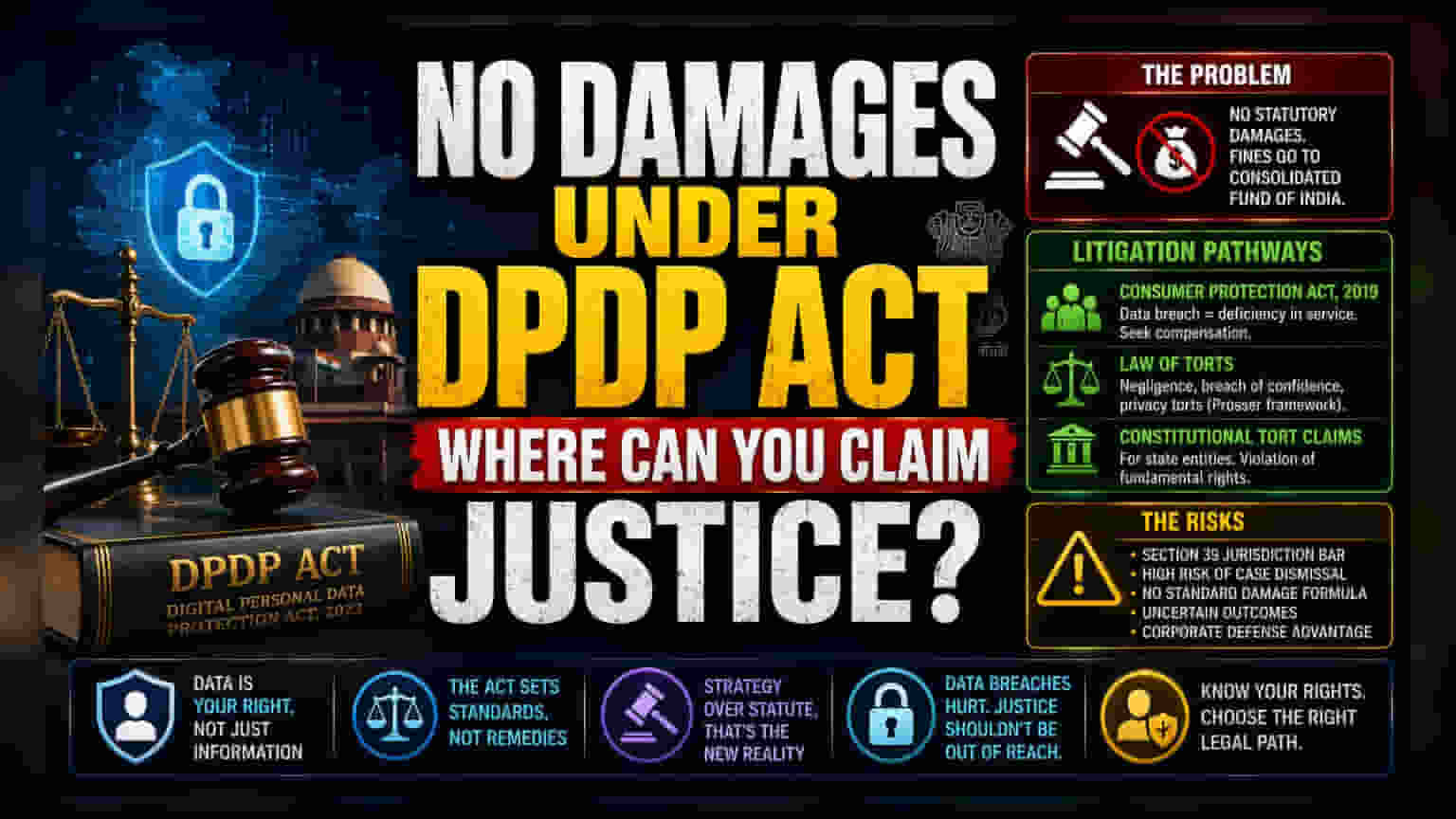


The Statutory Compensation Vacuum
The implementation of the Digital Personal Data Protection Act represents a significant shift in corporate compliance, yet it creates a stark imbalance between regulatory enforcement and victim recovery. Because the framework lacks a provision for direct statutory damages, aggrieved parties are effectively barred from seeking immediate financial redress through the Data Protection Board. Instead, all financial penalties collected under the Act are diverted to the Consolidated Fund of India, prioritizing state revenue over individual restitution.
Strategic Litigation Pathways
Legal practitioners are now forced to treat the Act as a foundational standard of care rather than a comprehensive remedy. By framing data breaches as a failure to meet these statutory benchmarks, plaintiffs are increasingly turning to the Consumer Protection Act of 2019. This venue provides a distinct advantage: the ability to classify data mismanagement as a deficiency in service. While critics argue that the lack of clear financial consideration for data complicates this strategy, courts are gradually warming to the concept that personal information functions as a form of digital currency.
Beyond consumer forums, the Law of Torts offers a more aggressive, albeit complex, alternative. By invoking negligence and breach of confidence, claimants can bypass the limitations of the DPDP Act. This approach mimics the Prosser framework common in international privacy litigation, shifting the burden onto the fiduciary to justify their security practices. For breaches involving state-linked entities, constitutional tort claims remain the most potent tool, though they require proof of fundamental rights violations and the exhaustion of administrative remedies.
Jurisdictional Complexity and the Bear Case
The primary hurdle for claimants is Section 39, which attempts to restrict the jurisdiction of civil courts. This creates a high-stakes tactical requirement: lawyers must precisely frame their cases to avoid appearing as though they are challenging a statutory contravention that falls under the Board’s purview. Failure to navigate this distinction risks immediate dismissal, effectively leaving the average citizen without recourse.
Furthermore, the absence of a standardized formula for quantifying non-pecuniary harm—such as emotional distress or the loss of digital autonomy—creates immense uncertainty. Without legislative guidance or established judicial precedents, the value of a data breach claim remains entirely at the mercy of judicial discretion. This ambiguity provides a significant defensive advantage to corporations, as the cost of litigation to prove damages may far exceed the potential settlement, discouraging individuals from pursuing justice against well-resourced data fiduciaries.