

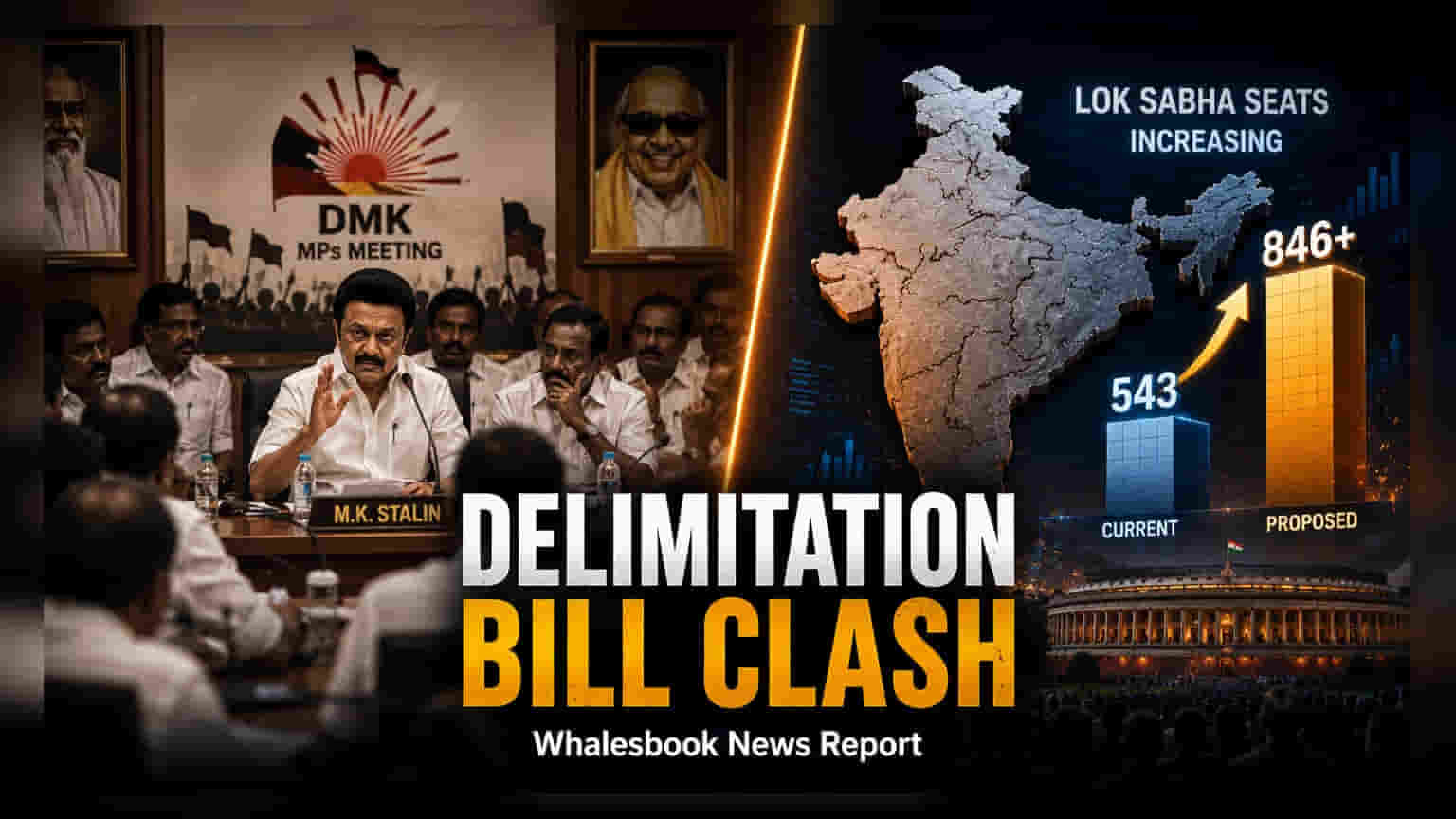
The DMK will finalise its position on the proposed Constitution (131st Amendment) Bill only after it is formally introduced in Parliament. As the government seeks to increase Lok Sabha seats to 850, the opposition's unity remains a key factor for the legislation's passage. Investors are monitoring the situation due to the potential for significant political shifts during the upcoming Monsoon session.
The Dravida Munnetra Kazhagam (DMK) has announced that it will wait to see the final text of the upcoming delimitation legislation before deciding on its support or opposition. This formal stance was confirmed following a high-level meeting of the party's Members of Parliament, led by Tamil Nadu Chief Minister M.K. Stalin. The party’s decision is viewed as a major influence on the political landscape ahead of the Monsoon session of Parliament, which is set to begin on July 20, 2026.
Legislative Context and Opposition Strategy
The proposed Constitution (131st Amendment) Bill is a significant legislative agenda item that aims to increase the number of Lok Sabha seats to 850. Because this involves a constitutional amendment, the government requires a two-thirds majority in Parliament to pass the bill. Congress and other members of the INDIA bloc are currently coordinating their strategy to challenge the legislation. Congress general secretary Jairam Ramesh has indicated that opposition parties are in active talks, citing past instances where these parties united to vote against similar government proposals.
Concerns Over Representation and Demographics
Critics of the proposed bill, including senior Congress leader P. Chidambaram, have raised concerns regarding the impact of delimitation on different regions of the country. A core argument against the proposal is that it could unfairly impact southern states that have historically managed population growth more effectively. There are concerns that a new delimitation exercise could shift political influence in a way that disadvantages these states, leading to broader regional tension. P. Chidambaram also alleged that the government is seeking support from key opposition parties to secure the necessary numbers for the amendment.
Parliamentary Timeline and Monitoring
The government has scheduled an all-party meeting for July 19, 2026, to discuss the upcoming legislative agenda. The opposition bloc is also planning to meet on July 20 to finalise their unified response to the bill. For market participants and observers, the focus is on whether the government can secure the support of parties that are not part of the ruling coalition. The DMK's final decision will be a critical trigger to watch, as it could determine whether the government secures the numbers required for the amendment or faces a significant legislative hurdle during the session, which runs until August 13.