 Whalesbook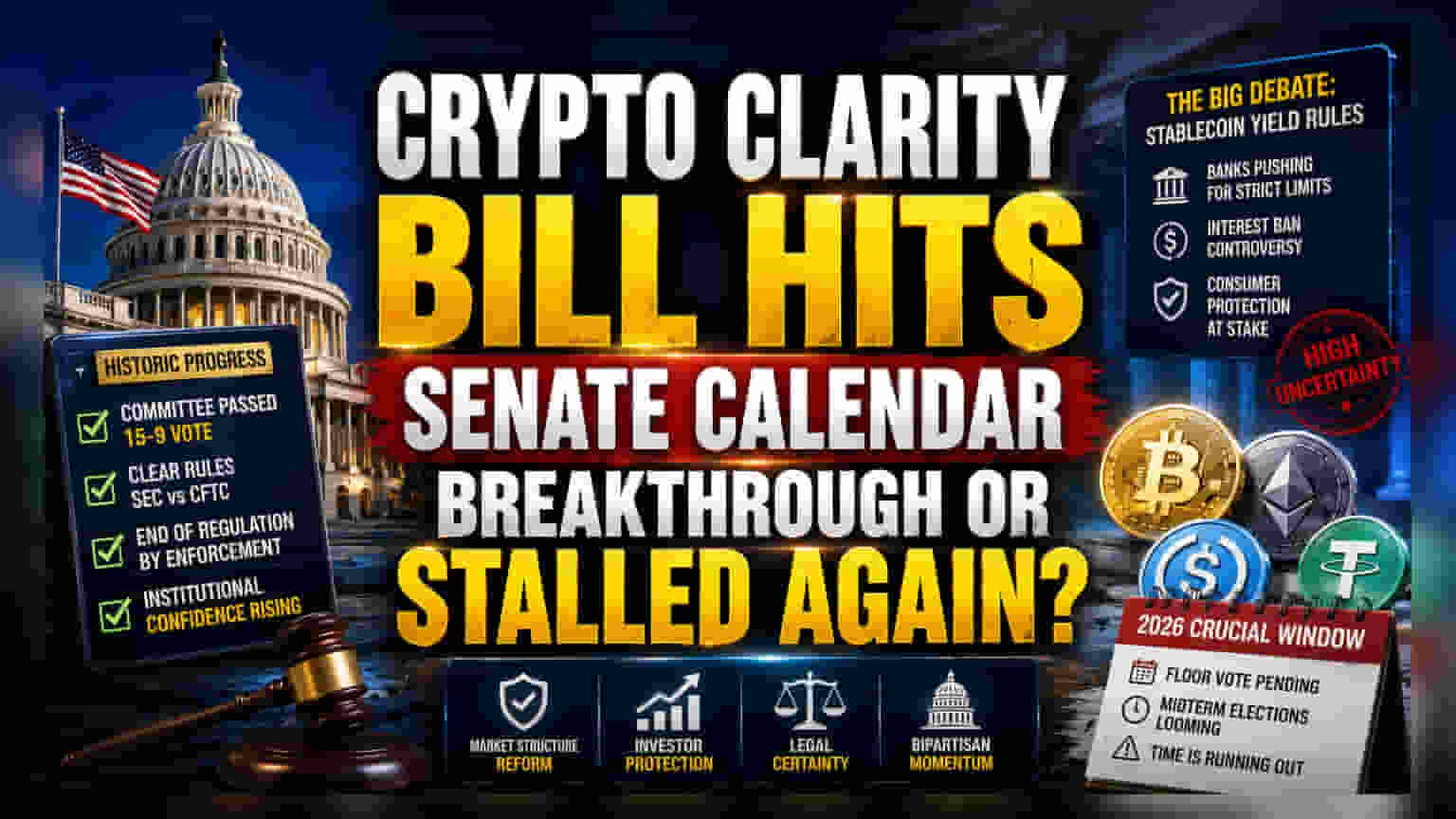


The Legislative Milestone
The Digital Asset Market Clarity Act has transitioned from a committee-level struggle to the formal Senate legislative calendar. This move marks a significant shift for the digital asset sector, which has operated under a patchwork of enforcement-based regulation for years. Having cleared the Senate Banking, Housing, and Urban Affairs Committee on May 14, 2026, with a 15-9 bipartisan vote, the bill is now positioned for potential floor consideration. This progress represents the most tangible step toward a comprehensive federal framework that would delineate the jurisdictional lines between the Securities and Exchange Commission and the Commodity Futures Trading Commission.
The Calibration of Market Structure
Unlike previous attempts at reform, this legislation specifically targets the ambiguity that has defined the digital asset landscape. By establishing distinct registration regimes, the Act aims to end the era of regulation-by-litigation, where firms were often forced to interpret century-old securities laws to determine their compliance status. Industry participants, including major exchanges and investment firms, have pinned significant expectations on this legislation. Institutional confidence is such that large-scale participants have begun using prediction markets to bet on the bill’s passage this year, reflecting a tactical belief that the current congressional environment, though fragmented, provides a rare window for institutional-grade guardrails.
The Forensic Bear Case: Structural Hurdles
Despite the newfound momentum, the bill faces formidable obstacles that suggest a far from guaranteed outcome. The most contentious issue remains the treatment of stablecoin yields. Banks and traditional financial institutions have lobbied heavily for stringent limitations, arguing that current proposals fail to impose the same oversight and insurance requirements on stablecoin issuers that are mandatory for regulated depository institutions. The resulting compromise language—intended to prohibit passive interest while allowing activity-based rewards—remains a flashpoint for debate.
Furthermore, the congressional calendar is increasingly hostile. With midterm elections looming, legislative floor time is scarce and highly competitive. JPMorgan Chase analysts have warned that the window for meaningful compromise is closing rapidly; a failure to act before the summer recess could force the bill into the post-election landscape, where shifted political incentives could fundamentally alter the current consensus. Critics, including the Revolving Door Project, have also amplified concerns regarding the influence of industry-backed lobbyists and former government officials in shaping the bill's language, cautioning that these dynamics may alienate lawmakers wary of corporate capture.
The Outlook for 2026
The path to enactment requires securing 60 votes in the full Senate, reconciling differences with the previously passed House version, and obtaining executive approval. While the official placement on the Senate calendar is a tactical victory for proponents, the lack of a scheduled floor vote suggests that leadership remains cautious. For investors and market participants, the next few weeks are critical, as the ability of negotiators to resolve remaining stablecoin disputes will determine whether the bill completes its journey or falls victim to the political churn of the 2026 election cycle.