

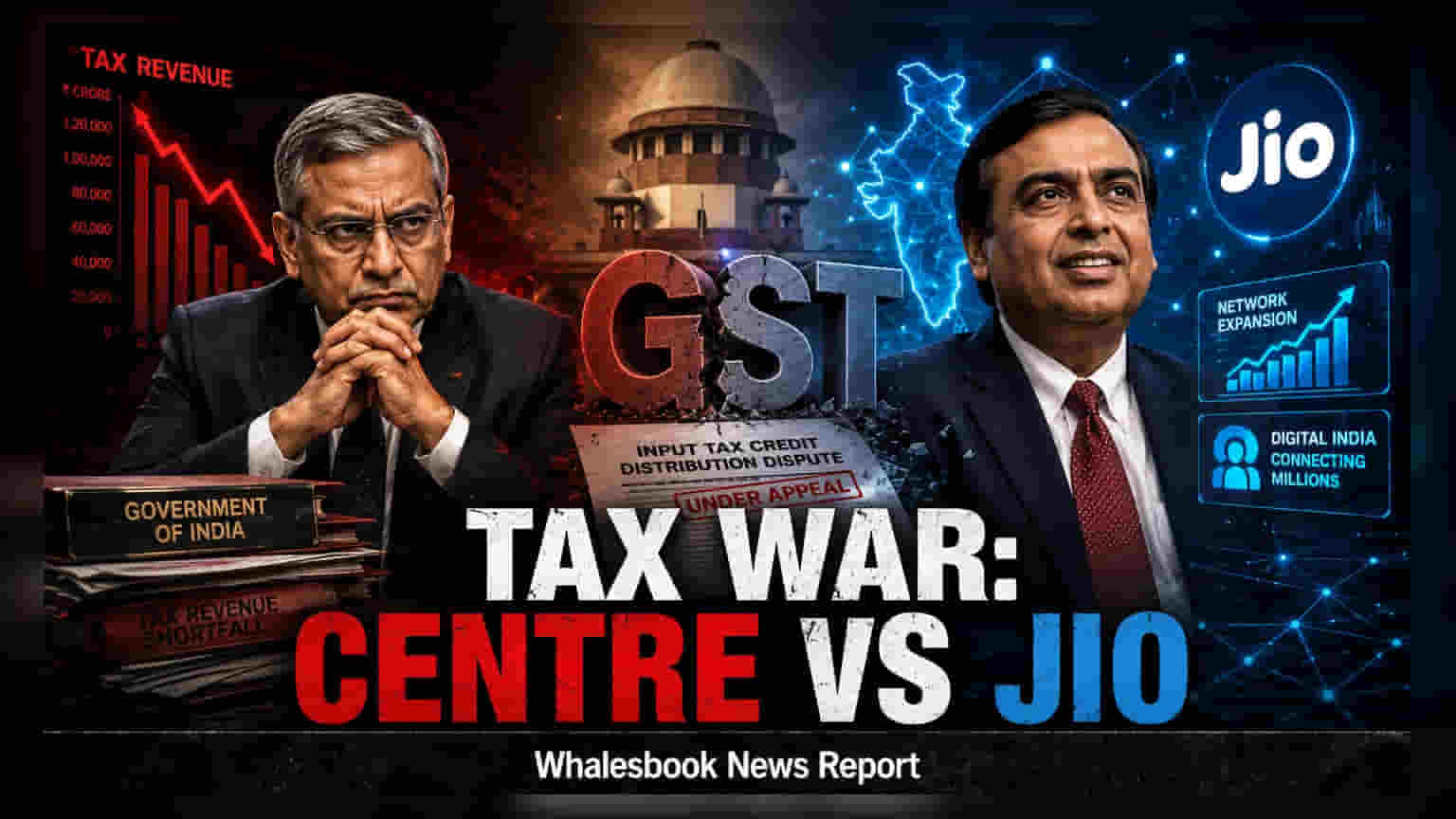
The Central government has appealed to the Supreme Court to contest a Madras High Court ruling that favored Reliance Jio in a GST input credit dispute. The case hinges on whether the telecom operator correctly managed tax credits across its multiple business registrations from 2018 to 2024. Investors are monitoring the situation as a potential reversal could lead to new tax liabilities or penalties.
The Central government has filed an appeal with the Supreme Court, challenging a March 2026 Madras High Court decision that provided relief to Reliance Jio Infocomm. The case concerns the distribution of Goods and Services Tax (GST) input tax credits, which is a major compliance issue for large companies operating across multiple states.
At the center of the dispute is how Reliance Jio manages its tax credits. As a telecom operator with 36 GST registrations across India, the company uses an Input Service Distributor (ISD) mechanism. This system allows companies to consolidate the tax paid on common business services and distribute the credit to various units to offset their own tax liabilities. The core of the conflict is timing: the tax authorities believe these credits must be distributed in the same month that the invoices are issued, as per Rule 39(1)(a) of the Central GST Rules.
Reliance Jio had previously challenged this interpretation, arguing that receiving an invoice is not enough to distribute a credit. The company maintained that it must first verify the eligibility of the credit and ensure that it complies with all legal requirements before the credit can be formally distributed to its various registrations. The Madras High Court had initially sided with the company, ruling that the credit only becomes 'available' once these internal checks and legal requirements are met, rather than on the date of the invoice.
The government's appeal to the Supreme Court seeks to overturn this interpretation. For investors and stakeholders, the outcome of this legal battle carries financial significance. The tax department's show-cause notices against the company cover the period from 2018-19 to 2023-24. If the Supreme Court rules in favor of the government, it could expose the company to demands for tax adjustments, potential interest, and penalties related to the way it distributed these credits over those years.
This dispute highlights the complexities large corporations face in navigating GST compliance, especially regarding the strict timelines for tax credit distribution. The key monitorable for investors will be the Supreme Court’s upcoming hearings, which will determine whether companies must adhere to a strict same-month timeline or if they have flexibility based on legal verification requirements. There is currently no official report of a final order from the Supreme Court, and the matter remains a significant legal event to track.