 Whalesbook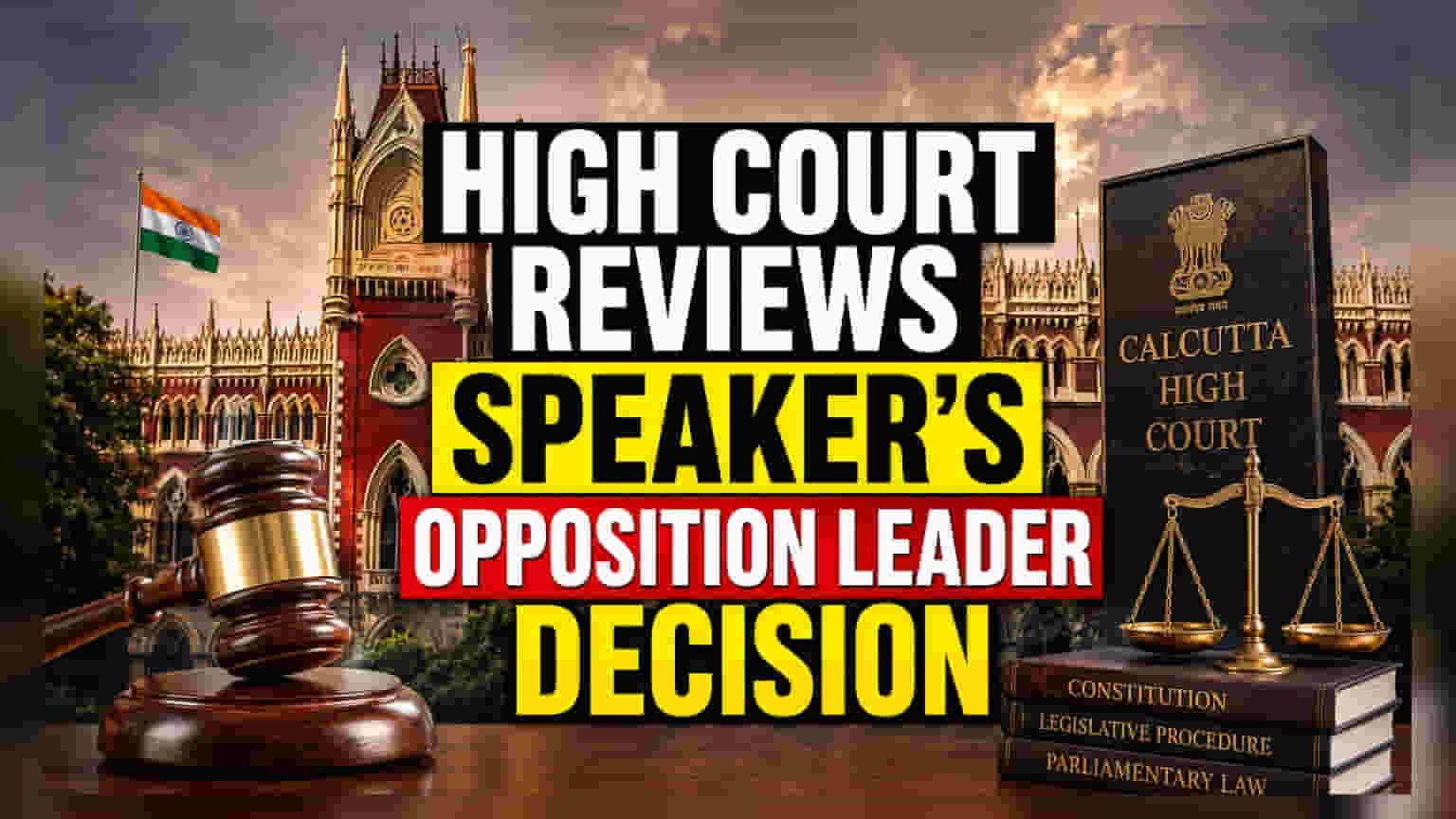


The Calcutta High Court is examining the West Bengal Assembly Speaker's decision to recognize an expelled MLA as the Leader of Opposition. This case highlights important questions regarding legislative authority and party hierarchy, which are closely monitored for their impact on political and governance stability.
What Happened
The Calcutta High Court is currently reviewing a petition challenging the decision of the West Bengal Legislative Assembly Speaker. The case centers on the Speaker’s choice to recognize an expelled member of the Trinamool Congress (TMC) as the Leader of Opposition. The petition was filed by TMC leader Sobhandeb Chattopadhyay, who contests the validity of appointing the rebel legislator, Ritabrata Banerjee, to the post. Justice Krishna Rao has reserved the verdict on the request for immediate legal relief.
Why This Matters for Governance
For observers and those monitoring regional stability, legal disputes within legislative bodies represent an important aspect of governance risk. When the process for appointing key opposition roles is challenged in court, it raises questions about legislative protocols and the influence of political parties over their representatives. The core of this legal battle is whether the Speaker holds the authority to ignore a political party's official nomination if there are competing claims, such as allegations of forged signatures on resolutions.
The Legal Arguments
The arguments presented in court highlight the complexity of the dispute. The Speaker’s representatives argued that their decision relied on the numerical support of legislators, noting that a majority of the rebel MLAs backed the appointment of Banerjee. They also pointed out that the TMC leadership was reportedly absent during the initial meeting where the position was nominated, leading them to classify the party's resolution as hearsay. On the other side, the petitioner argued that the Speaker must respect the internal hierarchy and will of the parent political party. They emphasized that the TMC had clearly communicated its choice for the position and that the Speaker should not have disregarded the party's formal intimation regarding the expulsion of members.
What Investors Should Track
The immediate monitorable is the upcoming court decision regarding the request for interim relief. A ruling from the Calcutta High Court will clarify the legal boundaries of a Speaker’s authority in such disputes and determine whether the appointment of the Leader of Opposition remains valid or faces intervention. Observers will watch how this outcome affects the political landscape in the state assembly and whether it establishes a precedent for how parties and speakers handle internal legislative conflicts.