

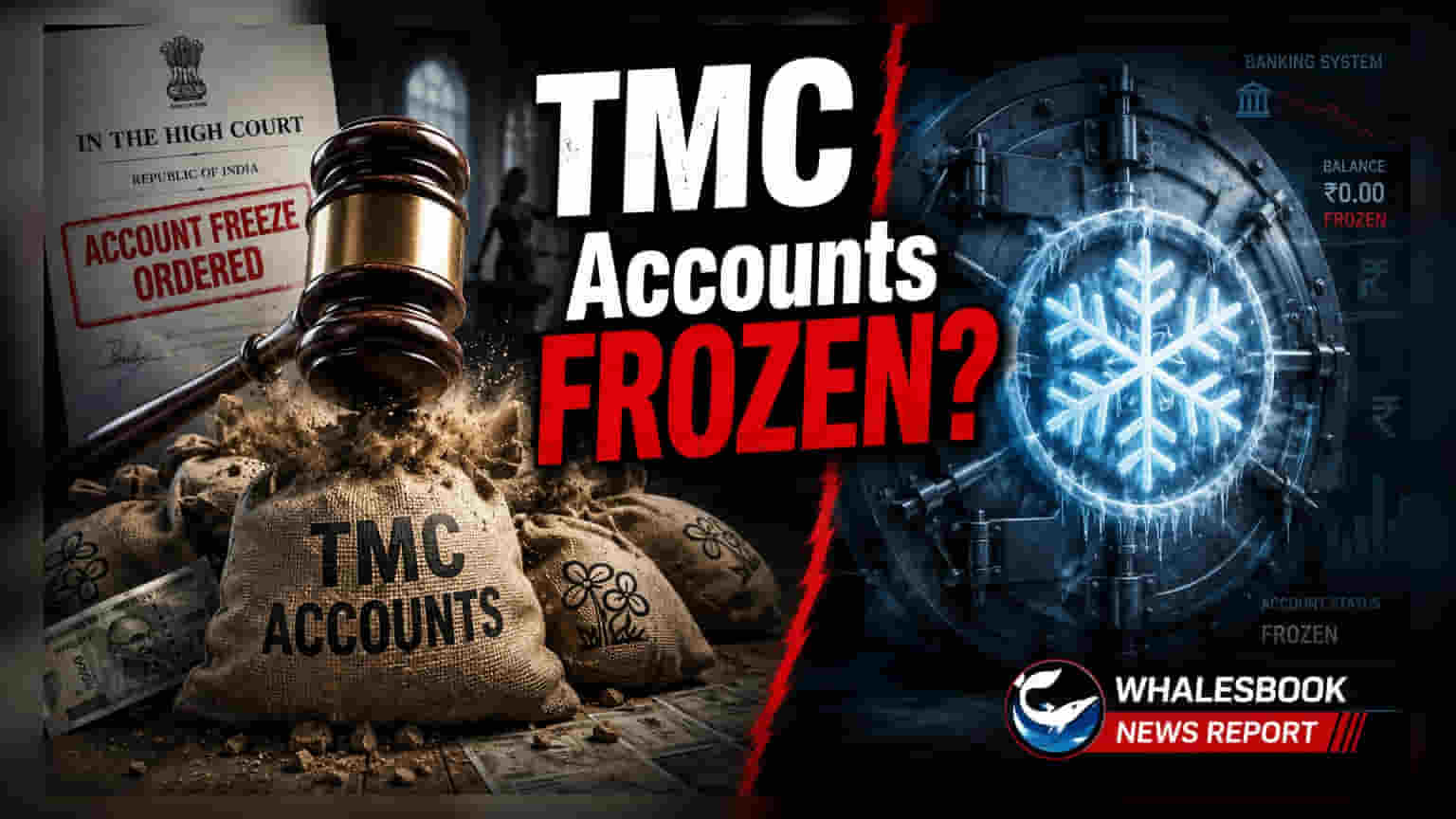
The Calcutta High Court has raised questions regarding the swift action by West Bengal Police to freeze the bank accounts of the Trinamool Congress (TMC). The court has sought a status report on the accounts while considering a supervised de-freeze to allow for essential operational expenses. This development follows a legal complaint regarding alleged financial irregularities within the political party.
What Happened
The Calcutta High Court has initiated a review into the rapid freezing of bank accounts belonging to the Trinamool Congress (TMC) by the West Bengal Police. During the hearing, Justice Saugata Bhattacharya questioned the speed at which this action was executed, noting that police intervened shortly after a complaint was lodged. The court expressed concern that such immediate freezing of accounts could potentially disrupt the operational functionality of a major political entity. To balance the ongoing police investigation with the party's ability to function, the court suggested a potential interim arrangement where accounts might be partially de-frozen under the supervision of court-appointed special officers.
The Legal Dispute
The matter originated from a complaint filed by a rebel TMC MLA, Biswanath Das, who alleged that financial fraud had taken place. Representing the police, Solicitor General Tushar Mehta urged the court to delay any immediate relief, stating that the investigation involves material that he described as potentially shocking. On the other side, counsel for the TMC argued that the police action exceeded their legal powers under the Bharatiya Nagarik Suraksha Sanhita (BNSS), the new legal code replacing the Code of Criminal Procedure. The party further claimed that the complaint is politically motivated. The court has directed authorities to submit a detailed report on the balances of the frozen accounts by July 7.
Why This Matters for Regional Governance
While this case involves a political party rather than a corporate entity, it highlights the importance of institutional stability and the rule of law within the region. Investors typically monitor political and governance stability as part of their risk assessment when looking at business environments in any state. Sudden regulatory or police actions against prominent organizations can lead to uncertainty. For observers of the regional landscape, the case serves as a point of reference for how legal and investigative procedures are applied and how the judiciary intervenes to ensure due process. Stable political and administrative environments are generally seen as supportive of consistent business operations.
What Investors Should Monitor
The immediate focus for those following the case is the next court hearing, which is scheduled for July 8. The report requested by the court, due on July 7, will likely clarify the specifics of the frozen accounts and provide more transparency regarding the underlying allegations. The court's eventual ruling on whether to permit a supervised de-freeze of the accounts will be a key indicator of how the judiciary balances investigative requirements with organizational operations. Any further developments regarding the validity of the investigation or changes in the operational status of the party will be critical updates.