 Whalesbook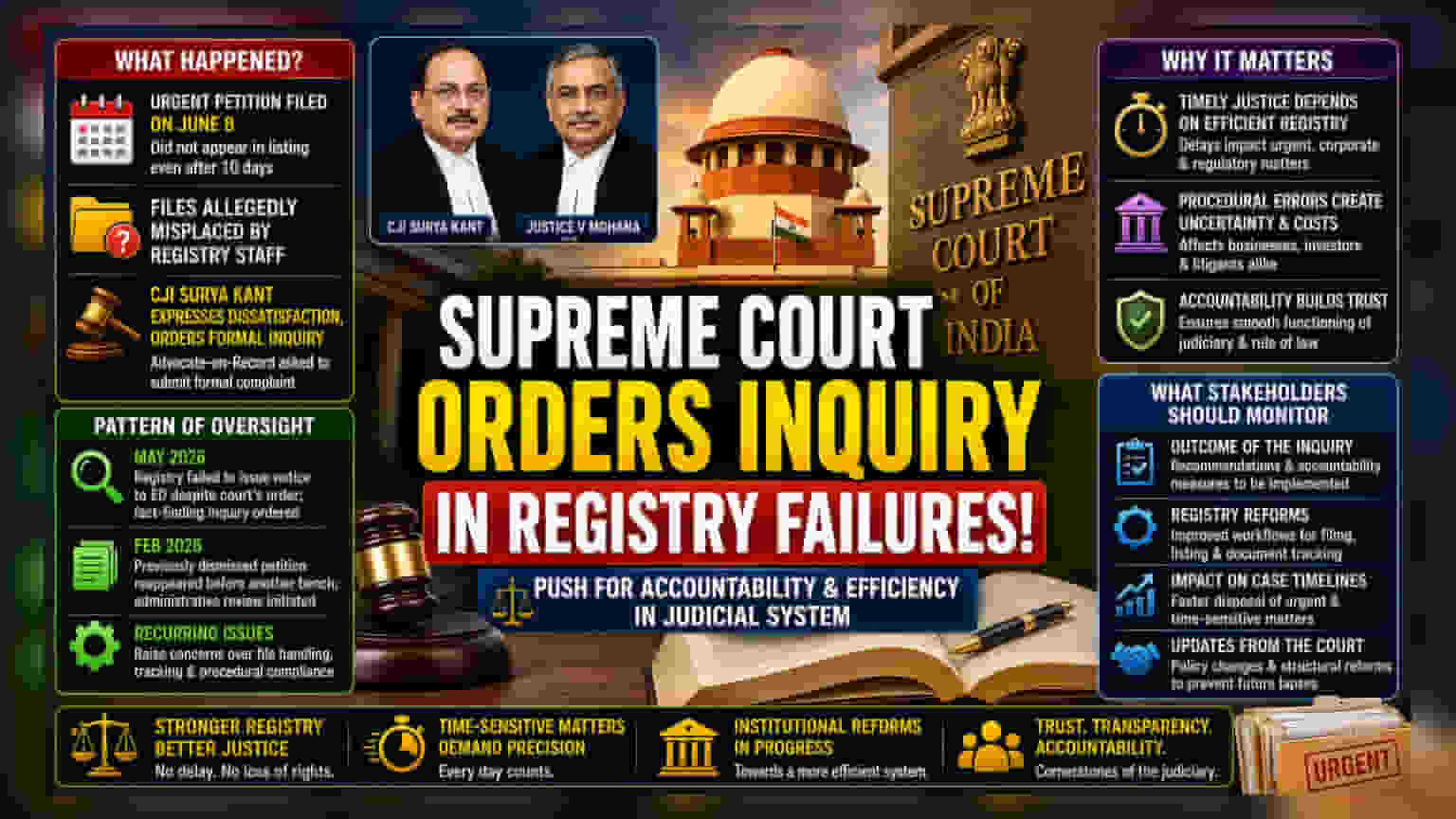


CJI Surya Kant has ordered a formal investigation into the Supreme Court Registry following reports of misplaced files that caused urgent case listing delays. The court is prioritizing administrative accountability after multiple recent instances of procedural errors. For market participants and stakeholders, judicial efficiency remains critical as delays can impact the resolution of urgent corporate, regulatory, and constitutional matters.
What Happened
The Supreme Court bench, headed by Chief Justice of India Surya Kant and Justice V Mohana, has directed a formal inquiry into administrative errors within the court registry. This action followed an instance where an advocate reported that an urgent petition filed on June 8 had failed to appear on the listing schedule ten days after filing. The reason provided for this delay was the alleged misplacement of essential case files by registry staff. Chief Justice Kant expressed dissatisfaction with the oversight and instructed the Advocate-on-Record to submit a formal complaint to facilitate a thorough investigation into the matter.
Why Institutional Efficiency Matters
The integrity and efficiency of the court registry are vital for the timely resolution of legal disputes. When administrative processes face delays or errors, it affects the entire judicial timeline. This is particularly relevant for urgent matters, including corporate litigation, regulatory compliance appeals, and commercial disputes, where timely intervention is often required. The judiciary's push for internal accountability aims to ensure that procedural errors do not hinder the delivery of justice or cause unnecessary uncertainty for litigants and businesses involved in time-sensitive matters.
A Pattern of Procedural Oversight
This directive from the Chief Justice follows a series of administrative concerns regarding the registry's functioning over the past few months. In May, the bench criticized the registry for failing to issue a notice to the Director of the Enforcement Directorate, despite clear judicial instructions. This oversight necessitated a formal fact-finding inquiry by the Registrar (Judicial). Additionally, in February 2026, the court addressed a situation where a petition that had been previously dismissed by a three-judge bench reappeared before another panel, a development that prompted a wider administrative review.
What Stakeholders Should Monitor
The primary focus for legal and market stakeholders will be the impact of these administrative inquiries on overall registry operations. The court is actively working to streamline procedural workflows and ensure that filing, listing, and document-tracking mechanisms are robust. Future updates from the court regarding structural reforms or changes in registry protocols will be important to monitor, as these measures will directly influence the speed and reliability of judicial outcomes.