

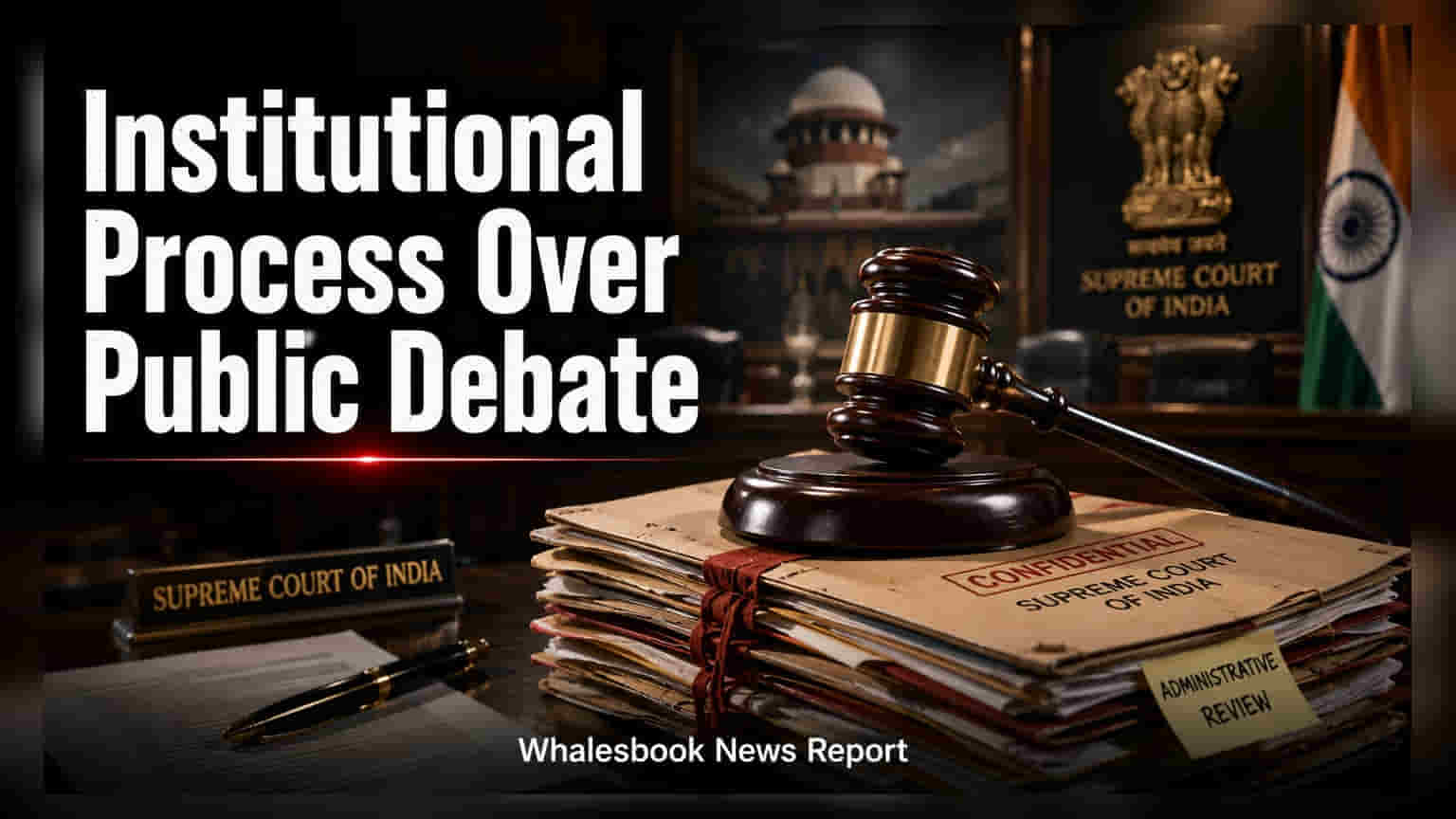
The Chief Justice of India has ordered that grievances regarding the Rajasthan High Court’s leadership be managed through internal channels. This decision follows allegations of maladministration leveled by a Supreme Court judge against Acting Chief Justice Sanjeev Prakash Sharma. The Supreme Court Collegium is currently reviewing the matter internally to maintain judicial decorum.
Chief Justice of India (CJI) Surya Kant has issued a clear directive that the ongoing dispute regarding the administration of the Rajasthan High Court must be resolved through internal institutional mechanisms. This move effectively blocks attempts to bring the matter into the public sphere for debate. The intervention follows a series of letters sent by Supreme Court Judge Justice Sandeep Mehta to the CJI, in which serious allegations were raised against the Acting Chief Justice (ACJ) of the Rajasthan High Court, Sanjeev Prakash Sharma.
In his correspondence dated August 2, 10, and 17, 2026, Justice Mehta accused ACJ Sharma of gross maladministration, nepotism, and the manipulation of case listings to favor wealthy litigants. These claims were accompanied by a request to appoint a new Chief Justice from a different state with immediate effect. The CJI has emphasized that these accusations are currently unverified allegations and cannot be treated as findings. Under the CJI's directive, ACJ Sharma will be provided a fair opportunity to respond to these claims, and the Supreme Court Collegium will undertake a full review of all materials before any administrative decisions are made.
This administrative tension is not entirely new to the Rajasthan High Court. Earlier in April 2026, the Rajasthan High Court Advocates Association had written to the CJI expressing concerns and requesting the transfer of Justice Sharma to help maintain better coordination between the Bar and the Bench. The situation is also marked by a nearing timeline, as ACJ Sanjeev Prakash Sharma is scheduled to retire on September 26, 2026.
For those observing the institutional environment, the key monitorable remains the outcome of the Collegium’s internal review. While this event does not impact the financial markets directly, the stability of the judiciary is a fundamental pillar for the business and legal environment in the country. The Supreme Court's insistence on handling these matters through established internal processes is intended to prevent the erosion of public trust in judicial institutions and to ensure that administrative governance continues without disruption.