

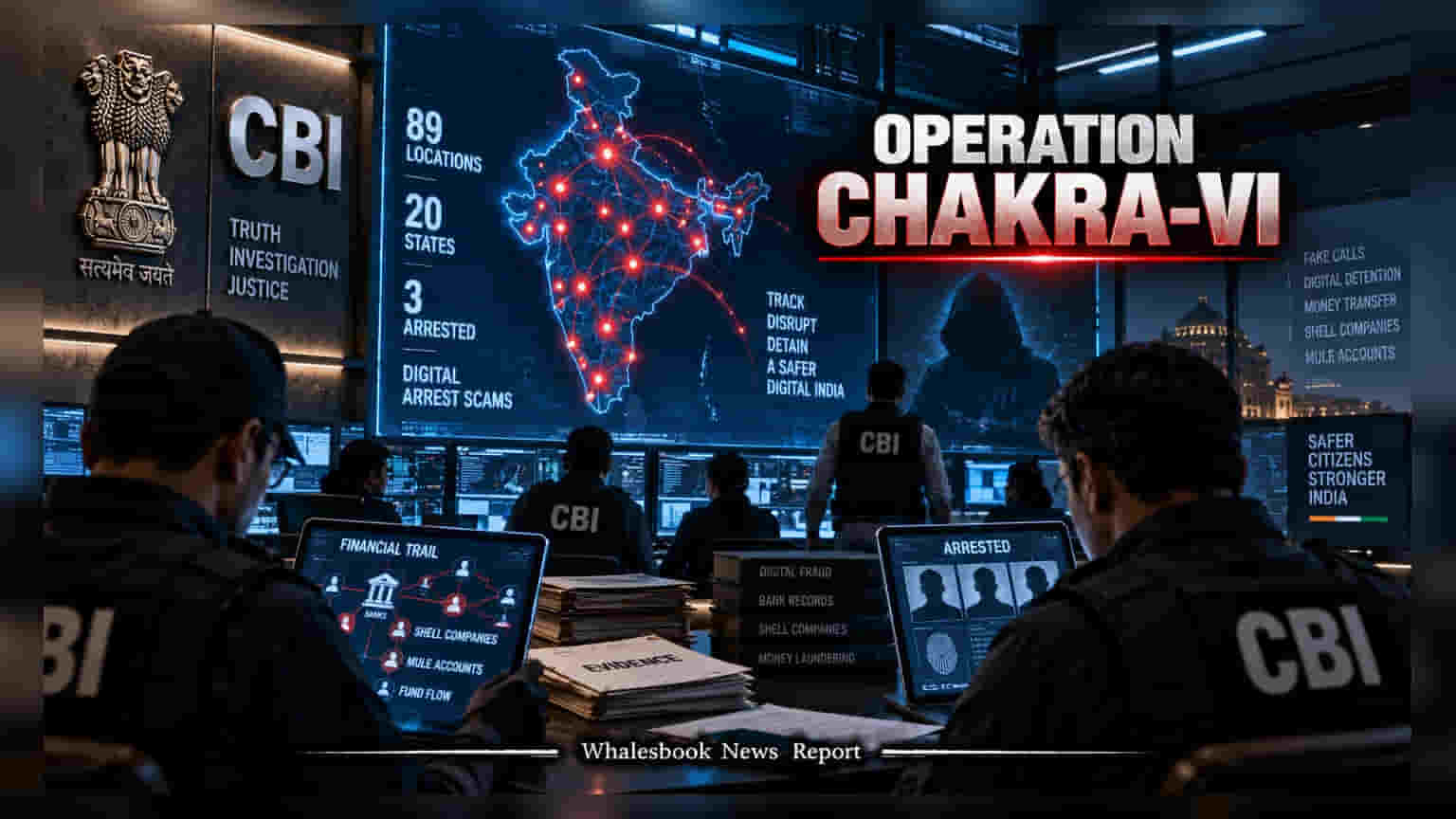
The Central Bureau of Investigation has launched 'Operation Chakra-VI', raiding 89 locations across 20 states to dismantle syndicates behind 'digital arrest' scams. These frauds have caused estimated losses of Rs 42.36 crore in investigated cases. The operation highlights the growing operational risks for the banking sector, as regulators push for stricter monitoring of 'mule accounts' used to launder stolen funds.
The Central Bureau of Investigation (CBI) has launched a massive nationwide crackdown dubbed 'Operation Chakra-VI' to dismantle organized crime networks running 'digital arrest' scams. In a coordinated effort to trace the financial trail of these frauds, the agency executed simultaneous searches at 89 locations across 20 states. The operation has led to the arrest of three individuals suspected of managing the laundering of illicit funds through networks of shell companies and bank accounts.
The Anatomy of the Scam
'Digital arrest' scams have evolved into a significant financial threat, operating as sophisticated extortion rackets. Fraudsters impersonate law enforcement, central agency officials, or judicial authorities, accusing victims of involvement in serious crimes like money laundering or drug trafficking. The victims are then coerced into 'digital detention'—often via long-duration video calls—where they are intimidated into transferring their life savings to 'investigation accounts' to avoid arrest. The CBI’s current investigation stems from specific cases, including one where a victim was kept under digital detention for three months and defrauded of Rs 7.67 crore. In total, the three cases currently under investigation involve financial losses amounting to Rs 42.36 crore, illustrating the massive scale at which these syndicates operate.
Impact on the Banking Sector
For the Indian banking and financial services sector, this crackdown serves as a critical monitorable. A core component of these scams is the use of 'mule accounts'—bank accounts, often opened in the names of unsuspecting individuals or shell companies, which are used to receive, layer, and transfer stolen funds. The CBI’s investigation is focusing on these accounts to identify the handlers of these syndicates.
As these fraud networks expand, banks are under increasing regulatory and legal pressure to enhance their detection capabilities. Financial institutions are now being pushed to invest more heavily in AI-driven fraud detection, real-time transaction monitoring, and more stringent 'Know Your Customer' (KYC) protocols to identify accounts that show suspicious movement of funds typical of money laundering.
Investor and Industry Monitorables
While this is a law enforcement action rather than a corporate event, it highlights a structural shift for the BFSI (Banking, Financial Services, and Insurance) sector. Investors should track how increased cybersecurity compliance and the cost of implementing robust anti-fraud infrastructure impact the operating margins of banks and fintech companies.
Furthermore, the government’s push—backed by Supreme Court directives—for banks to identify and freeze mule accounts suggests that the regulatory environment for digital transactions will remain strict. The industry’s ability to curb these financial leaks is no longer just a service quality issue but a key regulatory compliance requirement. The next phase of the investigation will involve forensic audits of the seized banking records, which could lead to further scrutiny of specific financial pathways used by these criminal syndicates.