

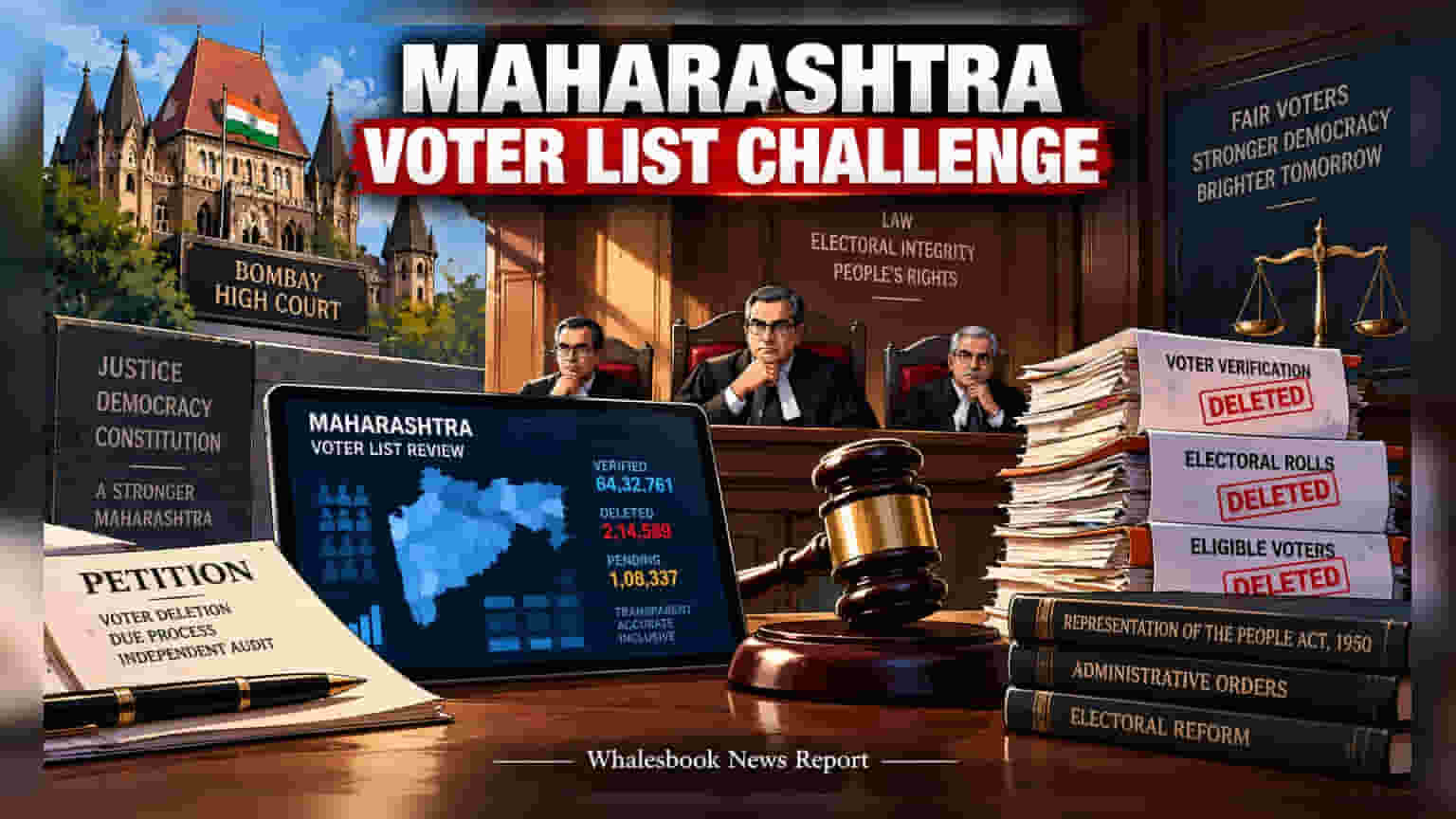
The Bombay High Court is examining two petitions challenging the voter roll revision process in Maharashtra. The legal challenge questions the validity of 14 administrative orders and alleges systemic issues in voter verification. As the state approaches assembly elections, this case highlights potential administrative friction and its implications for political stability and policy continuity.
The Bombay High Court has begun reviewing two petitions that challenge the current Special Intensive Revision of electoral rolls in Maharashtra. The legal challenge focuses on 14 administrative orders issued by Election Commissioner Gyanesh Kumar, which petitioners claim have led to the wrongful deletion of eligible voters. The petitions, filed at both the Mumbai and Kolhapur benches, seek to pause the current revision process until a more compliant methodology is adopted by the election authorities.
At the core of the legal debate is the process of door-to-door verification by local officials. Petitioners allege that voters are being incorrectly classified as absent, shifted, or deceased without proper hearings or documented evidence. This practice, they argue, contradicts established guidelines from the Association for Democratic Reforms case and the Representation of the People Act, 1950. The legal teams are calling for the appointment of an independent committee, led by a retired judge, to perform a forensic audit of the software and data management systems used during this revision.
The legal scrutiny comes alongside reports of internal disagreements within the Election Commission of India. Objections raised by Election Commissioners Sukhbir Singh Sandhu and Vivek Joshi, specifically regarding software limitations, database access, and the modification of Form 6, have added complexity to the matter. These disagreements highlight concerns about procedural transparency and the reliability of the voter database as the state approaches important assembly elections.
For investors and market participants, the integrity of the electoral process in Maharashtra is a significant monitorable. As one of India's largest economic contributors, the state’s political stability is crucial for long-term policy planning, state-level project execution, and regulatory consistency. Legal disputes surrounding the electoral roll or administrative processes can lead to uncertainty regarding election timelines and outcomes. While the petitioners have clarified that their intent is to ensure database integrity rather than to stall the election process, the court's stance on the matter will be vital.
The immediate investor focus will likely remain on the timeline of the High Court's directives. Any order to halt or significantly modify the revision process could impact the election schedule or the Commission’s administrative workload. Investors are typically sensitive to political developments in major states, as shifts in leadership or policy continuity can influence infrastructure spending and industrial policy in the region. The next key update will be the court’s decision on whether to mandate an independent inquiry or delay the ongoing roll revision exercise.