

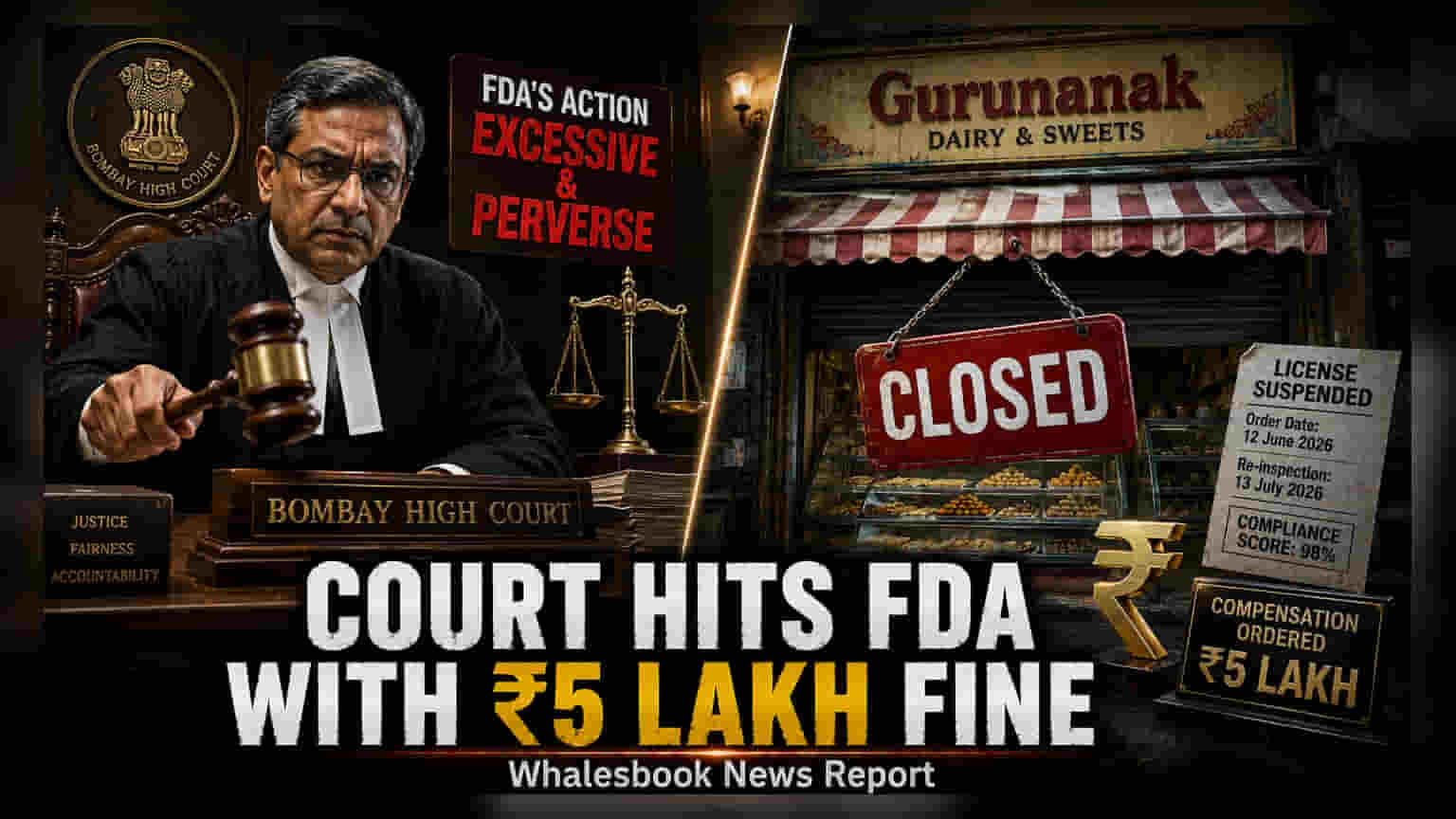
The Bombay High Court has fined the Maharashtra Food and Drugs Administration ₹5 lakh for keeping a Pune-based sweets shop closed despite the business achieving 98% compliance. The court ruled the continued license suspension was excessive, allowing the shop to reopen immediately. This decision highlights the regulatory risks faced by food businesses in the state when dealing with enforcement actions.
The Bombay High Court has ordered the Maharashtra Food and Drugs Administration (FDA) to pay ₹5 lakh in compensation to Gurunanak Dairy and Sweets, a Pune-based business. The court, led by Acting Chief Justice Ravindra V. Ghuge and Justice Gautam A. Ankhad, ruled that the FDA’s decision to maintain the shop's license suspension was excessive and unreasonable given that the business had already demonstrated high safety standards.
The dispute began on June 12, 2026, when the FDA suspended the shop's license following a complaint regarding food poisoning. During a re-inspection conducted on July 13, 2026, the shop achieved a 98% compliance score, meeting most of the required safety and hygiene parameters. Despite this improvement, the FDA kept the license suspended, which the court described as an "overboard" and "perverse" use of authority. The court's order allows the establishment to resume operations immediately.
Gurunanak Dairy and Sweets informed the court that the closure resulted in a revenue loss of ₹8.74 lakh. While the FDA’s goal of enforcing food safety standards is a critical regulatory function, this ruling emphasizes the judiciary’s expectation of proportionality and data-backed action from government bodies.
For investors and businesses operating in the food and beverage sector, this case highlights the risks associated with regulatory enforcement. Inconsistent or delayed processing of compliance approvals can directly impact business continuity and revenue for both small retailers and larger chains. When regulatory agencies impose suspensions that persist even after safety compliance is restored, it creates operational uncertainty. This precedent may encourage businesses to seek timely legal recourse if they face what they perceive as arbitrary or excessive regulatory hurdles.
The outcome of this case does not have a direct impact on the stock market as it involves a private enterprise. However, the ruling serves as a notable update for those monitoring the regulatory environment in Maharashtra. The primary monitorable for businesses in the food and retail sector will be how state authorities adjust their enforcement policies to avoid similar legal challenges and potential compensation liabilities in the future.