 Whalesbook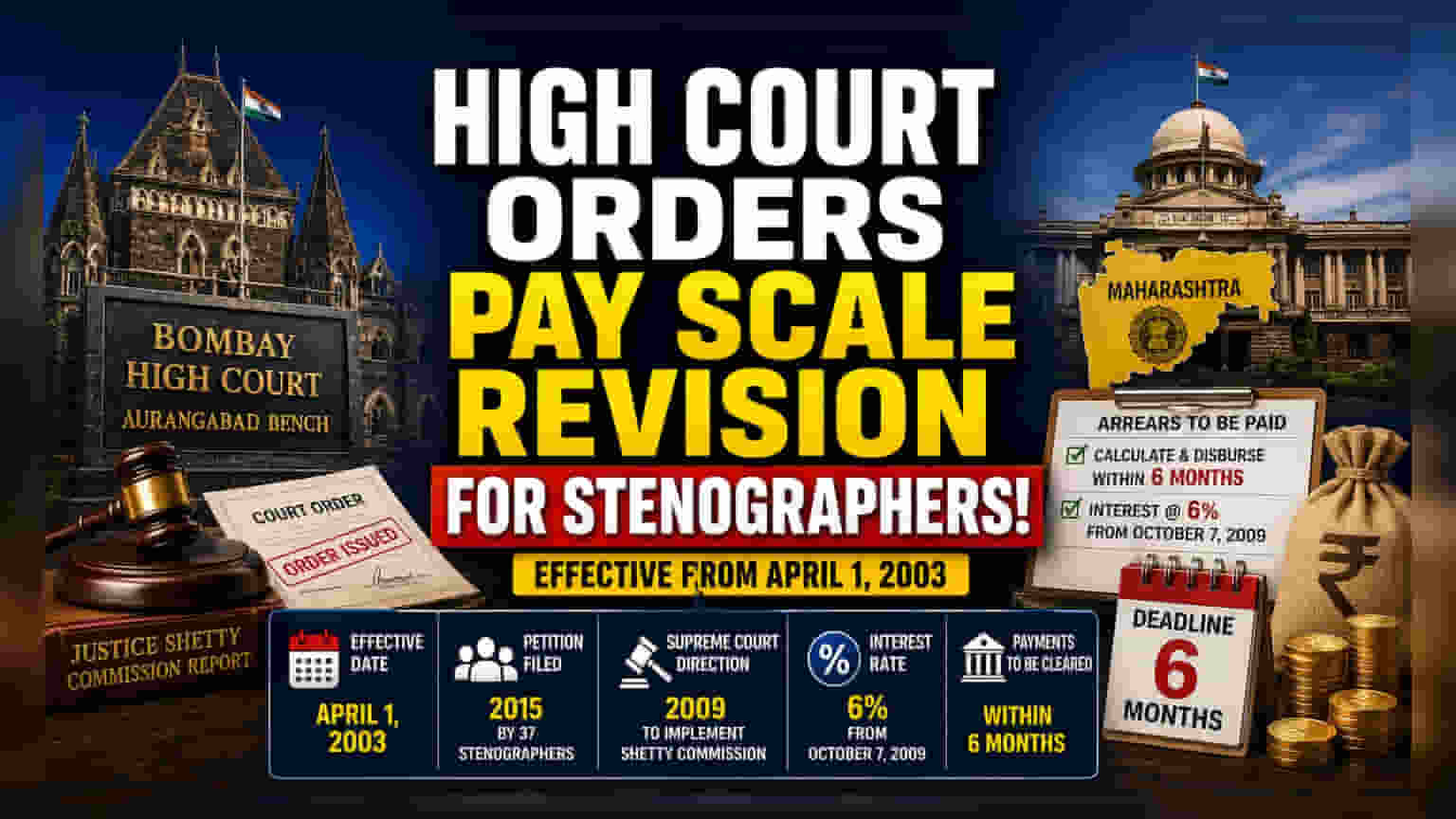


The Bombay High Court has ordered the Maharashtra government to implement the Justice Shetty Commission's pay scale recommendations for stenographers. The state must pay arrears dating back to 2003, along with 6% interest, within six months, impacting the state's budget planning.
What Happened
The Aurangabad Bench of the Bombay High Court has issued a ruling directing the Maharashtra government to implement pay scale recommendations made by the Justice Shetty Commission for stenographers. The court has mandated that the pay revisions must be effective from April 1, 2003. The state government has been given a six-month window to calculate and distribute the resulting salary arrears, which must include an annual interest of 6% starting from October 7, 2009.
Why This Matters for State Finances
For those tracking the financial health of the state, this ruling introduces a new liability. When courts mandate the payment of long-standing salary arrears, it adds to the state government's committed expenditure. Large-scale payments like this require the government to allocate funds from its budget, which can impact the fiscal room available for other development projects or capital spending. Investors and analysts monitoring state-level public finance often watch such court rulings as they can lead to unplanned revisions in budget estimates.
The Background of the Dispute
The legal battle began with a petition filed in 2015 by 37 stenographers. The core of the issue was the implementation of the Justice Shetty Commission report, which the Supreme Court had directed states to adopt back in 2009. While the Maharashtra government issued a resolution in 2011 accepting these recommendations, a later resolution in 2018 created confusion by attempting to limit the benefits to a prospective date. This led to prolonged legal uncertainty.
What the Court Said
In its order, the High Court bench, comprising Justices Kishore C Sant and Sushil M Ghodeswar, expressed strong disapproval of the state government’s approach. The court noted that the state had made repeated attempts to delay the case. The bench specifically criticized the government's argument that the older 5th Pay Commission scales were more beneficial to employees, rejecting the state's attempt to avoid the retrospective implementation of the Shetty Commission's recommendations.
What Comes Next
The primary monitorable for this event is the state's compliance timeline. The government now has a six-month deadline to clear these payments. Market observers and those interested in public policy will track whether the government moves to implement the order or decides to challenge the High Court's decision in a higher court. The final financial impact will depend on the total number of eligible employees covered by this ruling and the resulting outflow from the state exchequer.