 Whalesbook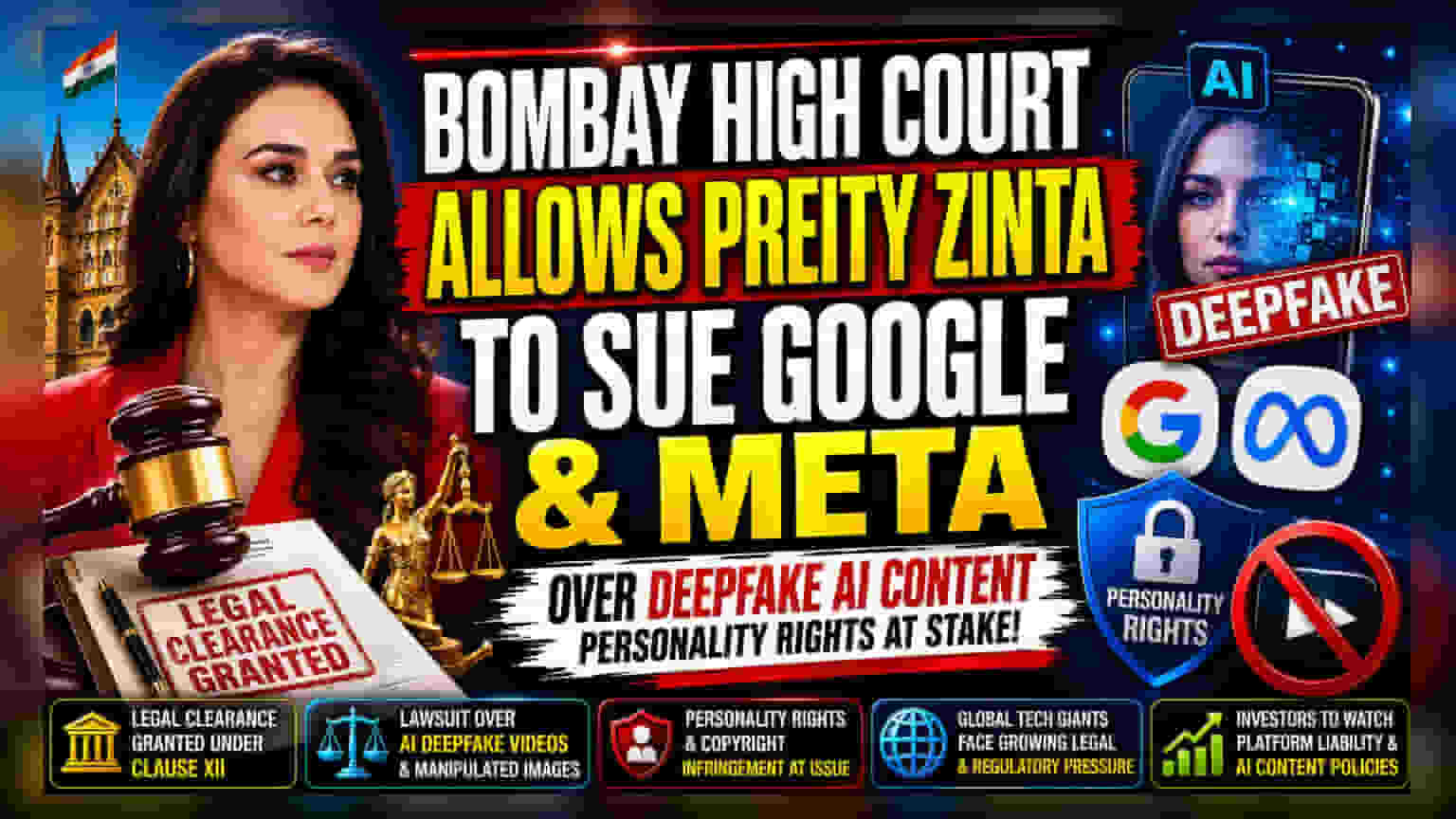


The Bombay High Court has granted actor Preity Zinta permission to sue Google and Meta over AI-generated deepfake content. The court ruled that the case can be heard in Mumbai, overcoming jurisdictional hurdles related to the platforms' global operations. This legal development highlights the increasing challenges tech giants face regarding personality rights, copyright, and AI content moderation.
What Happened
The Bombay High Court has granted Bollywood actor Preity Zinta the legal clearance to proceed with a lawsuit against global technology giants Google and Meta. The court's decision, delivered by Justice Abhay Ahuja, allows the actor to pursue a civil suit regarding the alleged unauthorized use of her likeness in AI-generated deepfake videos and manipulated imagery.
The court issued this ruling under Clause XII of the Letters Patent. This is a specific legal step required in India when a case involves parties or activities that originate outside the court’s immediate geographical reach. By granting this leave, the court acknowledged that while Google and Meta operate globally, a significant part of the legal dispute, including the damage to the actor's reputation and goodwill, resides within Mumbai.
Why This Matters for Tech Platforms
For global technology companies, legal challenges regarding AI content are becoming a frequent operational hurdle. The core issue in this case centers on personality rights, copyright infringement, and the unauthorized dissemination of digital content. As these platforms act as intermediaries for user-generated and AI-created content, they often face scrutiny over their role in hosting or facilitating the distribution of material that infringes on an individual's rights.
Investors and market analysts generally watch such cases closely because they impact the regulatory outlook for Big Tech. These legal battles can influence how governments frame future AI policies and liability laws. If courts continue to assert jurisdiction based on where the impact is felt—rather than where the company is headquartered—tech firms could face a significant increase in legal costs, compliance requirements, and the need for more robust content monitoring systems.
The Legal Argument
The petitioner argued that the distribution of deepfake content featuring her likeness is a direct violation of her personality rights and moral rights under the Copyright Act, 1957. The argument successfully convinced the court that her primary place of residence and work, Mumbai, provides a valid nexus for the lawsuit. This ruling effectively allows the substantive legal action, which seeks injunctions and other remedies, to move forward in the High Court.
The Broader AI and Regulatory Environment
The case arrives at a time when regulatory agencies and courts worldwide are trying to define the responsibilities of platforms regarding AI-generated media. The rapid rise of generative AI has made it easier to create convincing synthetic content, leading to concerns about identity theft and defamation. For companies like Google and Meta, the challenge is balancing their status as open platforms with the growing demand for stricter content moderation and protection of individual rights.
What Investors Should Track
As this case moves forward, the primary monitorable for market observers is the precedent it sets for digital jurisdiction in India. Investors may track whether this ruling encourages further litigation against tech giants regarding AI-generated content. Future updates on the court’s stance regarding platform liability and the implementation of stricter AI content policies will be key indicators of how the legal and regulatory environment for these companies is evolving. Furthermore, any changes in global content moderation strategies adopted by these firms in response to such legal pressures could affect their operational expenses and platform engagement dynamics.