

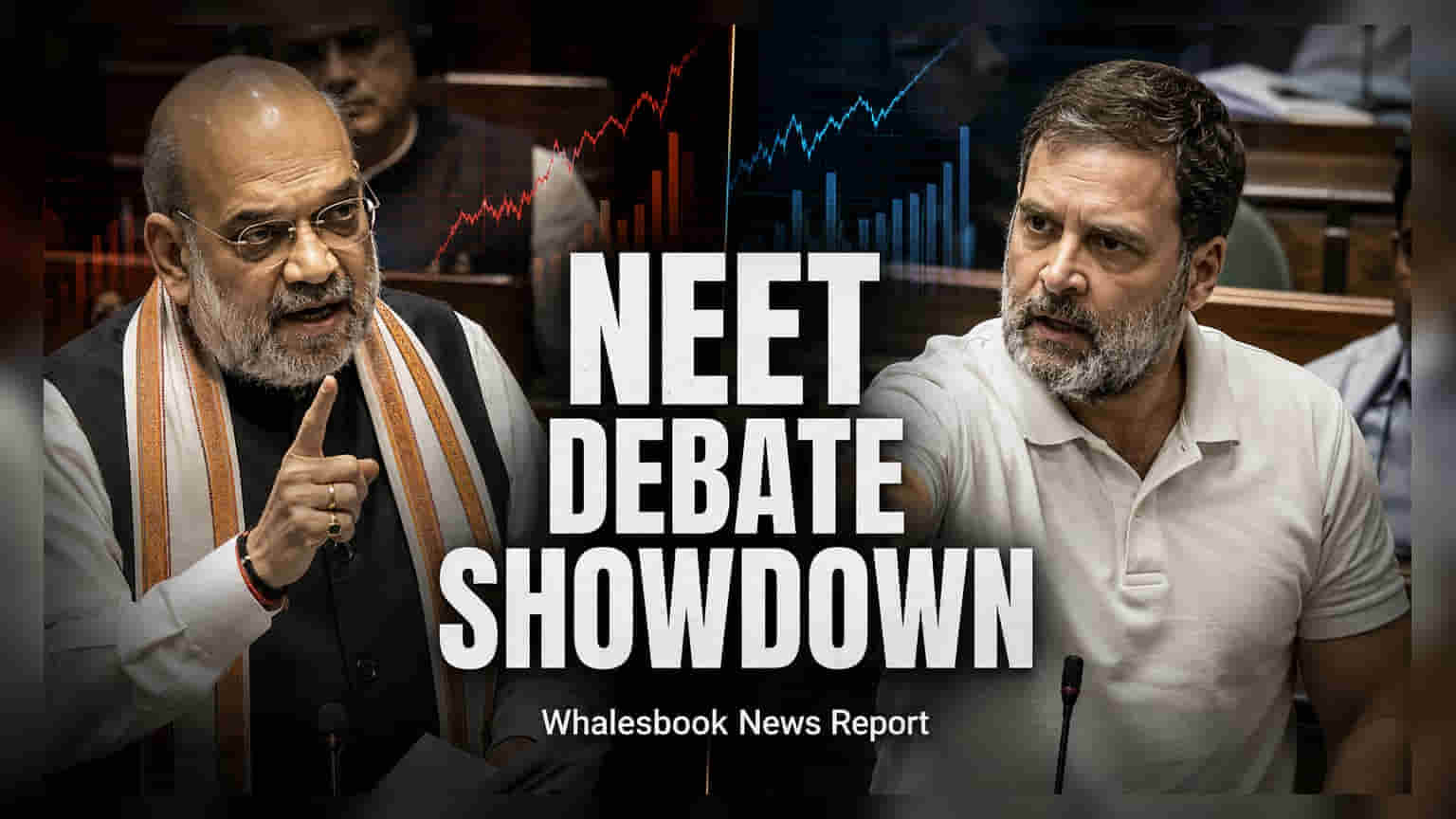
Union Home Minister Amit Shah has formally urged the Lok Sabha to hold a debate on the NEET paper leak, challenging opposition leader Rahul Gandhi to participate. This ongoing political deadlock is stalling legislative proceedings, which market observers track as a key indicator of governance and the pace of policy reforms.
The Bharatiya Janata Party (BJP) escalated its confrontation with the Congress on Wednesday, August 12, 2026, by directly challenging opposition leader Rahul Gandhi to engage in a formal parliamentary debate regarding the NEET paper leak controversy. Union Home Minister Amit Shah formally wrote to Lok Sabha Speaker Om Birla, affirming the government's readiness to address all questions on the floor of the House.
Parliamentary Deadlock and Legislative Impact
This challenge follows a series of disruptions that have stalled the Monsoon Session of Parliament. The ongoing standoff between the ruling government and the opposition has created a legislative deadlock, hindering the passage of bills and the discussion of public policy. From a governance perspective, such standoffs are significant because consistent parliamentary productivity is often viewed by markets as a metric of political stability and the government's ability to drive its reform agenda.
The Stance of Both Parties
The government has maintained that it is prepared to address the concerns raised by the opposition, with several BJP leaders accusing the Congress of adopting an obstructive approach to avoid substantive dialogue. Union Minister Piyush Goyal and other party officials have publicly questioned whether opposition leaders would attend the House if a debate were scheduled, framing the disruptions as an effort to evade accountability.
Conversely, the opposition has continued to press for the resignation of the Home Minister, citing police action during student protests at Jantar Mantar on July 20, 2026, as a point of contention. The opposition maintains that the government must address these specific grievances before normal proceedings can resume.
What Investors and Observers Track
For market participants, the primary concern in such political developments is the efficiency of the legislative process. A prolonged deadlock can delay policy decisions, budget approvals, or sectoral reforms that may have broader economic implications. While the current standoff is centered on the NEET examination issue, the monitorable factor for the coming days is whether the Lok Sabha Speaker can facilitate a resolution that allows the House to resume normal legislative business. Investors typically track these developments to gauge the stability of the policy environment and the government's control over the parliamentary agenda.