

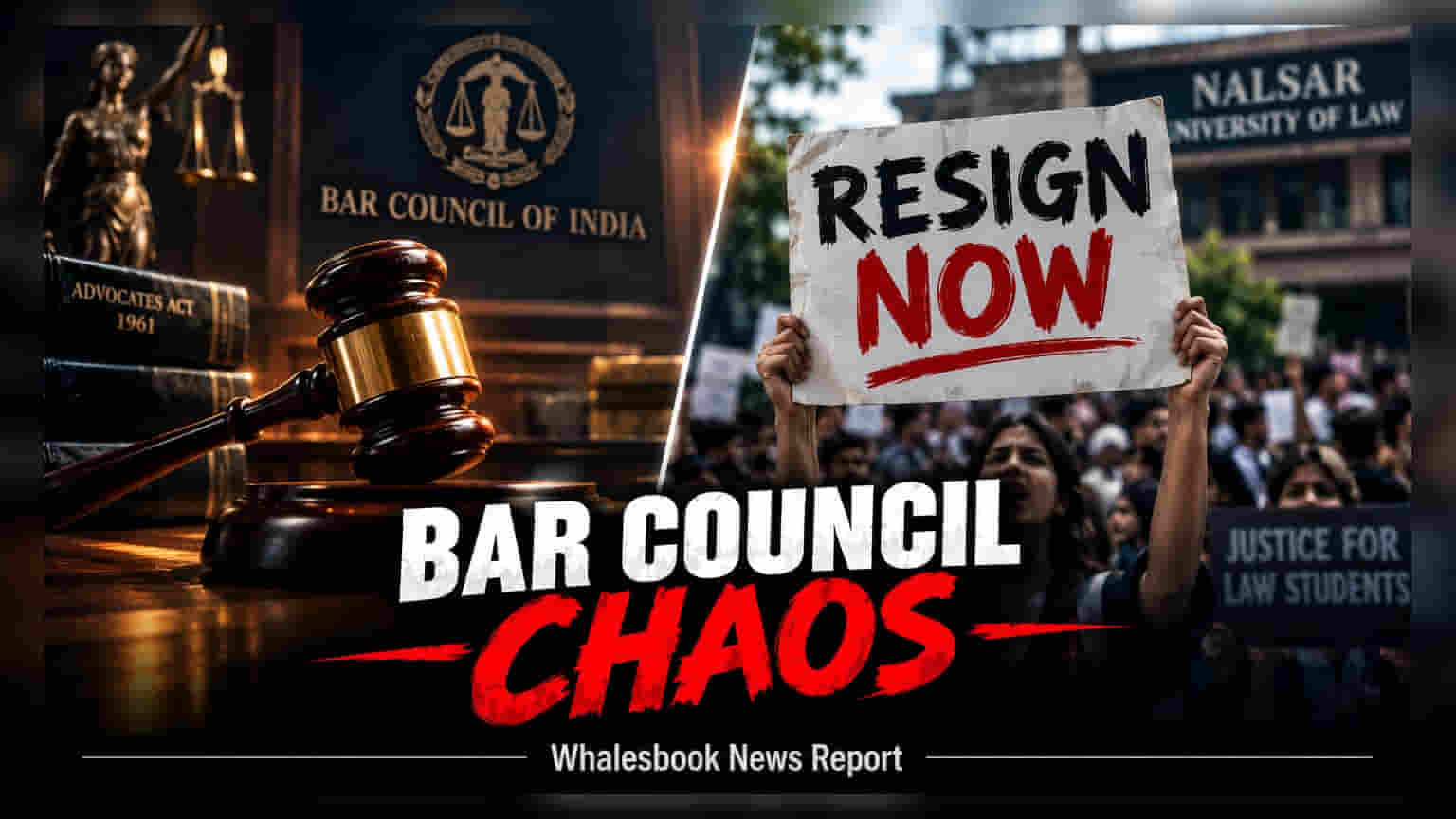
Protests organized by the Cockroach Janta Party are scheduled for August 20, 2026, demanding the resignation of Bar Council of India Chairman Manan Kumar Mishra. This follows the BCI’s controversial and now-withdrawn directive that had temporarily blocked 2026 NALSAR University graduates from enrollment. The incident has raised questions about the regulatory body's governance and its ongoing friction with the judiciary.
The Cockroach Janta Party (CJP) has organized demonstrations for Thursday, August 20, 2026, calling for the resignation of Bar Council of India (BCI) Chairman Manan Kumar Mishra. This action follows a significant governance controversy involving the BCI’s temporary decision to restrict 2026 graduates from the NALSAR University of Law from enrolling as advocates.
The core of the conflict stems from a BCI directive issued earlier in August, which threatened to block the enrollment of NALSAR graduates following student opposition to Chief Justice of India (CJI) Surya Kant's planned attendance at their convocation. The directive faced immediate and widespread criticism from legal circles for its punitive nature. Consequently, the BCI withdrew the order on August 13, 2026.
The incident has highlighted institutional friction between the BCI and the judiciary. CJI Surya Kant publicly disagreed with the BCI’s intervention, describing the disagreement as a matter for dialogue between students and the university rather than a disciplinary issue. This public divergence of views has created uncertainty regarding the regulatory consistency of the BCI, which holds the primary responsibility for maintaining standards for legal education and professional conduct in India.
Although Manan Kumar Mishra has issued an apology regarding the handling of the controversy, the CJP and other protesting groups argue that the initial move undermined the BCI's role as an independent and fair regulatory authority. The situation has prompted concerns about the BCI's decision-making processes and its impact on the student body.
It is important to understand that the Bar Council of India is a statutory body established under the Advocates Act, 1961. It is not a listed entity, and its governance matters do not involve stock market movements, financial listings, or tradeable instruments. The impact of this situation is confined to the legal and regulatory sector.
The primary monitorable for the legal community will be whether the BCI takes concrete steps to restore its administrative stability and rebuild its relationship with legal student bodies and the judiciary. Observers are tracking how the council addresses the growing calls for accountability to ensure its future directives remain focused on established legal procedures rather than reactive policy changes.