

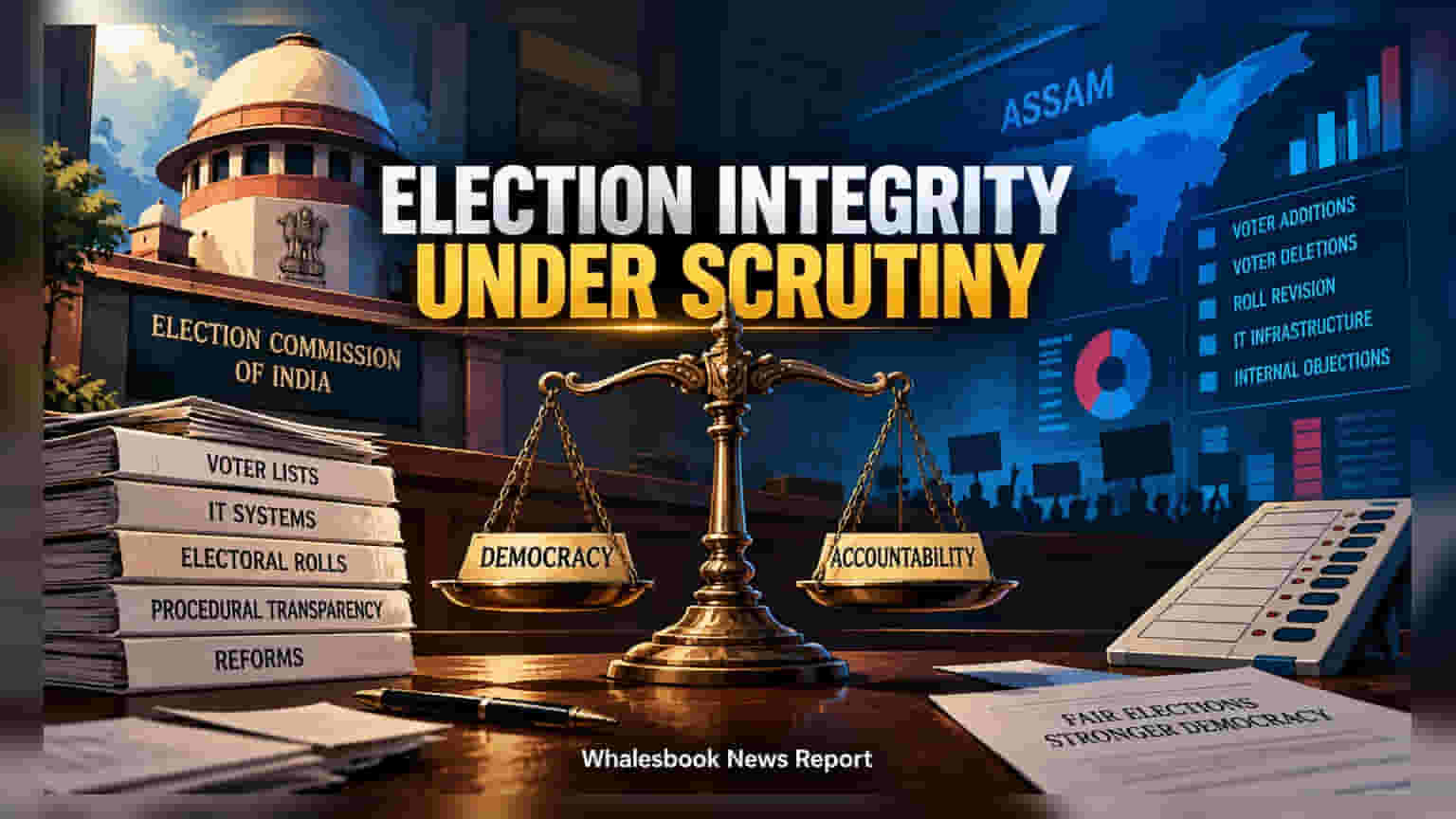
The Assam Jatiya Parishad has formally challenged the 2026 assembly election outcomes, citing alleged internal disagreements among Election Commission of India officials. The opposition party has raised concerns regarding the management of electoral rolls and oversight of digital databases. This development brings public attention to the transparency of institutional processes within the state.
The Assam Jatiya Parishad (AJP) has officially challenged the outcome of the 2026 state assembly elections, questioning the integrity of the process. Led by party president Lurinjyoti Gogoi, the AJP has alleged that the return to power of the BJP-led NDA was driven by electronic voting mechanisms rather than a clear public mandate. The party has framed this challenge as a demand for greater institutional transparency and accountability.
Concerns Over ECI Internal Processes
At the core of the opposition's challenge are reports detailing alleged internal disagreements among senior officials within the Election Commission of India (ECI). The AJP has cited claims that Election Commissioners Sukhbir Singh Sandhu and Vivek Joshi had formally filed objections over a ten-month period regarding administrative procedures. These reported objections centered on the unilateral management of electoral rolls, the removal and restoration of voter names, and the oversight of critical IT infrastructure and database systems.
Demands for Reform
The AJP has requested a public clarification from the ECI regarding these procedural allegations. The party argues that the reported internal friction undermines the public trust necessary for a functional democratic process. Beyond seeking immediate explanations, the AJP has advocated for structural reforms to the current electoral system, including a push to return to paper ballot voting. The party contends that until the commission provides total accountability regarding the preparation of voter lists, the legitimacy of the electoral mechanism remains a point of contention for them.
Institutional Governance and Investor Sentiment
From a market and governance perspective, the integrity of electoral and institutional processes is a key factor that investors monitor in any region. Political stability and the perceived reliability of administrative systems are essential for maintaining a predictable business environment. While this is primarily a political and administrative matter, market participants often track such disputes to assess the potential for long-term policy continuity and legislative stability in the state. The next critical development to watch will be whether the Election Commission of India provides a formal response to these allegations and how the government addresses these concerns regarding electoral roll transparency.