

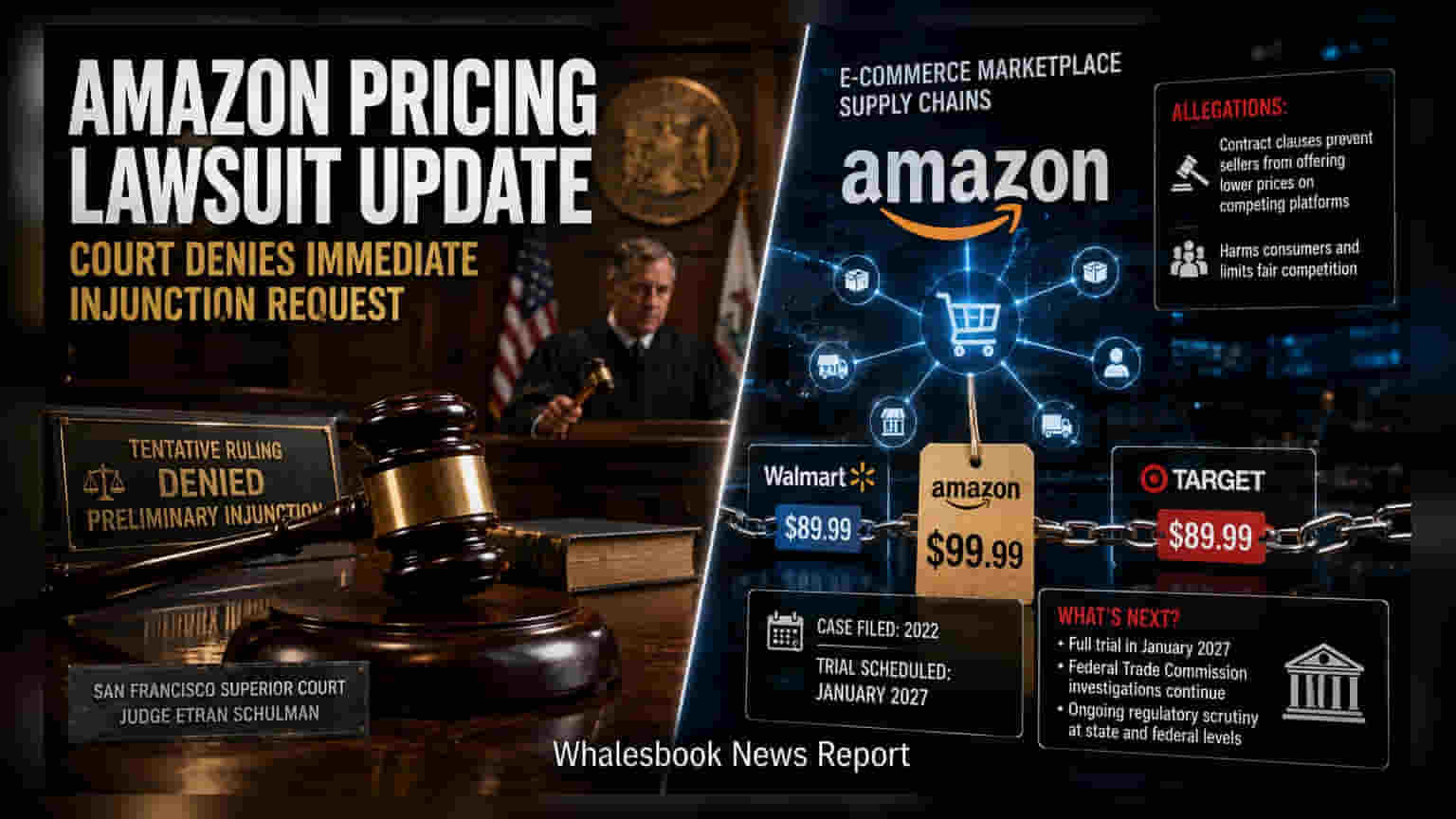
A San Francisco court has tentatively denied California's request for an immediate injunction against Amazon in an ongoing antitrust lawsuit. While the retail giant avoids an immediate change to its pricing policies, the broader legal battle is far from over. The main trial is set for early 2027, and investors continue to monitor how these regulatory pressures might impact the company's long-term business model.
A San Francisco Superior Court judge has tentatively ruled against a request by the State of California to force an immediate change to Amazon’s pricing practices. Judge Ethan Schulman indicated on Thursday that he would deny the preliminary injunction, which was sought by the California Attorney General’s office. If granted, this order would have forced the company to stop enforcing specific contractual obligations that authorities argue prevent third-party sellers from offering lower prices on competing retail platforms like Walmart and Target.
The court’s decision focuses on the timing and nature of the evidence provided by the state. During the hearing, the judge expressed skepticism regarding the necessity of an emergency injunction, noting that the evidence relied upon by the state was primarily from 2023. By questioning the immediacy of the threat, the court has signaled that the current documentation does not meet the high threshold required to justify a pre-trial intervention of this scale.
This ruling marks a procedural reprieve for Amazon, as it does not have to alter its marketplace rules while the lawsuit continues. However, the decision is limited in scope and does not dismiss the underlying claims. The antitrust case, originally filed in 2022 by Attorney General Rob Bonta, alleges that the company’s dominance in e-commerce allows it to artificially influence market pricing by pressuring brands. The state maintains that these practices harm consumers and limit fair competition.
While the immediate request for a change in operations has failed, the core legal challenge remains active. Both the state and the company are moving toward a full trial, which is currently scheduled to begin in January 2027. The outcome of that process could have significant implications for how major digital marketplaces manage their relationships with third-party brands and competing retailers.
For investors, the legal landscape surrounding the company remains a key area to watch. Beyond this specific state-level case, the company continues to face separate antitrust scrutiny, including ongoing investigations at the federal level by the Federal Trade Commission. While this particular court order reduces the immediate risk of forced operational changes, the cumulative effect of these various legal proceedings could influence the company’s future strategy, regulatory compliance costs, and potential structural adjustments to its business model. Market participants will likely focus on future trial updates and whether other regulatory bodies introduce similar challenges.