

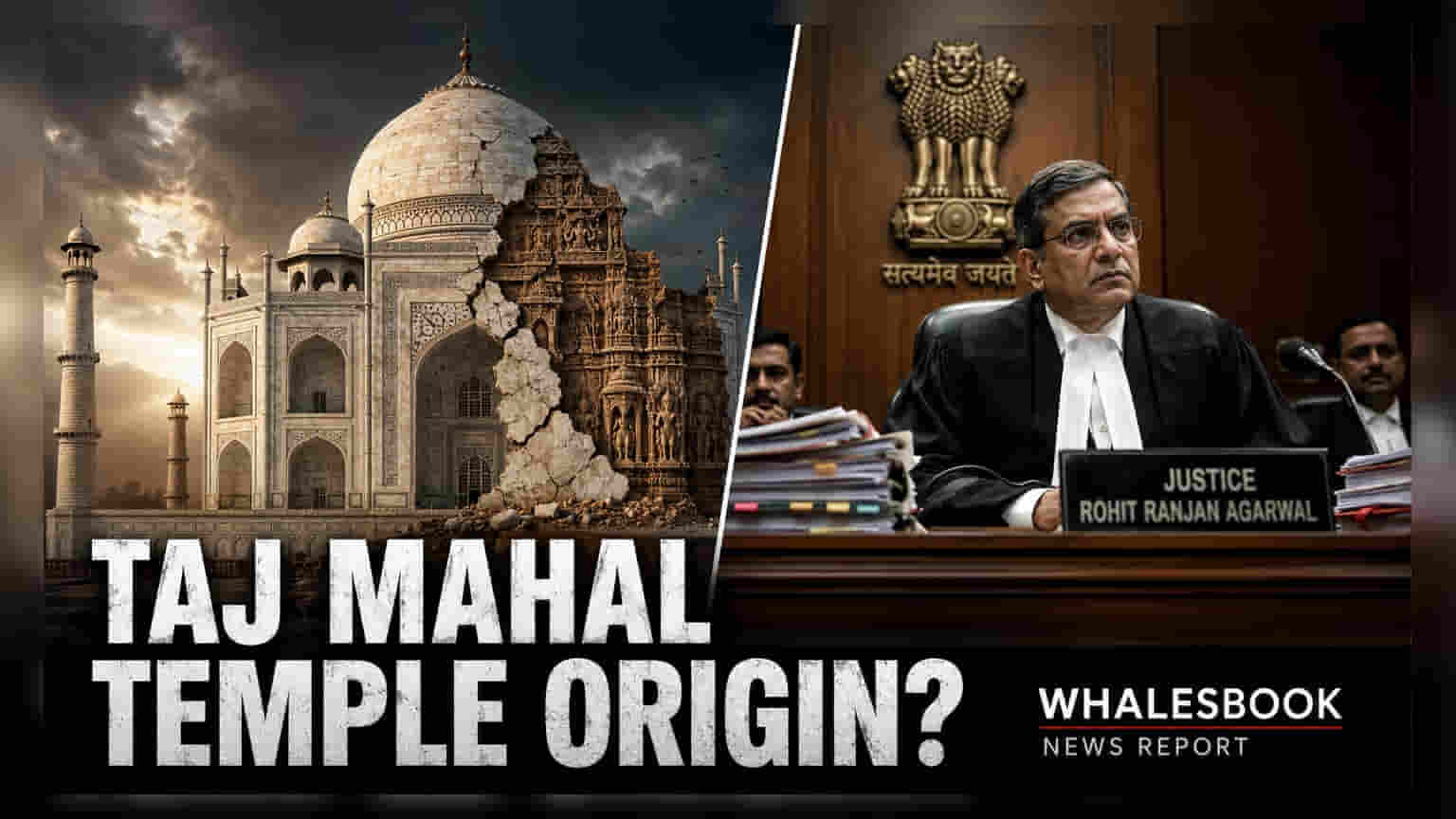
The Allahabad High Court has ordered the Union government and the Archaeological Survey of India to respond to a petition challenging the history of the Taj Mahal. The plea claims the monument was originally a Hindu temple and seeks official inspection to verify architectural evidence. This legal action follows a rejected application from 2017 to appoint a commissioner for surveying the site.
The Allahabad High Court has initiated a formal process to determine the government's stance on a civil suit regarding the origin of the Taj Mahal. Justice Rohit Ranjan Agarwal has directed both the Union government and the Archaeological Survey of India to file counter-affidavits in response to a petition that claims the historic monument was once a temple dedicated to Lord Shiva.
Legal Background of the Petition
The ongoing legal dispute traces back to a civil suit filed in 2015 in Agra. The petitioners, representing the deity 'Lord Sri Agreshwar Mahadev Nagnatheshwar Virajman Tejo Mahalaya Temple Palace,' are seeking a formal legal declaration that the site is a temple. Beyond this, the plea requests permission for individuals to conduct religious rituals within the complex, which currently functions as a protected mausoleum under the management of the Archaeological Survey of India.
Challenges to Inspection Requests
A central focus of the current legal battle is the demand for a court-appointed Advocate Commissioner to inspect, photograph, and document the monument's internal structures. The petitioners argue that such physical evidence is essential to support their claims regarding the building's historical design. They contend that the ASI's control over the monument makes independent documentation impossible without a court order.
Previous attempts to secure this inspection have faced significant legal hurdles. A trial court dismissed an application for an inspection commission in July 2019, a decision that was later upheld by an appellate court on April 4, 2026. The petitioners are now challenging these lower court rulings, arguing that they failed to adequately consider the necessity of a local investigation. In their arguments, they reference the legal principles established during the Supreme Court's Ayodhya judgment, which noted the power of civil courts to order local inspections to clarify contested factual disputes.
Significance for Protected Monuments
For investors and observers tracking the sector, this case highlights the evolving legal challenges facing heritage sites in India. The involvement of the ASI, the primary body responsible for the preservation of protected monuments, ensures that any judicial order could have implications for how historical sites are managed or accessed. The next step in this legal process will be the submission of official responses from the Union government and the ASI, which will provide further clarity on the state's position regarding the potential for any structural or photographic survey of the Taj Mahal.