

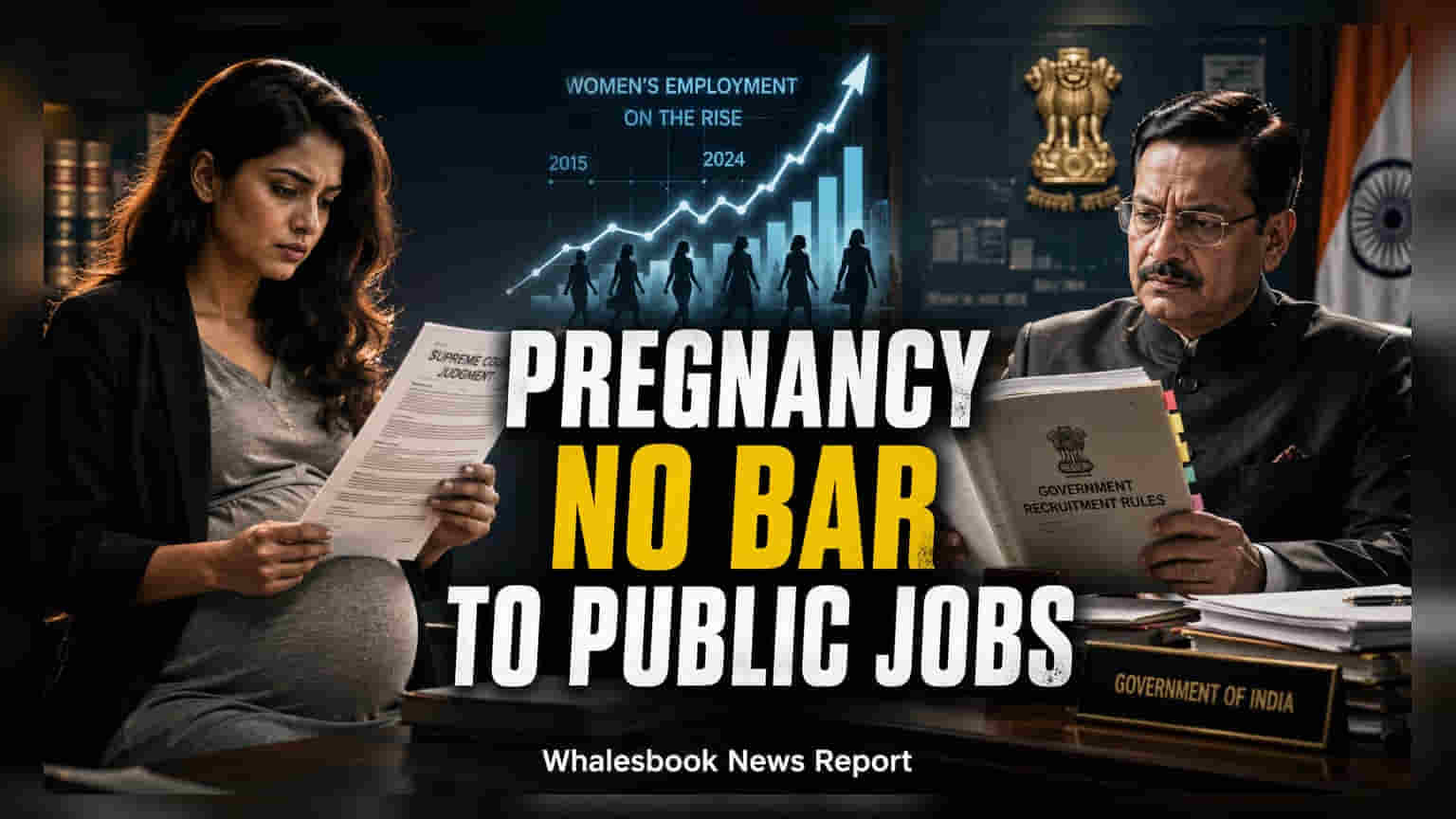
The Allahabad High Court has ruled that pregnancy cannot be used as grounds to deny women public jobs. This landmark decision ensures that candidates can defer physical tests for recruitment, protecting their right to employment while balancing motherhood.
The Allahabad High Court has issued a significant ruling stating that pregnancy is not a valid reason for the state to deny a woman public employment. In a case involving a recruitment process, the court held that forcing a woman to choose between her career and motherhood is a violation of her fundamental rights to reproduction and livelihood.
Court Mandates Physical Test Deferral
The legal challenge arose after the Uttar Pradesh Subordinate Services Selection Commission (UPSSSC) denied a candidate's request to postpone her physical efficiency test for Forest Guard and Wildlife Guard positions. The commission had cited the absence of specific provisions in its recruitment rules to allow for such a deferral during pregnancy. The candidate, Komal Jaiswal, moved the court to challenge this rejection.
Chief Justice Arun Bhansali and Justice Jaspreet Singh noted that recruitment processes often span long durations. They observed that penalizing women for natural life events, such as marriage or pregnancy, contradicts the constitutional principles of equality and fairness. The court ordered the UPSSSC to arrange for the candidate's physical test within four weeks. Furthermore, the commission was directed to keep a seat vacant in the OBC women category to ensure her appointment if she clears the necessary stages, providing her with full consequential benefits.
Impact on Public Recruitment Policies
This judicial intervention highlights a potential need for government recruitment bodies to update their existing policies. For many public sector roles that require physical efficiency tests, rigid rules can inadvertently create barriers for women. By mandating a more flexible approach, the court has signaled that administrative rules must evolve to align with constitutional protections against gender-based discrimination.
For job seekers and administrative bodies, the key update to follow will be how the UPSSSC and other government recruitment commissions revise their notification guidelines to incorporate flexible testing schedules for pregnant candidates. This ruling may lead to more inclusive hiring practices in future state-level recruitment drives across India.