 Whalesbook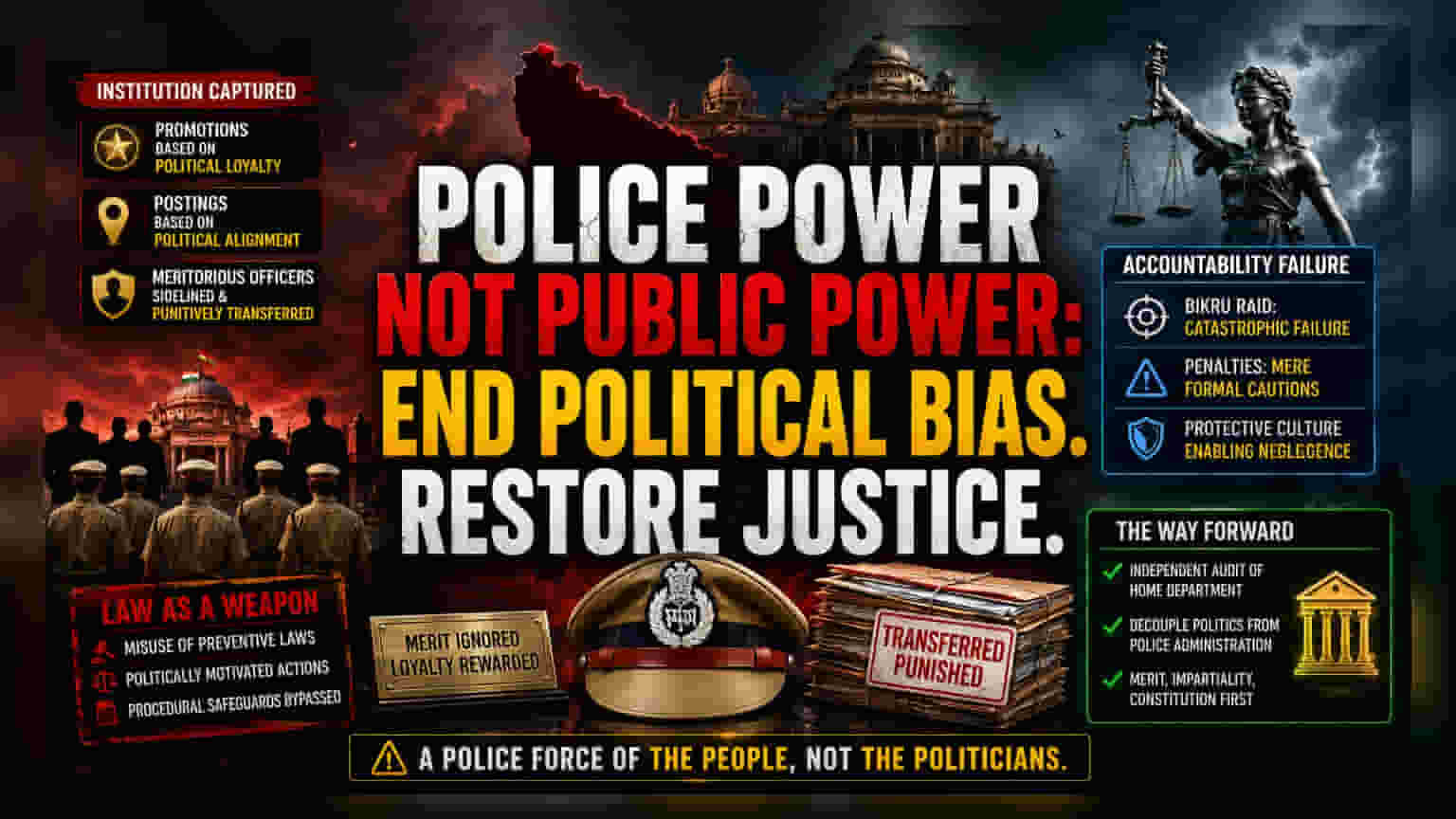


Institutional Allegiance and the Erosion of Merit
The judicial commentary from Justice Vinod Diwakar exposes a structural crisis within the Uttar Pradesh police force where administrative decisions, particularly those regarding promotions and geographic assignments, appear decoupled from professional competency. By prioritizing political alignment, the current framework incentivizes officers to function as agents of political patronage rather than impartial executors of law. This shift creates a binary within the department: loyalists receive preferential placement, while officers who prioritize legal independence are sidelined through punitive reassignments, effectively purging the ranks of objective enforcement.
The Mechanics of Selective Law Enforcement
Beyond internal dynamics, the court highlighted a alarming tactical trend regarding the misuse of the Uttar Pradesh Gangsters and Anti-Social Activities (Prevention) Act. The judiciary noted that this legislation—and other preventive detention powers—is frequently weaponized against individuals who are deemed politically inconvenient. By bypassing established procedural safeguards found in the Bharatiya Nagarik Suraksha Sanhita, the police force has transformed standard investigative procedures into tools for selective crackdowns. This operational approach treats the rule of law as an inconvenient administrative hurdle rather than a binding constraint on state power.
Accountability Deficits and Systemic Risk
The court’s reference to the Bikru village raid serves as a primary example of how institutional accountability remains elusive. Even in scenarios involving catastrophic loss of life and massive supervisory failure, the resulting administrative penalties—often limited to formal cautions—fail to deter future negligence. This leniency signal suggests a protective culture that shields high-ranking officials from the consequences of their operational directives. The court’s call for an independent audit of the Home Department acknowledges that the current oversight mechanisms have been effectively neutralized, as internal conduits now prioritize self-serving outcomes over public safety and constitutional fidelity.
The Judicial Standoff and Future Implications
While the current matter remains in a state of suspended animation pending Supreme Court deliberations, the underlying issues identified by the High Court signal a deep-seated friction between the state’s executive branch and the judiciary. The insistence that Home Secretaries function as conduits for political interests rather than objective administrators suggests that systemic reform may require intervention beyond mere judicial observation. Without a decoupling of political patronage from administrative authority, the current trajectory points toward continued degradation of institutional integrity and heightened legal risk for the state government in subsequent litigations.