 Whalesbook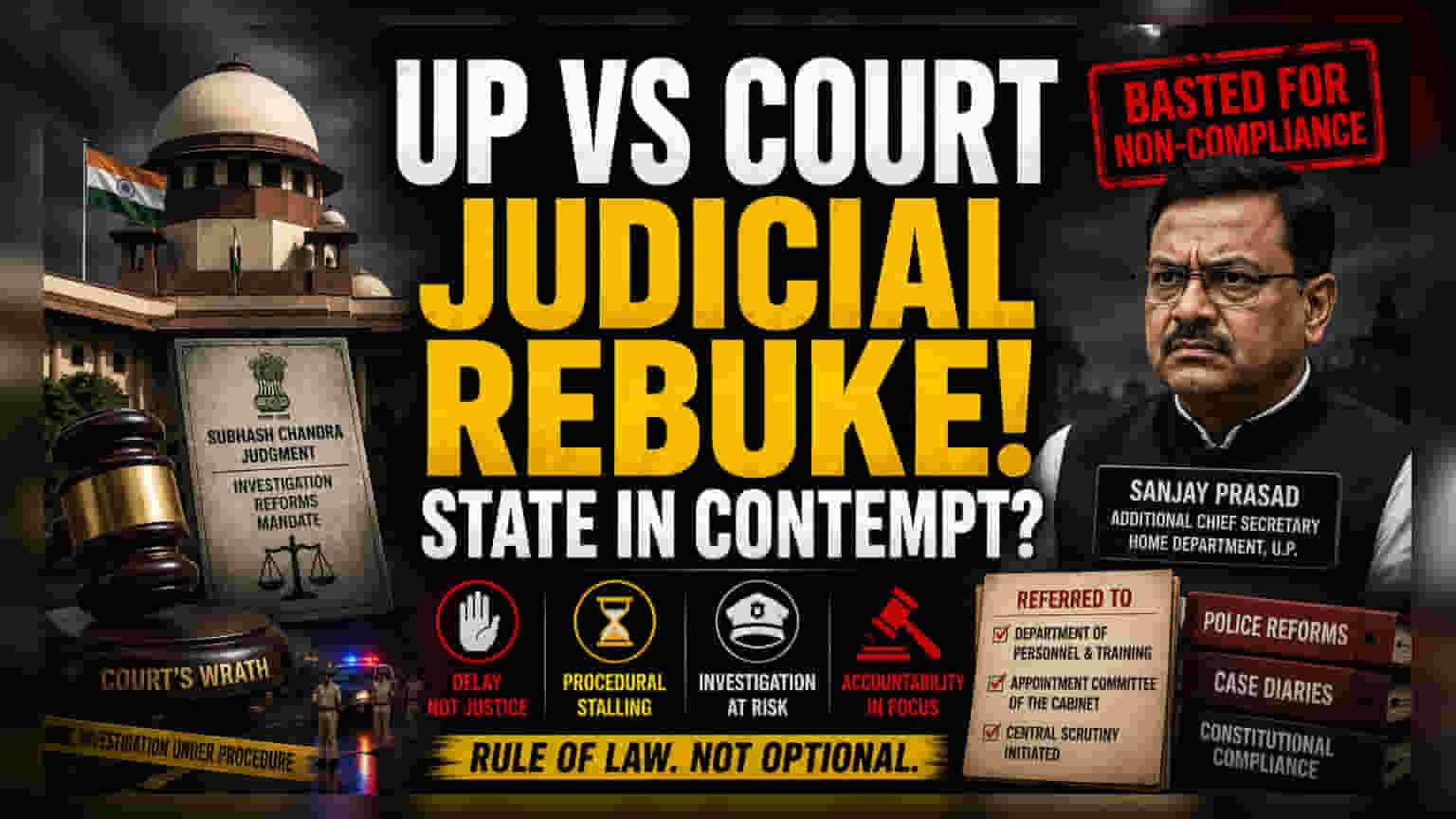


Judicial Friction and Institutional Resistance
The ongoing tension between the Uttar Pradesh executive branch and the judiciary has reached a boiling point, manifested in a scathing rebuke of Additional Chief Secretary Sanjay Prasad. The core issue involves the persistent failure of the state to align police investigation protocols with constitutional safeguards previously established in the Subhash Chandra judgment. Rather than accelerating compliance, the administration—under Prasad’s directive—attempted to leverage late-stage legal challenges to bypass directives intended to standardize criminal investigation transparency.
The Mechanics of Procedural Delay
Administrative records reveal that the state’s decision to pursue a Special Leave Petition in the Supreme Court emerged only after the High Court demanded accountability for months of inaction. The timing of this legal maneuver suggests a tactical strategy to stall judicial scrutiny rather than a genuine pursuit of appellate relief. By failing to secure or present a stay order from higher courts, the executive office has effectively left investigative reforms in a state of suspended animation, a move the bench described as an intentional erosion of the rule of law.
Accountability Beyond Local Jurisdiction
By escalating this matter to the Department of Personnel and Training, the High Court has shifted the focus from simple local non-compliance to the professional integrity of the civil service. The referral to the Appointment Committee of the Cabinet signals that judicial patience regarding bureaucratic obfuscation has expired. This action implies that individual officers, regardless of their proximity to state leadership, will face federal scrutiny when their administrative decisions are deemed to undermine the efficiency and fairness of the investigative machinery.
Risks of Executive Overreach
The systemic refusal to adopt standardized investigative practices risks delegitimizing the state's criminal justice operations. Critics argue that when the home department chooses to battle judicial reforms, it creates a culture where police impunity thrives at the expense of public trust. The court’s intervention underscores a broader, cynical reality in administrative law: reforms are frequently derailed not by a lack of resources, but by entrenched interests protecting personal or political spheres of influence. As this situation develops, the focus will remain on whether central authorities choose to intervene in the career trajectory of officials who treat court mandates as optional suggestions rather than binding governance.