

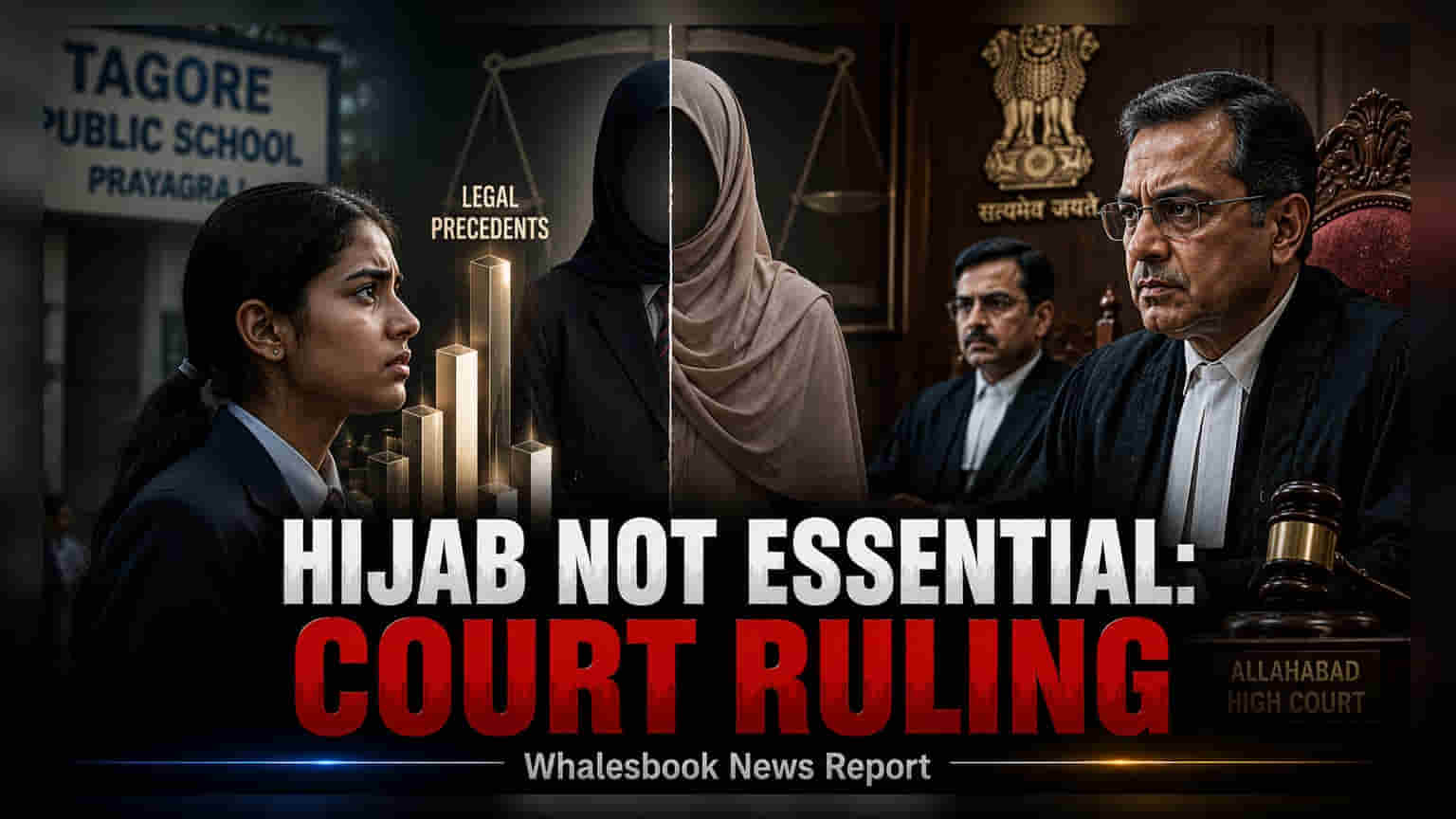
The Allahabad High Court has rejected a Class 11 student's petition seeking to wear a hijab with her school uniform. The court ruled that the headscarf is not an essential religious practice under Article 25 of the Constitution. This decision reinforces the authority of educational institutions to enforce uniform dress codes to maintain discipline.
The Allahabad High Court has delivered a significant judgment regarding the rights of students and the regulatory authority of educational institutions. On August 21, 2026, a Division Bench comprising Justice JJ Munir and Justice Indrajeet Shukla dismissed a petition filed by a Class 11 student of Tagore Public School, Prayagraj. The student had challenged the school's uniform policy, which restricted the wearing of a hijab on campus.
In its ruling, the court stated that the petitioner failed to provide sufficient legal or religious evidence to establish the hijab as an essential religious practice under Article 25 of the Constitution of India. The bench emphasized that while individual rights are protected, they are not absolute when they conflict with institutional discipline and non-discriminatory dress codes.
This decision provides clarity on the administrative autonomy of private educational institutions. The court observed that schools have the right to enforce bona fide uniform policies to maintain a sense of equality and institutional identity among students. The judgment explicitly noted that an individual's personal preference to wear a specific item does not override a school's established uniform requirements if those requirements are applied consistently and without discrimination.
To support its conclusion, the bench referred to the 2022 judgment by the Karnataka High Court, using it as a persuasive authority on the issue of religious attire in educational settings. By upholding the school's policy, the Allahabad High Court has reinforced the legal precedence that institutions can prioritize uniform dress codes to ensure a standardized learning environment.
For the education sector, this ruling serves as a reference point for managing policies related to student attire and religious expression within private institutions. The matter highlights the legal boundary between personal religious practice and the operational guidelines set by school administrations to maintain discipline. The lack of a final, authoritative ruling from the Supreme Court on this issue means that similar cases may continue to be adjudicated on an individual basis, with courts evaluating the specific circumstances of each school’s uniform policy.