

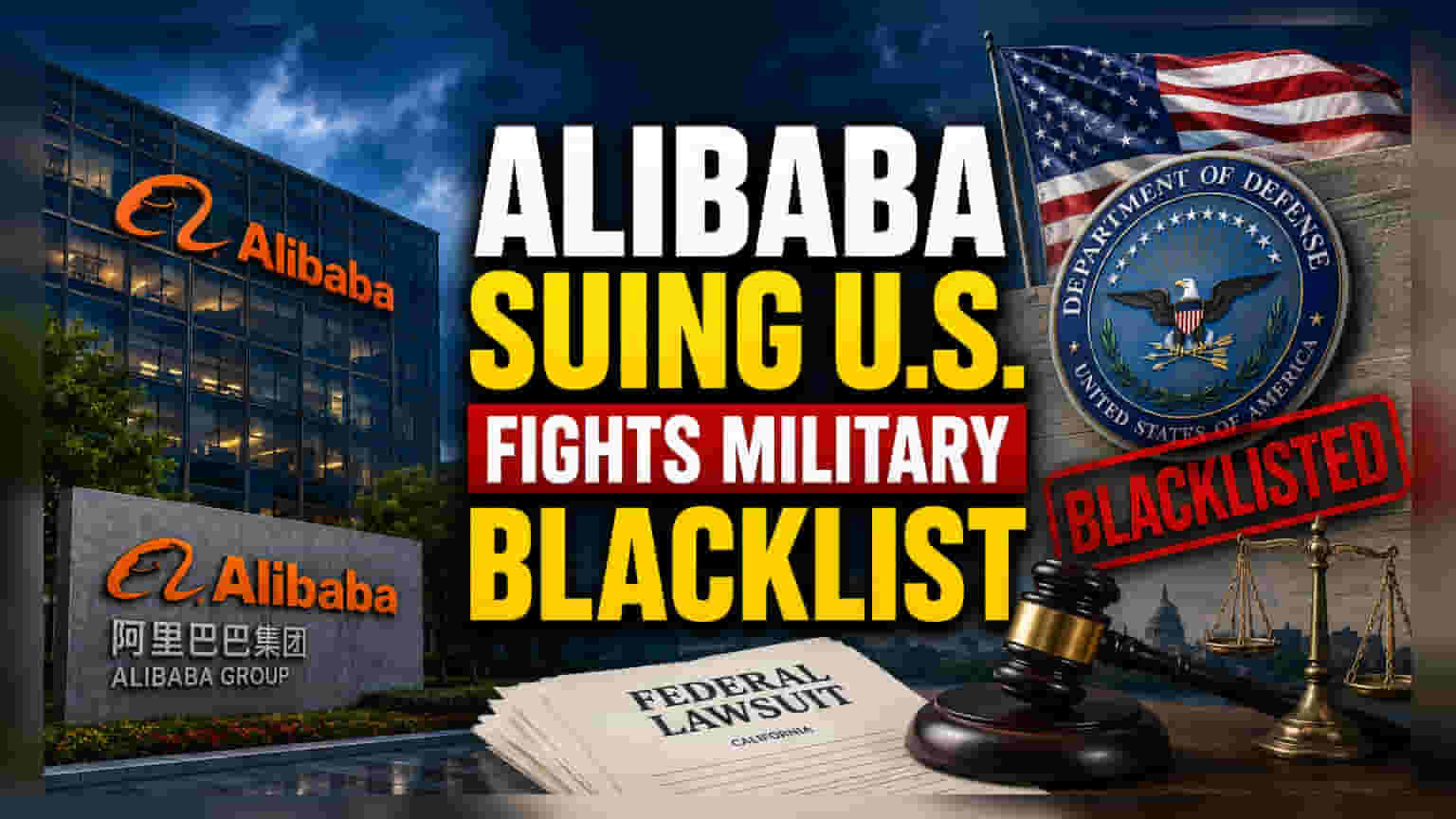
Alibaba has filed a federal lawsuit in California to challenge its inclusion on a US Department of Defense blacklist of Chinese military-linked firms. The e-commerce major denies all military affiliations, arguing the designation is baseless and damaging to its international business. The move follows a wider Pentagon expansion that has impacted several other prominent Chinese technology and manufacturing companies.
What Happened
Alibaba Group Holding Limited has launched a federal lawsuit in California against the United States government, seeking to be removed from the Department of Defense's list of companies designated as having links to the Chinese military. The lawsuit follows an expansion of this blacklist by the Pentagon on June 8, 2026, which added numerous Chinese entities to the list.
In its legal filing, Alibaba argues that the classification is arbitrary and lacks factual basis. The company has explicitly denied any military affiliations, emphasizing that its operations are run by an independent board and are focused strictly on e-commerce, logistics, and IT services, rather than defense-related activities.
The Core Conflict
The Pentagon’s designation rests on the claim that Alibaba acts as a contributor to the "military-civil fusion" within China's defense industrial base. The US authorities have pointed to connections with the Ministry of Industry and Information Technology, as well as indirect links to the State-owned Assets Supervision and Administration Commission (SASAC) in China.
Alibaba maintains that these accusations do not reflect its business model. The company contends that being labeled a "Chinese military company" creates reputational harm and threatens its ability to maintain existing business relationships with American firms. Under US regulations, entities placed on this blacklist face significant limitations, including restrictions on government contracts, and are prohibited from having their services purchased through third parties by 2027.
Broader Sector Impact
This legal challenge brings focus to the ongoing regulatory pressure facing Chinese companies operating in the US or working with US partners. Alibaba is not the only company affected; the June expansion of the list included other major Chinese firms such as Baidu, BYD, NIO, and WuXi AppTec.
Notably, WuXi AppTec has also reportedly initiated similar legal action. For investors, this pattern indicates a sector-wide trend where large Chinese technology and manufacturing players are being caught in the crossfire of geopolitical tensions between the US and China. The listing of such prominent companies highlights the increasing difficulty these firms face in maintaining international partnerships while navigating stringent US compliance requirements.
What Investors Should Track
The most important factor for investors is how the US courts handle these legal challenges. A favorable outcome for the companies could mitigate reputational risk and provide clarity on future business operations. Conversely, if the lawsuits are unsuccessful, it may signal a more permanent hurdle for these companies in the US market, potentially complicating their global strategy.
Investors may monitor the progress of these court filings, as they could influence market sentiment regarding Chinese ADRs and the broader Chinese tech sector. Additionally, any updates from the Pentagon regarding the list or potential settlement discussions with the affected companies will be key to understanding the long-term impact on their operations.