 Whalesbook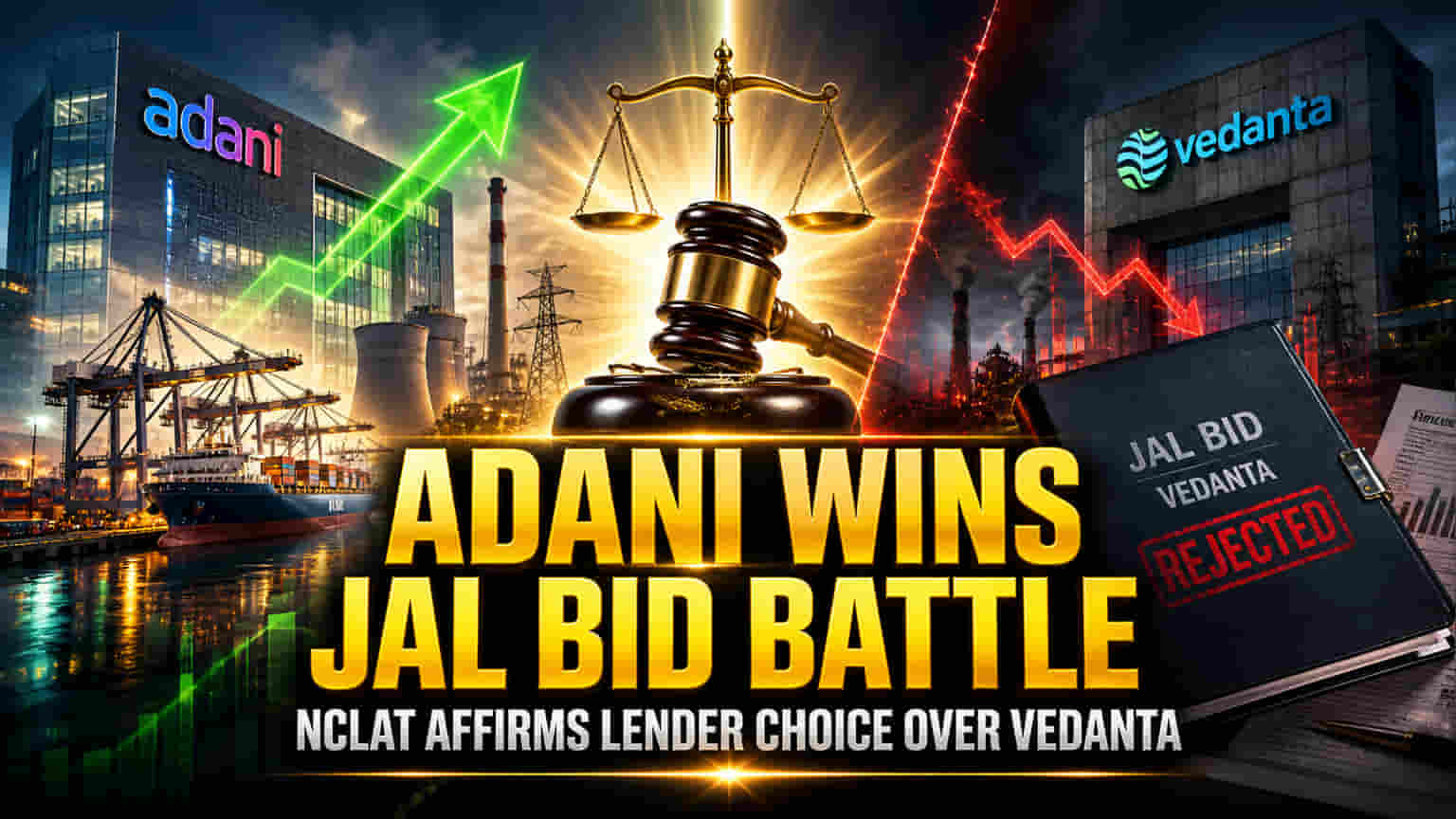


Tribunal Backs Adani's Plan for JAL
The National Company Law Appellate Tribunal's (NCLAT) approval of Adani Enterprises' plan for Jaiprakash Associates Ltd (JAL) marks a significant moment for India's insolvency system. The ruling signals a practical shift towards valuing distressed assets based on immediate financial certainty and execution speed, with creditors now placing greater weight on these factors.
Key Details of the Bids and Ruling
The NCLAT dismissed Vedanta's challenge, confirming Adani Enterprises' acquisition of JAL. The tribunal found no reason to reject the Adani plan, which was supported by the Committee of Creditors (CoC). Adani's bid, valued at about ₹14,535 crore at NCLT approval, was preferred for its substantial ₹6,000 crore upfront payment and a two-year settlement plan for the rest. Vedanta's offer, which claimed a higher net present value (around ₹500 crore more) and gross value (up to ₹3,400 crore more), proposed a longer payout of up to five years. The NCLAT sided with the CoC's view that Adani's plan provided more certain and faster resolution. As of May 4, 2026, Adani Enterprises (ADANIENT) stock traded between ₹2,420-₹2,450, while Vedanta (VEDL) shares were near ₹270-₹290.
Creditors' Choices and the Insolvency Process
The ruling strongly supports the creditors' committee's decision-making power, a key aspect of India's insolvency system governed by the Insolvency and Bankruptcy Code (IBC). While the IBC aims to maximize value, actual resolutions have often faced delays, averaging over 683 days. The CoC's choice of Adani's plan, even with a potentially lower net present value, reflects a shift towards prioritizing immediate recovery and reducing further asset erosion. Adani Enterprises, with a market cap of ₹3.12-₹3.15 trillion and a P/E of 22x-34x, has a strategy of using the IBC to acquire distressed assets in sectors like airports and infrastructure. Vedanta, with a market cap of ₹1.06 trillion and P/E of 4x-7.6x, has also sought acquisitions, but analysts have viewed these cautiously due to limited synergy with its mining business. The NCLAT's decision reinforces the tribunal's respect for the CoC's process when it follows legal guidelines, a stance supported by Supreme Court rulings.
Challenges Ahead for Adani
Despite winning the bid, Adani Enterprises faces significant challenges in integrating JAL's assets. JAL has a complex portfolio of businesses, including cement, real estate, and hospitality, which have historically been loss-making and carry substantial debt. Successfully turning these around will require major investment and strategic skill. While Adani's quick payment terms were crucial to securing the deal, integrating and reviving these varied operations is a major hurdle. India's insolvency process, with average resolution times exceeding 683 days, also poses a risk of further delays and costs. Vedanta's continued legal challenges, even seeking Supreme Court intervention, show the potential for ongoing disputes. The company has raised questions about how lenders evaluated bids, suggesting its higher offer may have been unfairly overlooked. JAL's admitted claims, exceeding ₹57,000 crore, mean maximizing value for everyone involved could be difficult.
Future Outlook for Adani and Vedanta
The Adani Group plans to integrate JAL's assets, including cement plants, power units, and land holdings in the Delhi-NCR region, into its existing power and real estate businesses. This move is expected to boost Adani Realty and Adani Power. Analysts generally view Adani Enterprises positively, with many recommending 'BUY' ratings and price targets around ₹2,600-₹2,750, citing confidence in its growth strategy. For Vedanta, this outcome highlights the difficulties of high-stakes insolvency bids and questions its approach to acquiring assets that don't align well with its core business. The speed of India's insolvency cases remains important, with recent IBC changes aimed at speeding up resolutions, though their full effect is still uncertain.