

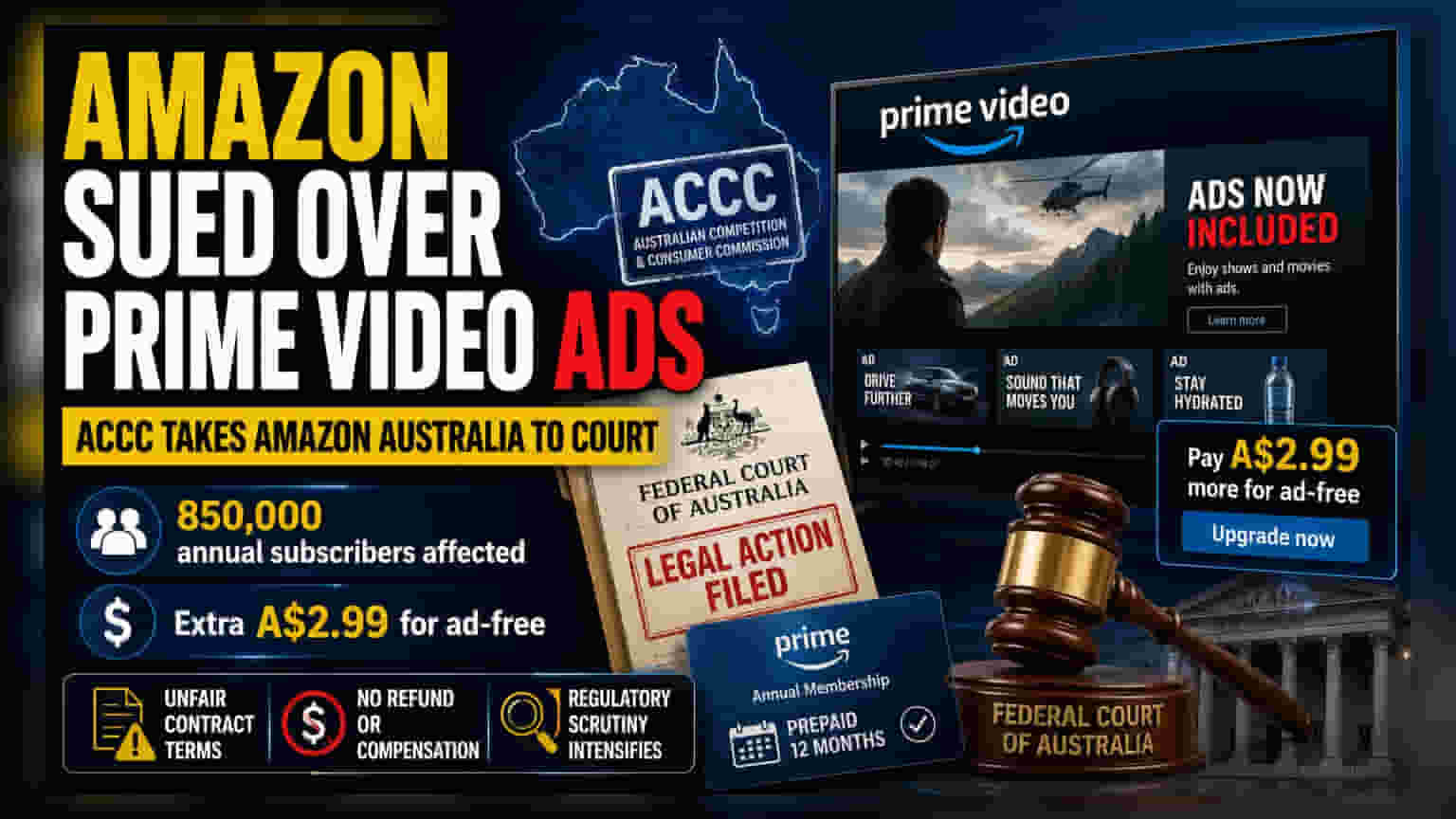
Australia's competition watchdog has filed a lawsuit against Amazon Australia, alleging unfair contract changes to its Prime Video service. The regulator claims the company unfairly forced prepaid annual subscribers to pay extra fees to avoid advertisements. This case adds to global regulatory scrutiny facing the tech giant regarding its subscription business practices.
What Happened
The Australian Competition and Consumer Commission (ACCC) has taken legal action against Amazon Australia in the Federal Court. The regulator claims that Amazon introduced advertisements to its Prime Video service in July 2024, despite having already collected annual subscription fees from customers who expected an ad-free experience. The watchdog alleges that over 850,000 annual subscribers in Australia were affected by this change. The core of the complaint is that Amazon required these prepaid members to pay an additional monthly fee of A$2.99 if they wanted to maintain the ad-free service they had originally paid for.
The Core Allegation
The ACCC has accused Amazon Australia of incorporating five unfair contract terms into its agreements with subscribers. According to the regulator, these terms allowed the company to make significant changes to its services—such as introducing ads—without offering refunds or compensation to users who had already paid for an annual plan. The ACCC chair, Gina Cass-Gottlieb, noted that consumers were essentially left with no option but to pay more to retain the service level they had initially purchased. The regulator is seeking penalties and other court orders against the company.
Why This Matters for Investors
For investors following global technology companies, this lawsuit highlights a growing regulatory trend focused on subscription-based business models. Companies that bundle services often face scrutiny when they alter terms after payment has been collected. While the lawsuit is specific to the Australian market, it highlights the potential for similar regulatory risks in other regions. Large subscription platforms are increasingly under the microscope of consumer protection agencies that are keen to ensure that changes to product features do not unfairly penalize customers who have entered into long-term contracts.
Global Regulatory Context
This legal challenge is not an isolated event for Amazon. The company has faced increasing regulatory pressure in several major markets. In the United States, the Federal Trade Commission (FTC) has initiated legal action against the company, raising concerns about its subscription enrollment and cancellation practices. In India, Amazon has faced various investigations by the Competition Commission of India (CCI) regarding its marketplace operations and exclusive deals. These instances reflect a broader global environment where regulators are becoming more active in monitoring how major digital platforms operate their marketplaces and subscription ecosystems.
What Investors Should Track
Investors and market watchers should look for the following updates regarding this case:
- Legal Outcome: The Federal Court's ruling, which could set a precedent for how subscription service providers can alter terms for existing annual members.
- Financial Impact: Potential fines or compensation costs if the court finds the terms to be unfair.
- Policy Changes: Whether Amazon adjusts its global subscription terms to avoid similar regulatory friction in other jurisdictions.
- Broader Regulatory Trends: Any similar investigations by consumer protection agencies in other major markets that might signal increased compliance costs for the company.