 Whalesbook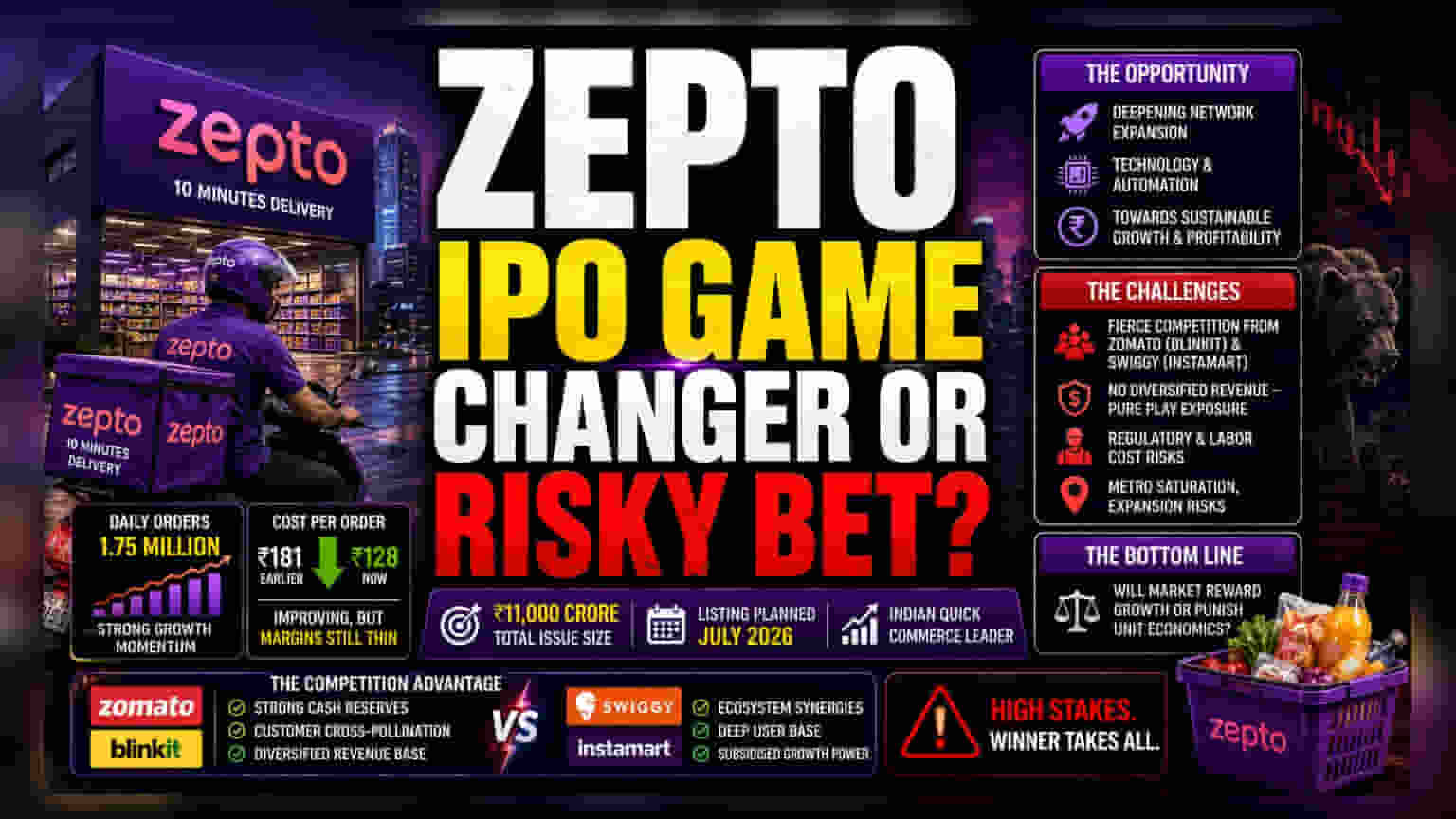


The impending public debut of Zepto marks a fundamental pivot in the Indian retail sector, signaling a shift from aggressive land-grab expansion to a desperate search for operational sustainability. With a target of ₹11,000 crore total issue size, including an Offer for Sale, the company is effectively capitalizing its war chest to survive the next phase of the quick commerce arms race. This infusion is critical as the sector matures, moving away from the venture capital-fueled euphoria of previous years toward the colder, more scrutinized reality of public market valuations.
The Unit Economics Paradox
While management points to a reduction in cost per order from ₹181 to ₹128, this metric remains a vulnerability. The business model hinges on extreme velocity to dilute the fixed costs of dark stores, yet the current expense profile reveals that even with peak efficiency, the margins on fast-moving consumer goods are razor-thin. By channeling capital into further network expansion and technology infrastructure, Zepto is betting that increased density will eventually break the cycle of losses. However, public markets often punish companies that require persistent scale to mask underlying unit economics that do not independently support the business. If the growth rate in daily orders—currently at 1.75 million—begins to plateau, the financial structure will face immediate pressure.
The Pure-Play Vulnerability
Unlike its primary competitors, Zomato and Swiggy, Zepto operates as a pure-play quick commerce entity. Zomato leverages its Blinkit subsidiary through the vast cash reserves and customer cross-pollination provided by its food delivery core, while Swiggy utilizes a similar ecosystem strategy to subsidize its Instamart operations. Zepto lacks this diversified revenue cushion, making it uniquely exposed to any sector-wide downturn or regulatory tightening regarding gig worker compensation and labor rights. The competition is no longer just about delivery speed; it is a battle of balance sheets where incumbents with secondary revenue streams can withstand price wars that a standalone quick commerce firm might find existential. Analysts suggest that the IPO proceeds are essential not just for technology upgrades, but to maintain parity in a market that is increasingly winner-take-all.
Structural Risks and the Bear Case
The most glaring risk remains the saturation of the top-tier metropolitan areas that drive the bulk of Zepto's revenue. As the company pushes into newer, lower-density territories, the logistical costs typically spike, potentially reversing the recent gains in operational efficiency. Furthermore, the company's reliance on inorganic growth opportunities to justify this valuation suggests that internal organic growth may be decelerating faster than reported. Should regulatory bodies mandate stricter employment standards for delivery partners, the current cost-per-order structure would likely deteriorate, forcing the company to pass costs to consumers and risking a sharp contraction in volume.
Future Outlook
Market participants will be closely watching the valuation metrics compared to Zomato’s trailing multiples. With listing planned for July 2026, the success of the IPO will likely depend on the company's ability to demonstrate a clear path to profitability that does not rely solely on aggressive discounting. The market will demand evidence that the narrowing EBITDA loss is a structural shift and not merely a temporary artifact of seasonal promotional pauses.