 Whalesbook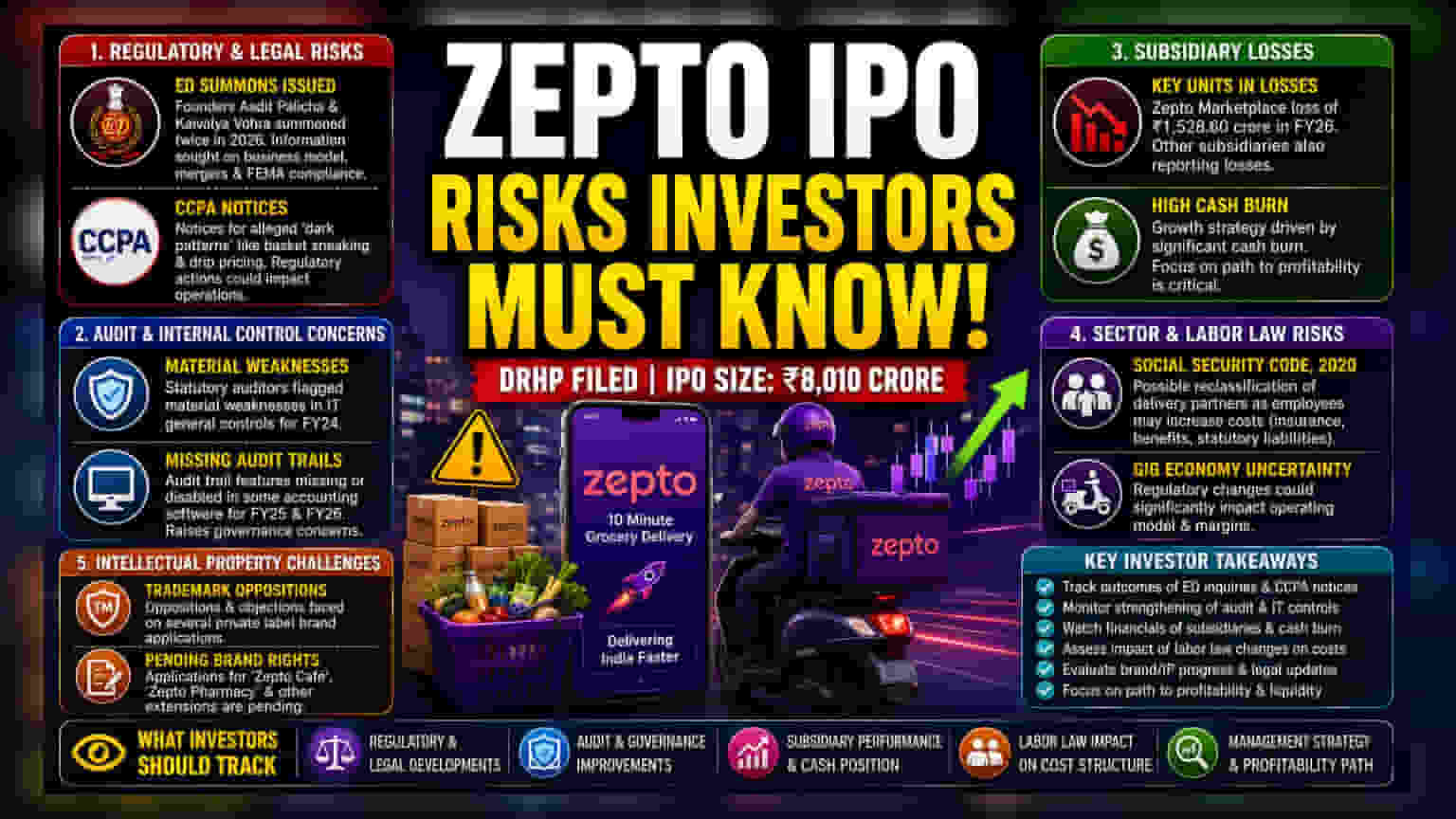


Quick commerce major Zepto’s Rs 8,010 crore IPO filing reveals several challenges, including ongoing regulatory inquiries, internal control weaknesses, and high subsidiary losses. Investors are evaluating these disclosures alongside the company's growth plans.
What Happened
Zepto, a prominent player in India’s quick commerce sector, has filed its Draft Red Herring Prospectus (DRHP) for a proposed initial public offering (IPO) of Rs 8,010 crore. Like all companies preparing to list on the stock exchange, Zepto is required to disclose potential risks to its business in this filing. The document highlights several areas of concern that range from regulatory scrutiny to operational challenges, which prospective investors typically examine closely to understand the company's business stability.
The Regulatory And Legal Environment
The company’s filing discloses that its founders, Aadit Palicha and Kaivalya Vohra, have received summons from the Enforcement Directorate (ED) twice this year. The agency has requested information regarding the company’s business model, merger schemes, and foreign investment structure under the Foreign Exchange Management Act (FEMA). While the company has stated it is complying with these requests, such investigations are a notable monitorable for investors, as they involve ongoing legal and regulatory procedures.
Separately, the Central Consumer Protection Authority (CCPA) has issued notices to Zepto and its units regarding the alleged use of 'dark patterns.' This term refers to design choices on apps or websites that may trick users into making unintended purchases, such as 'basket sneaking' (adding items without clear consent) or 'drip pricing' (hiding fees until the final payment step). Regulatory compliance regarding consumer rights is increasingly important for digital platforms, as any adverse ruling could impact operational practices.
Audit And Internal Control Challenges
Transparency and financial oversight are key metrics for any company going public. The filing notes that statutory auditors flagged 'material weaknesses' in the company’s IT general controls for the financial year 2024. Furthermore, the company reported that certain audit trail features—which are essentially logs used to track changes to data—were missing or disabled in some accounting software systems for the 2025 and 2026 financial years. For investors, robust internal controls are essential to ensure the accuracy of financial reporting. The company will need to demonstrate that it has strengthened these systems to meet the high standards expected of a listed entity.
Subsidiary Performance And Financials
Zepto’s business model involves multiple subsidiaries, including Kiranakart Wholesale, Zepto Marketplace, and Zepto Commerce. The filing reveals that these units are currently generating losses. For example, Zepto Marketplace reported a loss of Rs 1,528.60 crore in FY26. Such figures indicate that the company’s growth strategy currently relies on significant cash burn, which is common in the quick commerce sector. Investors will likely look at how the company plans to achieve profitability or sustain its cash position while managing these subsidiary expenses.
Sectoral Headwinds And Labor Laws
The quick commerce business model relies heavily on a fleet of delivery partners. The upcoming implementation of the Social Security Code, 2020, introduces potential regulatory changes for the gig economy. If this code leads to the reclassification of delivery partners as employees rather than gig workers, the company may be required to provide benefits like health insurance, disability cover, and life insurance. This reclassification could lead to a significant increase in operational costs across the sector, and Zepto is not immune to these potential shifts.
Intellectual Property And Brand Hurdles
Building a brand involves securing intellectual property rights, and the filing mentions that the company is navigating challenges in this area. While the main 'Zepto' trademark is registered, the company has faced oppositions and objections on several private label brand applications. Additionally, trademark applications for potential business extensions, such as 'Zepto Café' and 'Zepto Pharmacy,' are currently pending approval, indicating that future brand expansion plans face some legal hurdles.
What Investors Should Monitor
Investors will likely track how these issues evolve as the IPO process moves forward. Key monitorables include the outcome of the ED inquiries, the resolution of CCPA notices, and the timeline for strengthening internal audit and IT controls. Additionally, the market will look for management’s plans regarding the financial sustainability of its loss-making subsidiaries and how the company intends to manage potential cost increases resulting from new labor regulations.