

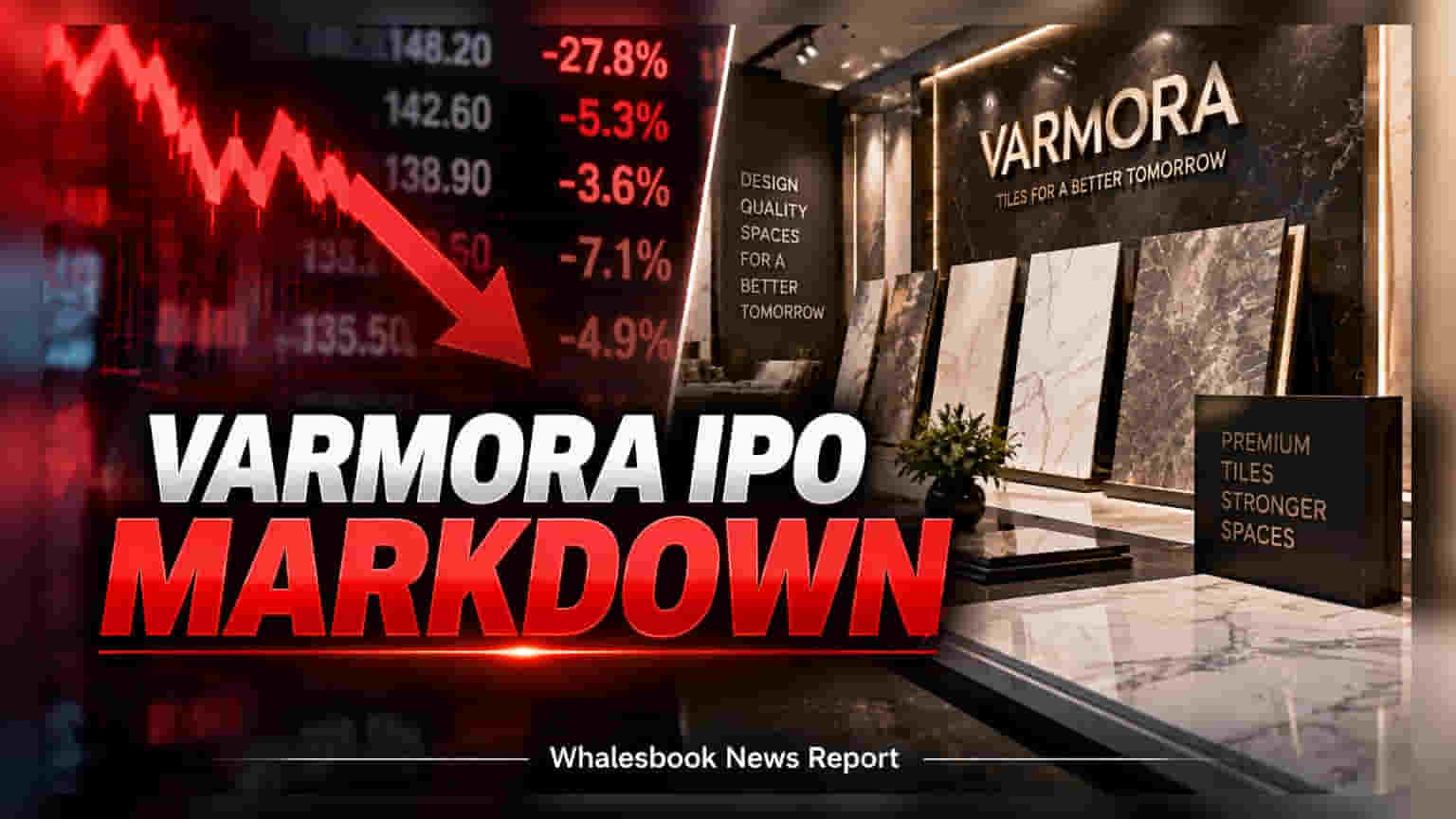
Varmora Granito's IPO price band of ₹140-₹148 sits approximately 28% lower than the ₹204.59 per share paid by 82 pre-IPO investors just months ago. Carlyle Group is offloading a portion of its stake, while the company plans to use ₹245 crore from the issue to repay debt. Investors may assess this valuation gap alongside the company's recent margin improvements and the competitive landscape of the tile industry.
Valuation Gap Between Private and Public Markets
Varmora Granito’s upcoming initial public offering (IPO) has highlighted a notable disconnect between recent private market valuations and the public price band. The company has set its IPO price band between ₹140 and ₹148 per share. This is nearly 28% lower than the ₹204.59 per share paid by a group of 82 pre-IPO investors during private funding rounds between October and November 2025. These investors, which include entities within the promoter group, supplier Vidres India Ceramics, and NovaaOne Capital, acquired over 56 lakh shares during that period. None of these pre-IPO investors are participating in the current offer-for-sale (OFS).
Financials and Debt Reduction Strategy
The Carlyle Group, which currently holds a 33.2% stake in the Morbi-based manufacturer, is the sole selling shareholder in the ₹708 crore offering. Carlyle is offloading approximately 2.62 crore shares, having initially invested roughly ₹640 crore in 2022. The IPO also includes a fresh issue component of ₹320 crore. The company intends to allocate ₹245 crore of these proceeds toward repaying debt across its various subsidiaries, a move aimed at deleveraging its balance sheet.
Financially, Varmora Granito reported revenue of ₹1,512.46 crore for the financial year 2026, marking a 4.6% increase compared to the previous year. Profitability also showed improvement, rising to ₹55.09 crore. A key detail for investors to track is the profit margin, which expanded to 3.53% in FY26, up from 2.06% in the previous year. This improvement reflects the company's operational efforts to stabilize its financial performance.
However, the tile manufacturing industry in India, particularly within the Morbi cluster, is highly fragmented and intensely competitive. Companies in this sector often face pressure on pricing and profit margins due to high competition and the commoditized nature of the products. Investors may continue to monitor whether Varmora Granito can maintain or improve its profit margins in such a challenging environment. Additionally, the effectiveness of the debt reduction plan will depend on the company's ability to maintain healthy cash flow after the IPO proceeds are utilized. Watching the post-listing performance and future management commentary on demand trends will be important to understand the long-term impact of these financial decisions.