

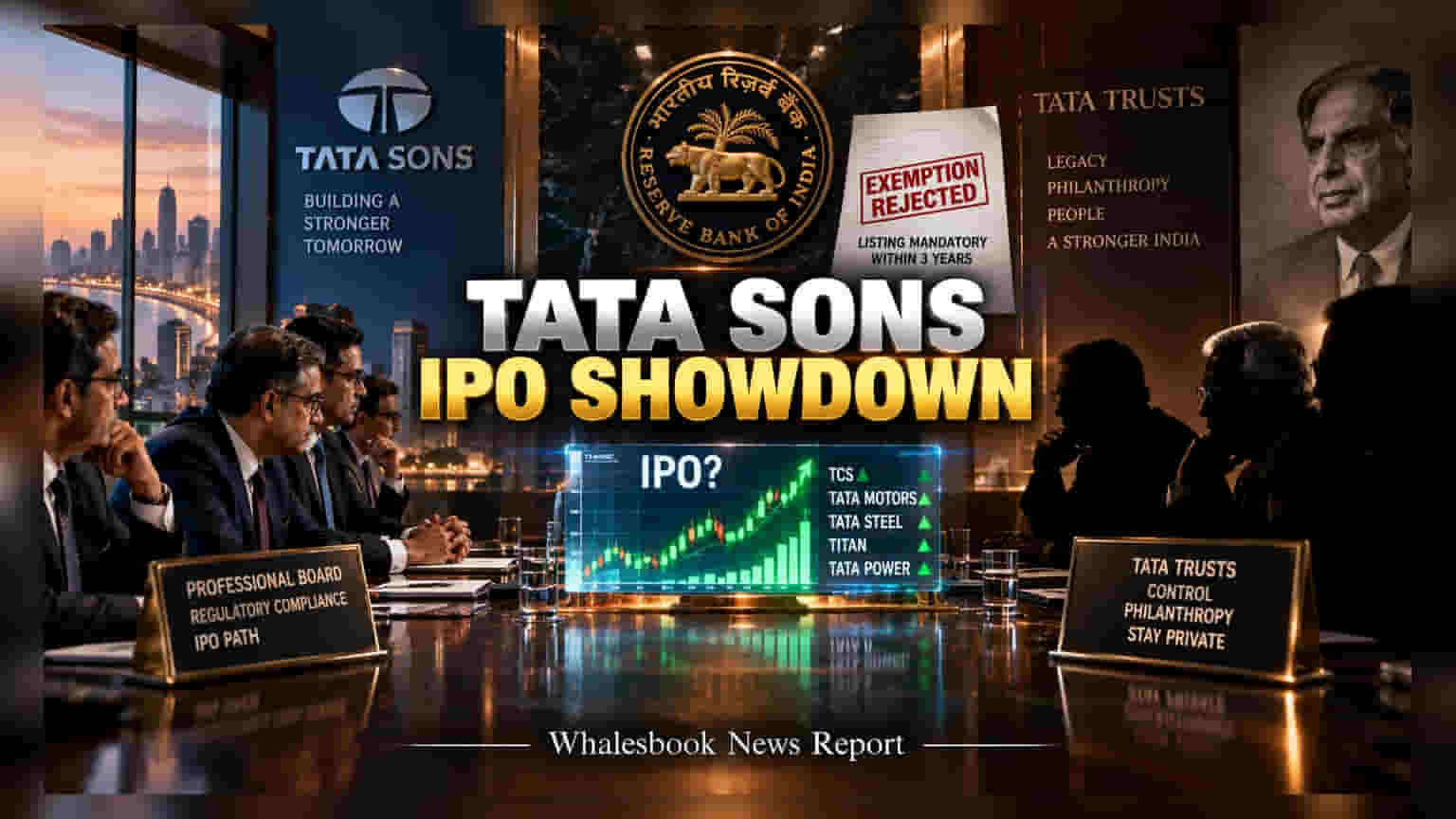
The Reserve Bank of India has rejected Tata Sons' plea for an exemption from mandatory public listing, classifying the group holding company as an 'Upper Layer' NBFC. This regulatory mandate has sparked a confrontation between the board and majority shareholder Tata Trusts. Investors should note that the internal power struggle and ongoing legal disputes create significant uncertainty regarding the company’s future governance and IPO timeline.
The Reserve Bank of India (RBI) has rejected Tata Sons' plea for exemption from mandatory public listing, classifying the group holding company as an 'Upper Layer' non-banking financial company (NBFC). Under the RBI’s scale-based regulations, companies in this category are required to list on stock exchanges within three years of being identified. This regulatory requirement has created a direct confrontation between the professional board, led by Chairman N Chandrasekaran, and the majority shareholder, Tata Trusts.
The board is focused on regulatory compliance, which would require an initial public offering (IPO). However, the Tata Trusts, which hold approximately 66% of Tata Sons, have historically maintained that the group holding company should remain private to preserve its philanthropic mission and control over the conglomerate. This divergence in objectives has turned a regulatory requirement into an internal governance struggle.
Adding to the complexity, the Charity Commissioner has frozen the voting powers of the Sir Ratan Tata Trust following internal disputes regarding trustee appointments. This legal intervention limits the Trusts' ability to influence board decisions, potentially reducing their resistance to the IPO process. Both the board and the Trusts are preparing for potential legal action, with both sides referencing the 2021 Supreme Court ruling in the Cyrus Mistry dispute to support their opposing legal positions.
For investors, this situation presents a unique set of challenges. Tata Sons acts as the holding company for the group’s major operating businesses, such as TCS, Tata Motors, and Tata Steel. A potential IPO would be a major event in the Indian equity markets. However, the ongoing friction between the board and the majority shareholder introduces significant uncertainty. Minority shareholders often watch for governance issues in such scenarios, where internal instability or conflicts over capital allocation can impact long-term stock performance.
The regulatory mandate from the RBI is legally binding, meaning the company must eventually comply with the listing requirement. Investors should track the next steps, including any new legal challenges, developments in the Charity Commissioner’s investigation into the Trusts, and any formal timelines provided by the company for the IPO. Until the power structure within the group is clearly settled, the uncertainty regarding future strategy and succession remains a primary factor for the market to monitor.