

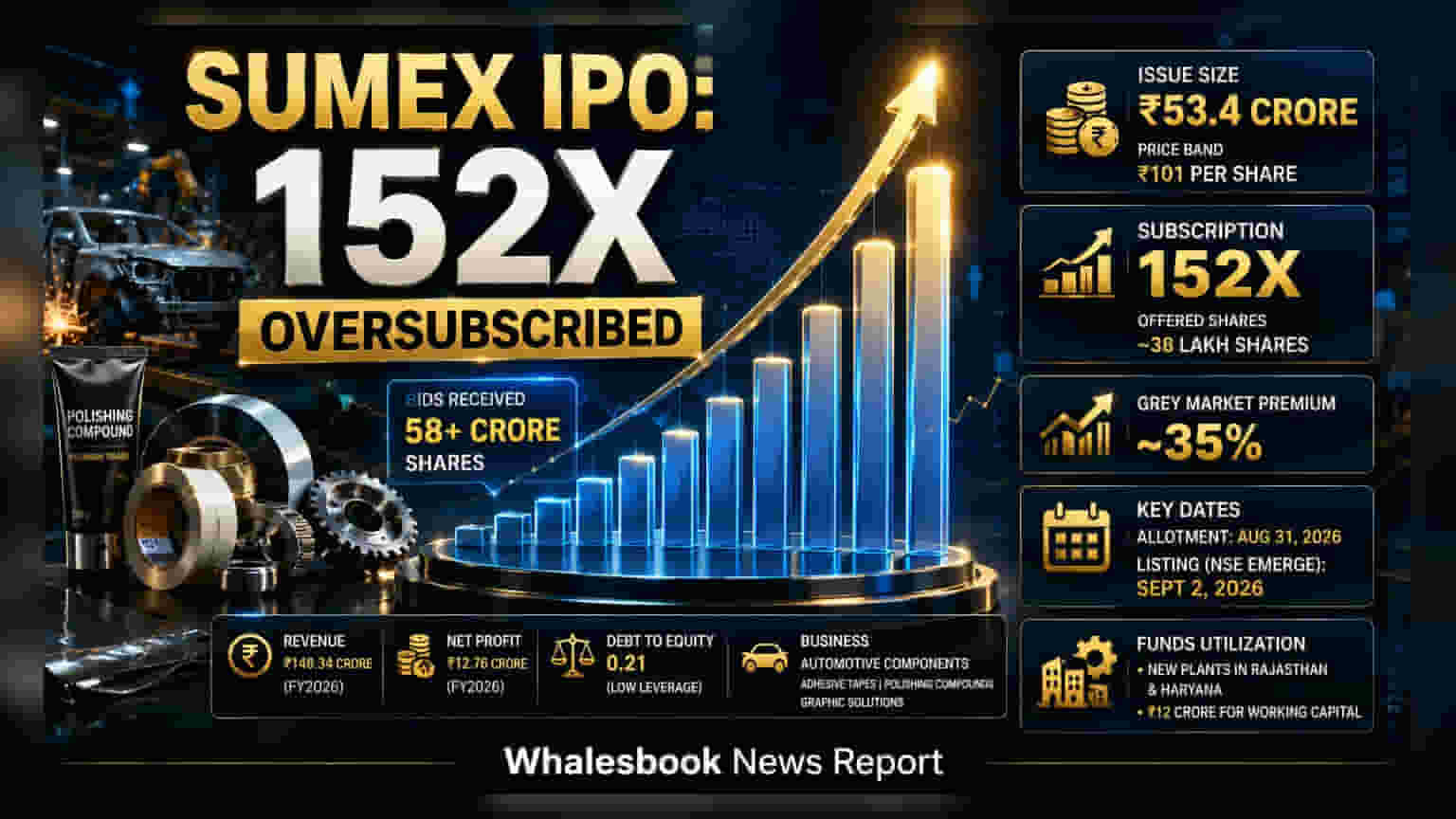
Sumex Engineering's SME IPO concluded with a massive 152-fold subscription, driven by strong interest from non-institutional investors. With the price fixed at ₹101 per share, the stock is trading at a 35% premium in the grey market, signaling high investor expectations ahead of its debut on the NSE Emerge platform on September 2.
Sumex Engineering, an automotive component manufacturer, closed its SME initial public offering on August 28, 2026, with an overwhelming response from the market. The issue was subscribed approximately 152 times, with investors placing bids for over 58 crore shares against an offer of roughly 38 lakh shares. The company successfully raised ₹53.4 crore through the issue, with the price finalized at the upper band of ₹101 per share.
The strong demand has been reflected in the grey market, where the shares are trading at a premium of around 35%. This unofficial market price often serves as a gauge for how the stock might perform on its first day of trading. The company is scheduled to list its shares on the NSE Emerge platform on September 2, 2026.
Business Context and Financials
Sumex Engineering focuses on producing automotive supplies, including adhesive tapes, polishing compounds, and specialized graphic solutions. For the financial year 2026, the company reported revenue of ₹148.34 crore and a net profit of ₹12.76 crore. A key strength noted in its financial structure is a low debt-to-equity ratio of 0.21, which provides the company with more financial flexibility as it looks to grow.
Expansion and Risk Factors
The capital raised from this public issue is intended to support the company's expansion strategy. Funds have been specifically earmarked for setting up new manufacturing facilities in Rajasthan and Haryana. Additionally, ₹12 crore will be utilized to bolster working capital, which helps ensure the company has enough cash on hand to manage its day-to-day operations during this period of growth.
While the subscription numbers indicate strong interest, investors should consider the inherent business risks. The company operates entirely within the automotive component space, meaning its performance is tied closely to the health of the broader auto industry. Any downturn in vehicle demand or shifts in manufacturing technology could impact its sales. Furthermore, the business is working capital intensive, meaning it needs to closely manage its inventory levels and the time it takes to collect payments from customers. Intense competition from both local and multinational rivals in the auto components sector also remains a factor to watch.
Following the close of the bidding window, investors can expect the finalization of share allotment around August 31, 2026. The key monitorable for shareholders will be the company’s ability to successfully execute its capacity expansion plans while maintaining its profit margins in a competitive industry.