 Whalesbook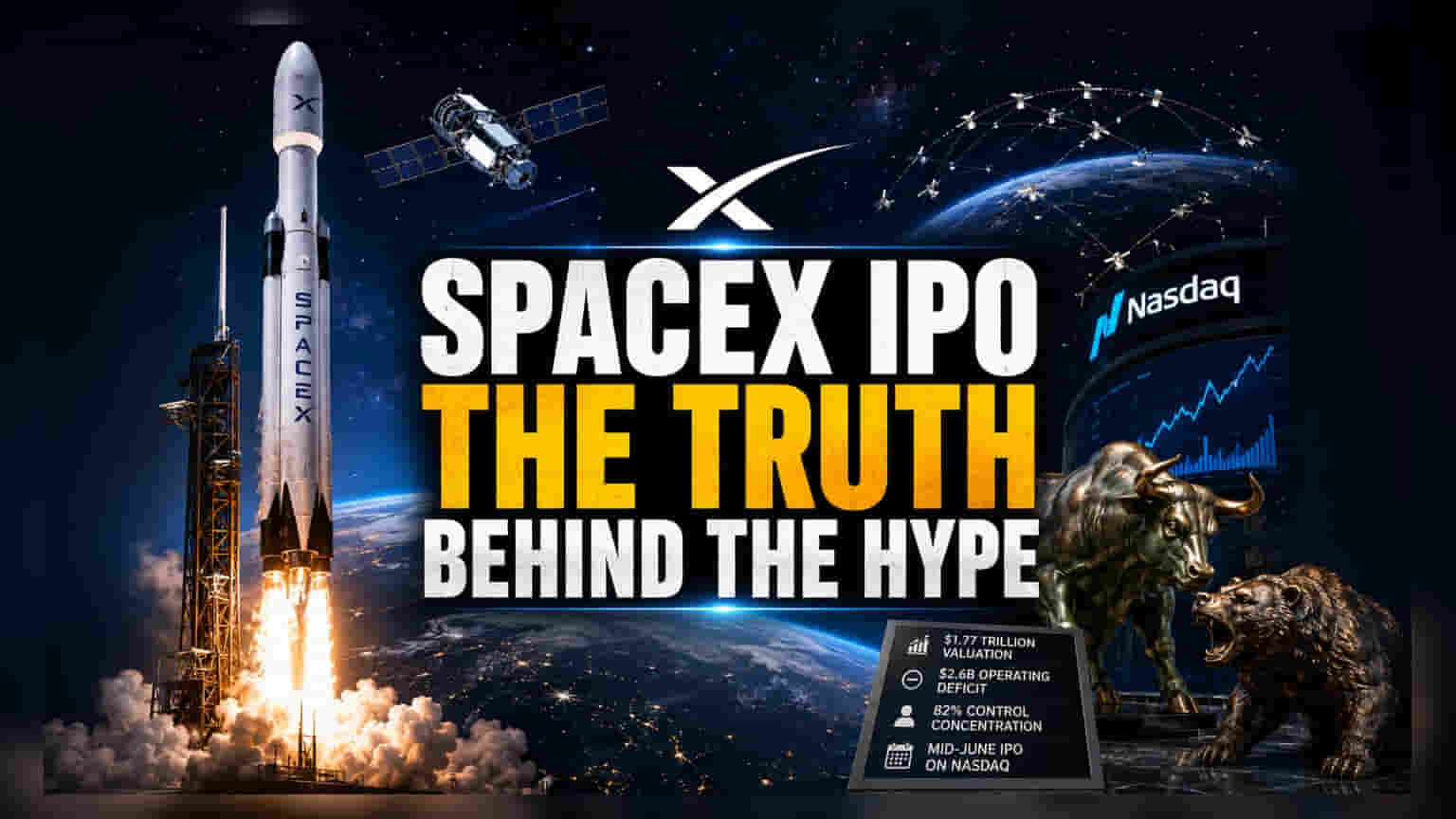


The Valuation Disconnect
The market’s appetite for the upcoming SpaceX listing remains intense, yet the $1.77 trillion valuation demands scrutiny. By bypassing the traditional price-range disclosure in favor of a fixed $135 share price, the firm has effectively neutralized traditional price discovery mechanisms. This move forces institutional investors to bet on the company's long-term dominance in orbital launch services and the Starlink satellite network rather than current fundamental metrics. Unlike established aerospace peers such as Lockheed Martin or Northrop Grumman, which prioritize steady dividend yields and government-contract-backed stability, SpaceX is pricing itself on the assumption of infinite growth in the high-risk, capital-intensive deep space sector.
The Operational Reality
Financial disclosures indicate that the underlying business remains significantly cash-flow negative, with a $2.6 billion operating deficit reported on $18.7 billion in annual revenue. This confirms that the firm’s aggressive expansion into Starlink and xAI infrastructure requires constant capital injection. Market analysts are focused on the firm's ability to transition from a capital-consuming entity to a self-sustaining one, particularly as infrastructure maintenance costs for its LEO constellation escalate. While the firm leads in launch volume and reusable rocket technology, the transition to a public entity introduces rigorous quarterly reporting requirements that may clash with the company’s history of prioritizing rapid, often high-failure-rate, development cycles.
The Forensic Bear Case
The governance structure surrounding this listing warrants caution. The concentration of voting power, with Elon Musk retaining over 82% of control, creates a potential disconnect between retail shareholder interests and corporate decision-making. Furthermore, the web of capital flows between Tesla, SpaceX, and xAI—specifically the purchase of Megapack battery systems—creates a closed-loop economy that complicates independent valuation. Critics argue this circular movement of resources raises questions regarding arm's-length transaction transparency. Investors must also contend with the inherent regulatory volatility of the space sector, where reliance on government launch contracts provides both a floor for revenue and a ceiling for independent growth, should federal oversight tighten on the company's integrated AI and satellite operations.
Forward Guidance and Sector Impact
Goldman Sachs, alongside a syndicate of major banks, is steering the float toward a mid-June debut, but the broader market impact remains uncertain. Historical precedents for mega-cap tech IPOs suggest high initial volatility, with significant institutional rotation expected in the weeks following the listing. As the company prepares for its Nasdaq entry, the critical factor for investors will be how the firm balances its reliance on SpaceX for proprietary hardware against the capital demands of its AI division, xAI, in an increasingly saturated satellite-internet marketplace.