

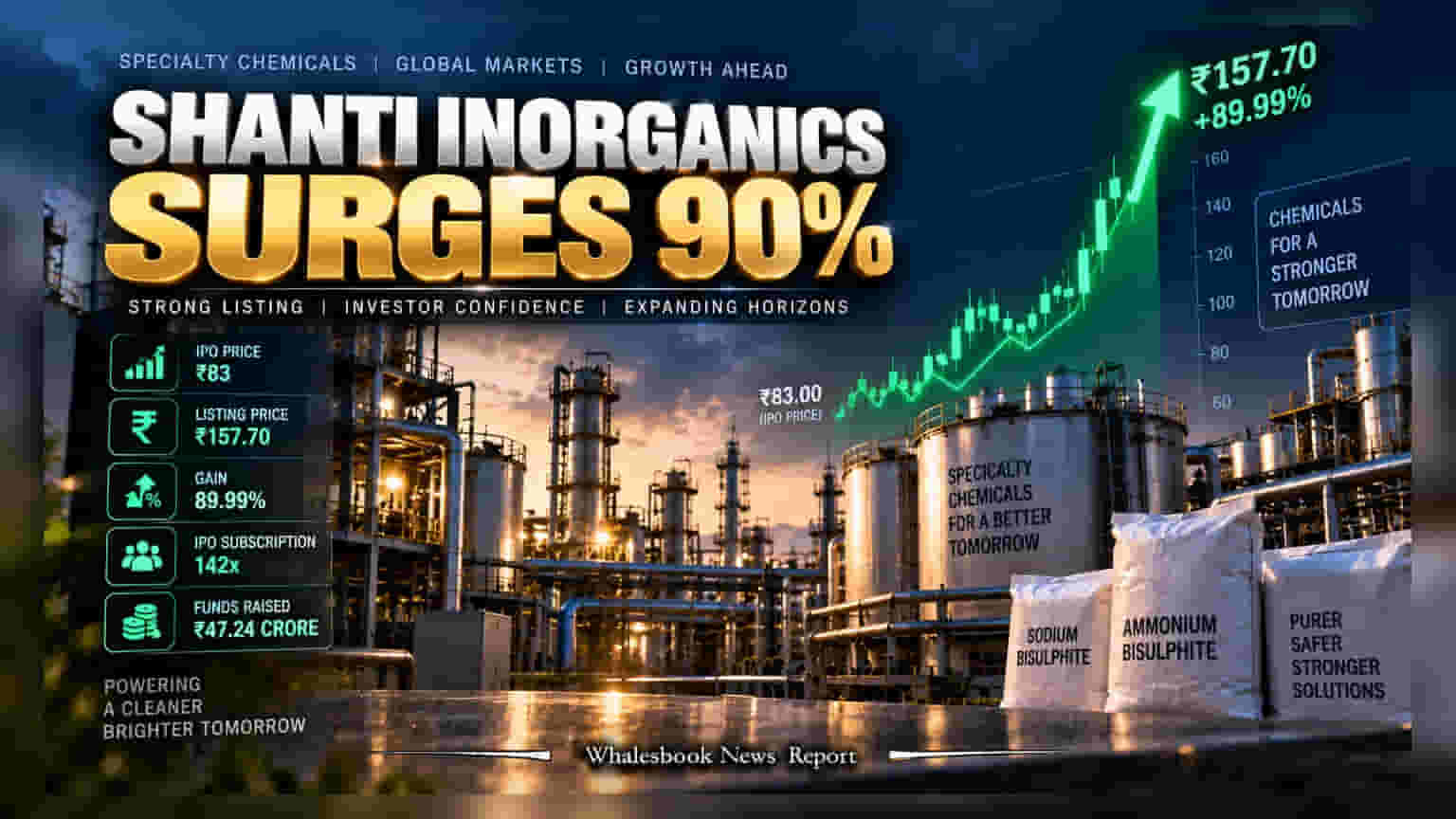
Shanti Inorganics made a strong debut on the NSE Emerge platform on September 7, 2026, opening at ₹157.70 against an IPO price of ₹83 per share. While the 90% listing gain highlights high investor appetite, the company faces monitorable risks including high debt, significant export dependence, and raw material cost sensitivity that shareholders should consider.
Shanti Inorganics debuted on the NSE Emerge platform on Monday, September 7, 2026, opening at ₹157.70. This represents a significant 89.99% premium over the initial public offering (IPO) price of ₹83 per share. The listing followed strong demand from investors, with the IPO being subscribed over 142 times during the bidding period.
The company raised ₹47.24 crore through this offering, which was entirely a fresh issue of 56.91 lakh shares. Because the IPO did not include an offer-for-sale by existing shareholders, the capital raised is intended to fund the company’s own business needs, such as working capital or expansion projects. The company operates in the specialty chemicals sector, manufacturing sulphur-based inorganic chemicals such as sodium bisulphite and ammonium bisulphite. These chemicals are used as key inputs in sectors like pharmaceuticals, food and beverages, and water treatment. Its manufacturing footprint is centered in Gujarat, with facilities in Vatva and Bavla.
Financial and Operational Context
While the listing day performance was robust, the company’s long-term financial health involves specific monitorable factors. The company carries a notable level of debt, with a debt-to-equity ratio of approximately 98%. High leverage can limit financial flexibility, as a portion of profits must be directed toward servicing interest and principal repayments. This can become a point of concern if operational cash flow faces pressure.
Furthermore, Shanti Inorganics is significantly exposed to global markets, with a substantial portion of its revenue—often reported between 30% and 50%—derived from international sales. This makes the company vulnerable to risks beyond its control, such as currency fluctuations, changes in international trade policies, and shifts in global demand for its chemical products.
Managing Margins and Governance
Profit margins for specialty chemical manufacturers are often sensitive to fluctuations in the cost of raw materials, particularly sulphur. If global commodity prices rise and the company cannot pass these costs on to its customers, profit margins may come under pressure. Investors often track how well a company manages these cost cycles to protect its bottom line.
Additionally, corporate governance is a key area for market observers. As of the time of the listing, the company’s board included a minority of independent directors. Market participants often look for a higher proportion of independent oversight to ensure balanced decision-making and management accountability. Moving forward, the company’s ability to manage its debt, maintain its international market share, and navigate raw material price volatility will be central to its operational performance.