

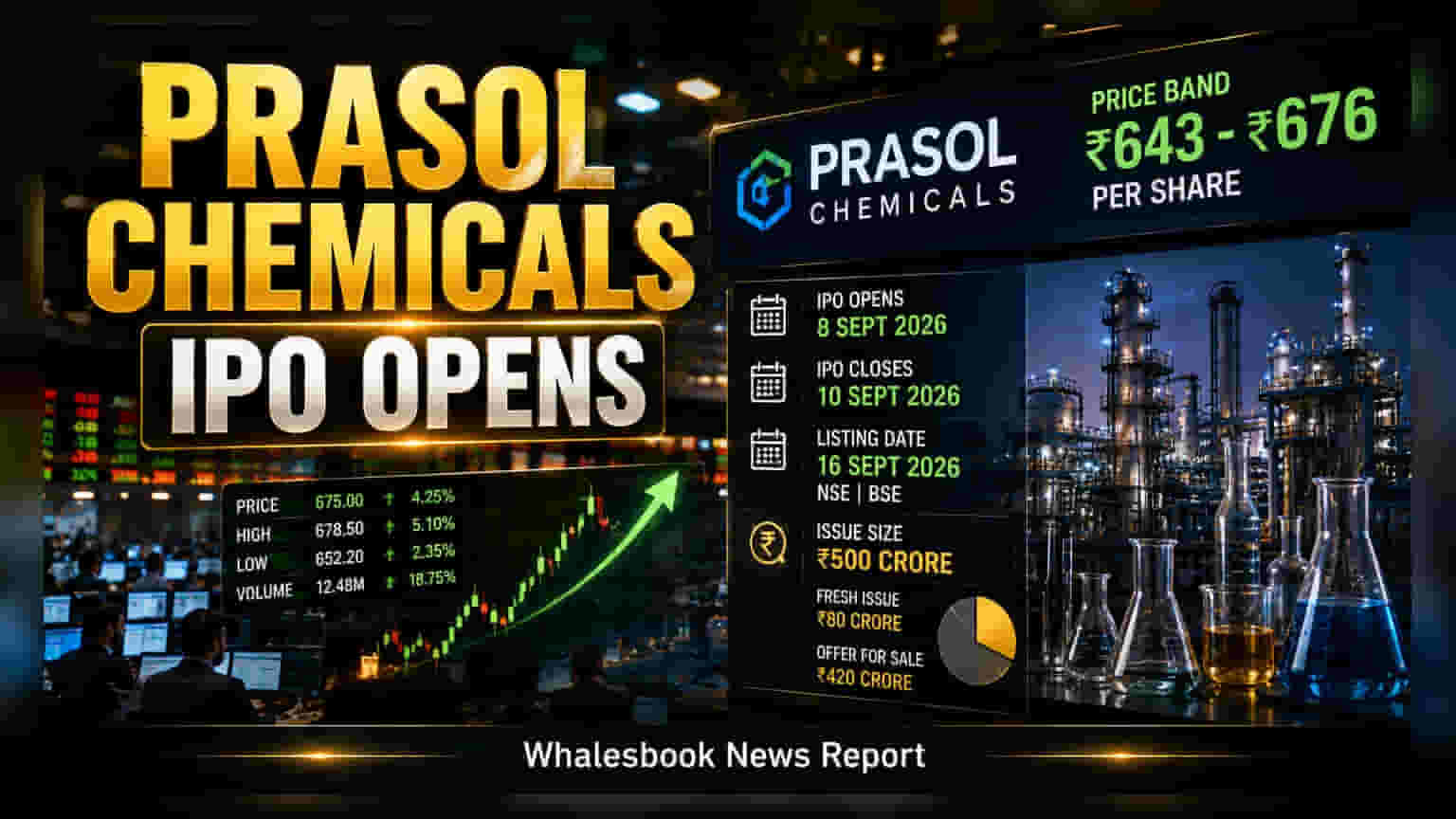
Prasol Chemicals has announced a price band of Rs 643-676 per share for its Rs 500-crore initial public offering. The subscription window opens on September 8, 2026, and closes on September 10, 2026. The company intends to use part of the fresh proceeds to reduce its debt, which remains a key factor for investors assessing the business.
Maharashtra-based specialty chemical manufacturer Prasol Chemicals has announced a price band of Rs 643 to Rs 676 per share for its upcoming initial public offering. The Rs 500-crore public issue is scheduled to open for subscription on September 8, 2026, and will close on September 10, 2026. The shares are expected to be listed on the NSE and BSE on September 16, 2026.
IPO Structure and Debt Repayment
The total offering consists of a fresh issue of shares worth Rs 80 crore and an offer for sale of Rs 420 crore by existing shareholders. A significant portion of the strategy involves improving the balance sheet; the company has earmarked Rs 60 crore from the fresh issue proceeds to pay down its existing debt. As of mid-July 2026, the company’s debt stood at Rs 343.7 crore. By using IPO funds to reduce these borrowings, the company aims to lower its interest expenses and potentially improve its financial health.
Business Model and Market Context
Prasol Chemicals maintains a portfolio of 150 products, with a primary focus on acetone- and phosphorus-based specialty chemicals. These products serve various industries, including pharmaceuticals, agrochemicals, and industrial coatings. The company competes in a sector with several established domestic players, including Aarti Industries, Vinati Organics, Laxmi Organic Industries, and Privi Speciality Chemicals. For the fiscal year ending March 2026, the company reported revenue of Rs 1,232.5 crore and a profit of Rs 83.1 crore.
Potential Risks and Monitorables
Like many companies in the chemical sector, Prasol Chemicals faces specific risks that investors often track. One key factor is customer concentration, as a significant portion of the company’s revenue has historically come from its top 10 customers. Any change in demand or the loss of a major client could impact revenue. Additionally, the company is subject to operational risks, such as the potential for manufacturing shutdowns or disruptions. Because the chemical industry is sensitive to global commodity prices, the company’s ability to manage its input costs and maintain profit margins remains an important area of focus. Investors may monitor how the company uses its reduced debt to drive future growth and whether it can effectively diversify its client base in the coming years.