

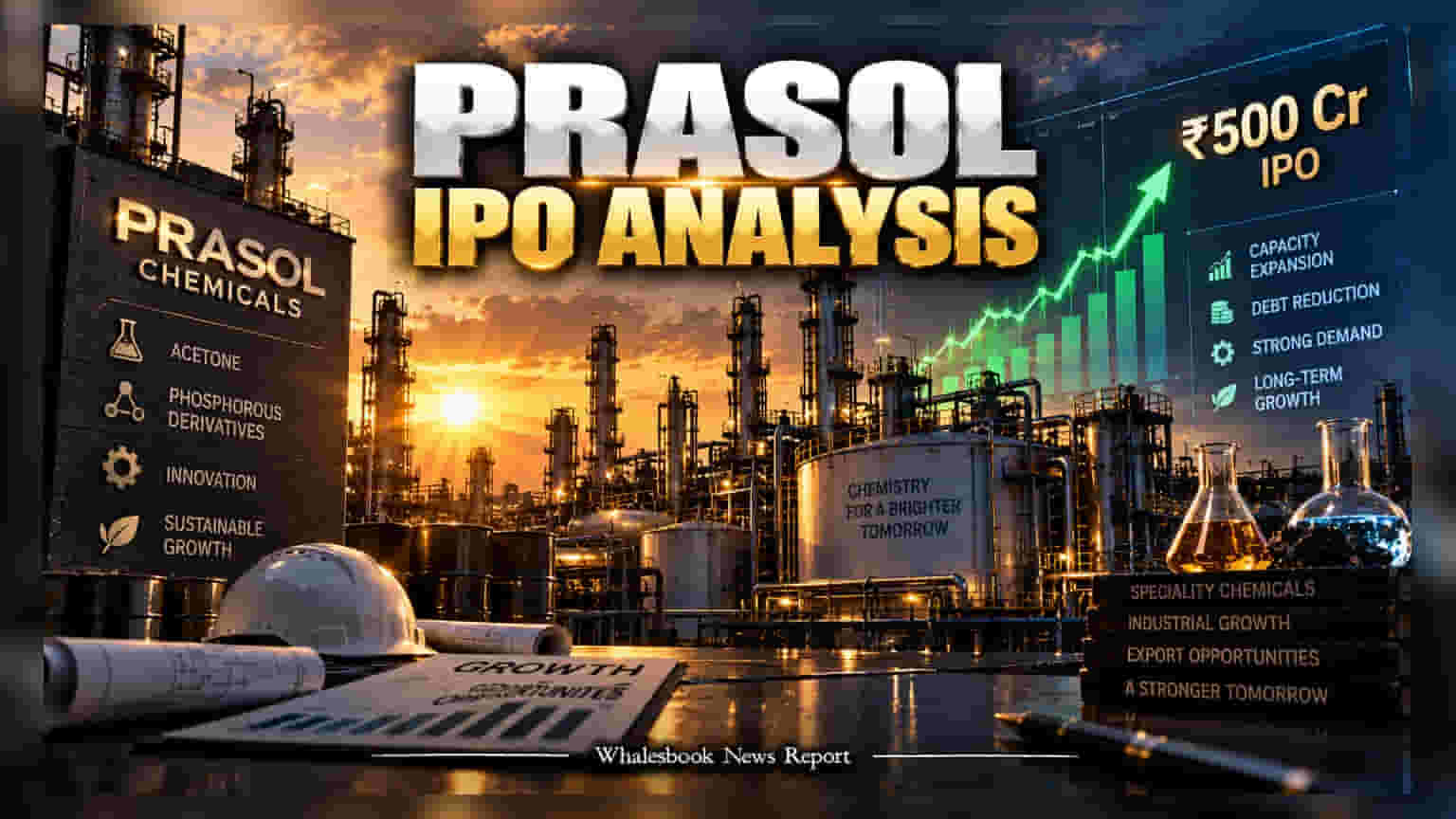
Prasol Chemicals' ₹500 crore IPO is open for subscription from September 8 to September 10, 2026, with a price band of ₹643–₹676. While the company shows steady revenue growth, investors should weigh the high Offer for Sale component, operational history, and premium valuation against sector peers.
Prasol Chemicals has launched its public offering today, September 8, 2026, aiming to raise ₹500 crore from the Indian market. The issue will remain open for subscription until September 10, 2026, with shares priced in the range of ₹643 to ₹676. The company, which specializes in manufacturing acetone and phosphorous-based derivatives, is looking to list its shares on the BSE and NSE on September 16, 2026.
Financial performance indicates that the company has been on a growth path, reporting revenue of ₹1,237.85 crore and a profit after tax of ₹83.12 crore for the fiscal year 2026. Between FY24 and FY26, the company achieved an 18.6% compound annual growth rate in revenue, supported by increased production volumes. To provide further comfort to the issue, anchor investors were already allotted shares worth approximately ₹150 crore at the upper price band before the IPO opened to the public.
However, a critical aspect of this IPO is the composition of the funds being raised. Of the total ₹500 crore issue, only ₹80 crore is a fresh issue of shares, which the company intends to use to repay debt. The remaining ₹420 crore consists of an Offer for Sale (OFS), where existing shareholders are selling their stake. This means the majority of the proceeds will go to these selling shareholders rather than being invested back into the company for business expansion or new projects.
Operational and regulatory risks are also factors for potential investors to consider. The company operates facilities in Khopoli and Mahad. While the Khopoli plant has seen improvement, the Mahad facility—commissioned in 2020—has faced challenges, including a temporary shutdown following a gas leakage incident in 2023. Although utilization levels at Mahad are currently rising, the facility has yet to become EBITDA positive. Additionally, the company depends on imports for 66% of its raw material requirements, leaving it sensitive to currency fluctuations and global supply chain disruptions. Investors should also be aware of the company's past regulatory history with the Maharashtra Pollution Control Board regarding site closures.
Regarding valuations, the issue is priced at an implied EV/EBITDA multiple of roughly 29.3x. When compared to some industry peers like Excel Industries, which trade in the 14x–17x range, the valuation appears to be at a premium. As the company seeks to stabilize operations at its newer facility and reduce debt, the primary monitorables for shareholders will be the improvement in profit margins and the ability to maintain consistent production levels without further regulatory or operational setbacks.