

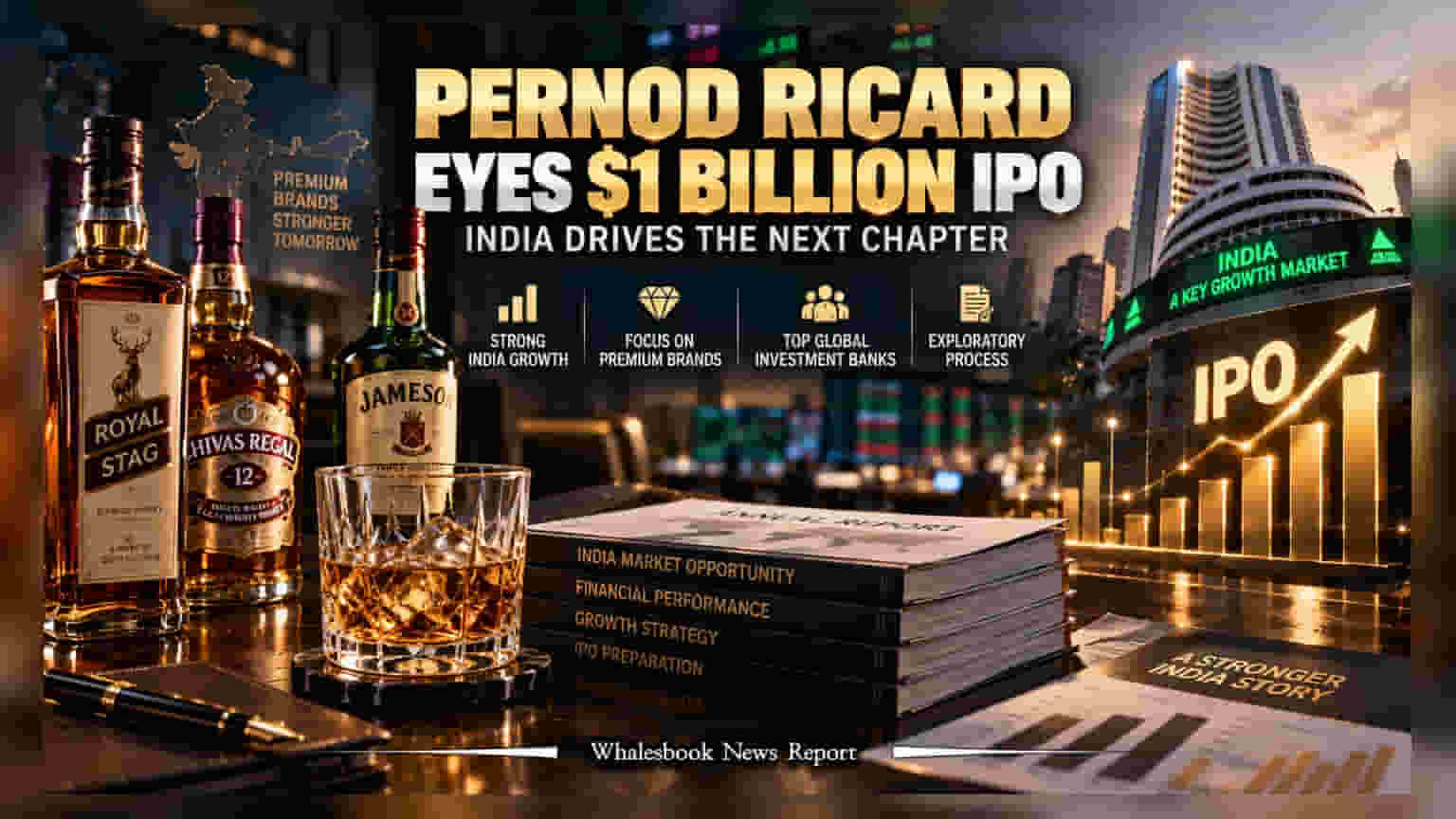
Global spirits major Pernod Ricard has appointed four investment banks to explore a potential $1 billion initial public offering for its Indian unit. While the company is preparing for a possible listing, management clarified that the process is in the early stages with no final decision made. This move highlights India's rising importance as the group's second-largest market.
Pernod Ricard, the owner of brands like Royal Stag and Chivas Regal, is taking formal steps toward a potential $1 billion initial public offering for its Indian subsidiary. To manage the complexities of this process, the company has engaged a syndicate of investment banks, including Kotak Mahindra Capital, Goldman Sachs, JP Morgan, and BofA Securities.
While this development marks a significant move, the company has stated that the process remains exploratory. Management continues to emphasize that the board is carefully weighing the decision against market conditions and the company’s internal requirements, meaning a final outcome is not yet confirmed.
The Shift Toward India
The move to explore a listing in India comes at a time when the country has become a vital growth driver for the group. India recently overtook China to become Pernod Ricard's second-largest market globally. In the financial year ending June 2026, the company reported 7 percent sales growth in the region, largely driven by a strong appetite for premium whisky.
This positive performance in India stands in contrast to the company’s global results, where organic sales declined by 3.9 percent in the same period. The parent company faced significant pressure in the US and China, which saw sales drops of 14 percent and 19 percent, respectively. Consequently, the Indian subsidiary is increasingly viewed as a key asset within the group’s portfolio.
Refining the Business for Growth
To prepare for a potential market entry, the company has been streamlining its operations. A recent example is the divestment of the Imperial Blue whisky brand to Tilaknagar Industries. This strategy reflects a broader move toward premiumization, where the company focuses more resources on higher-value products such as Jameson, Ballantine’s, and Chivas Regal, which typically offer better profit margins.
Investor Monitorables and Risks
Investors looking at the sector should note that the path to a public listing is not without challenges. Regulatory and excise policy changes in various Indian states can directly impact sales and margins. Furthermore, the company has recently faced scrutiny from local food safety regulators, which adds to the operational risk.
Management previously noted earlier in 2026 that an IPO was not an immediate solution for the parent company’s global debt management, reinforcing that any local listing would likely be driven by strategic growth rather than short-term cash needs. As the company continues its preparations, the market will track official updates regarding board approval, the final timeline for the offer, and the valuation targets set by the management.