

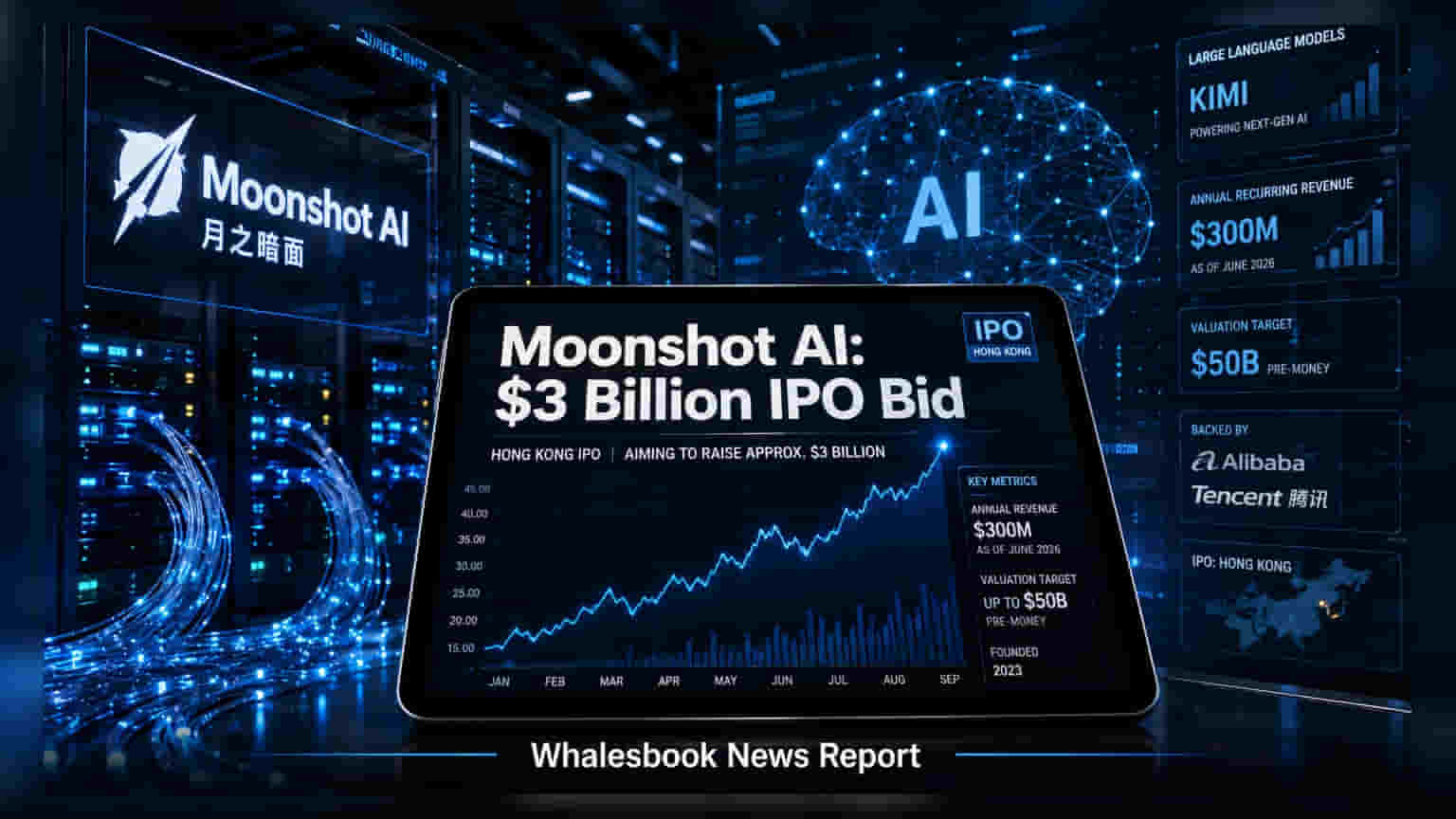
Beijing-based Moonshot AI, the developer of the Kimi large language model, has filed for a Hong Kong IPO aiming to raise $3 billion. The company is targeting a $50 billion valuation as it seeks to expand despite intense sector competition and complex geopolitical challenges. Investors are monitoring whether the firm can sustain its rapid revenue growth while navigating strict regulatory hurdles.
Moonshot AI, the Chinese startup behind the popular Kimi large language model, has officially initiated the process for a public listing in Hong Kong. The company is aiming to raise approximately $3 billion through this initial public offering. This move marks a significant milestone for the firm, which has seen rapid expansion since its inception in 2023, bolstered by backing from major investors including Alibaba and Tencent.
To prepare for this listing, Moonshot AI has undergone a notable corporate restructuring. The company has shifted from an offshore red-chip framework to an onshore China domicile. This change was a prerequisite to satisfy regulatory requirements for the public offering. In the lead-up to the IPO, the firm is also reportedly seeking a pre-money valuation of up to $50 billion during its final private funding round.
Financial performance will be a primary focus for potential investors. As of mid-June 2026, the company reported an annual recurring revenue of $300 million. While this figure demonstrates strong market demand for its AI technology, the company operates in a capital-intensive industry where maintaining that growth requires heavy spending on computing infrastructure.
However, the path to a successful public offering involves navigating several material risks. The generative AI sector is highly competitive, and Moonshot AI faces pressure from domestic peers like DeepSeek and Z.AI. Additionally, the company must manage complex geopolitical challenges. There has been ongoing scrutiny regarding the company's access to high-end hardware, specifically chips manufactured by Nvidia, which are essential for developing and maintaining sophisticated AI models. Any restriction on importing these components could impact the company's ability to innovate and scale.
Beyond hardware concerns, the company faces the broader regulatory environment associated with the Chinese technology sector. Historically, this sector has dealt with unpredictable regulatory shifts, which can impact operations and investor sentiment. The firm is currently working with investment banks, including Goldman Sachs, CICC, and Deutsche Bank, to manage the offering process. The final success of the IPO will depend on regulatory clearances and broader market appetite for tech listings in Hong Kong. Investors will likely track the company’s progress in maintaining its revenue growth, securing necessary computing resources, and navigating these multifaceted operational and regulatory risks.