

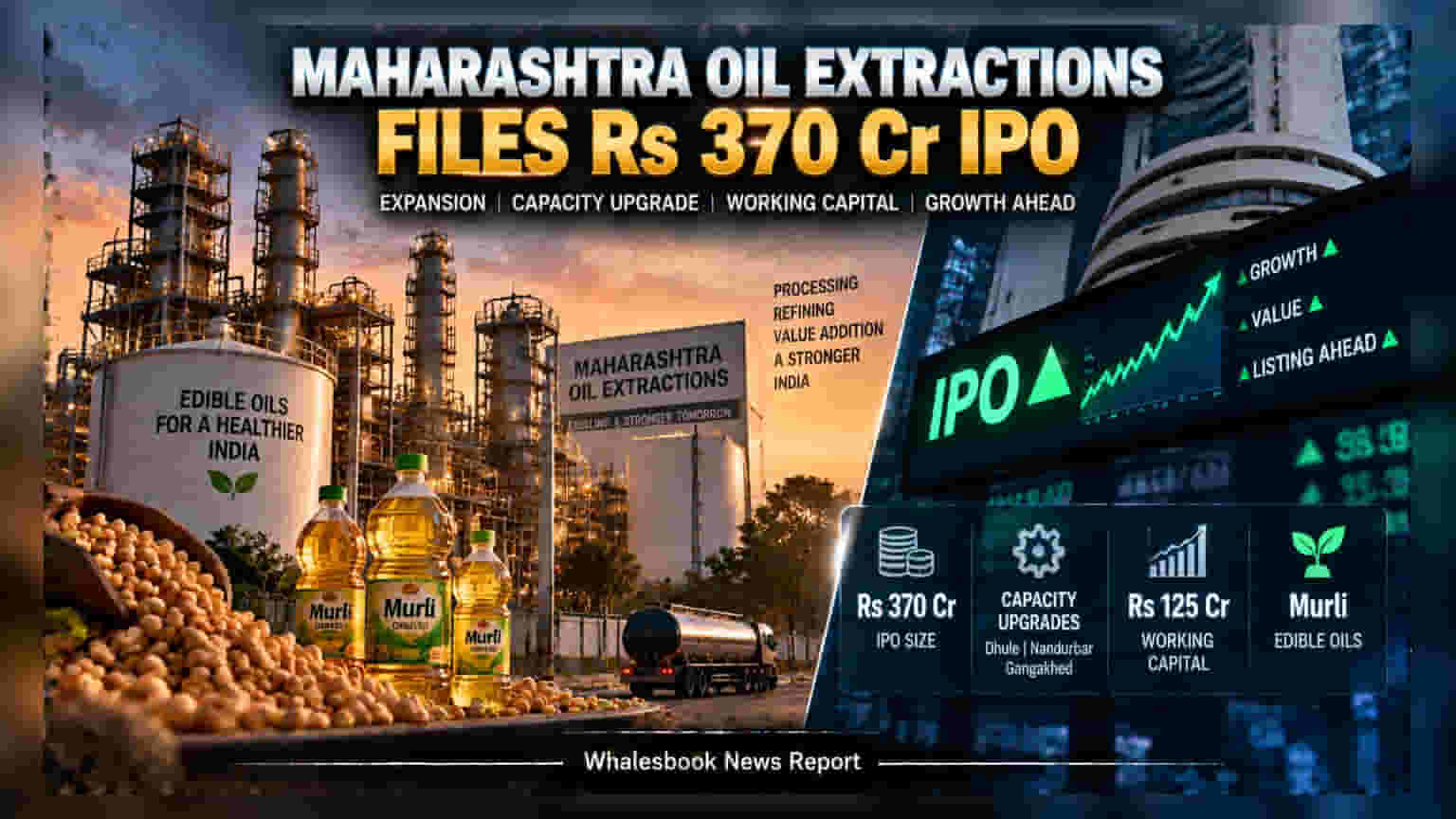
Maharashtra Oil Extractions has submitted draft papers to SEBI for a Rs 370 crore IPO, aiming to fund plant upgrades and working capital. The soybean processor and edible oil maker, which owns the 'Murli' brand, reported revenue of Rs 2,211.5 crore for fiscal year 2026. Investors may look at the company's profit margin trend and past credit rating disclosures as the review process begins.
Maharashtra Oil Extractions has officially initiated its journey to the public market by filing draft red herring prospectus documents with the Securities and Exchange Board of India (SEBI). The company plans to raise Rs 370 crore through a mix of a fresh share issue and an offer-for-sale, where existing promoters will sell 2.14 crore shares. This move is part of a broader strategy to scale operations and address working capital needs.
Expansion and Fund Usage
The firm, which processes soybeans and manufactures edible oils under the 'Murli' brand, intends to direct a significant portion of the IPO proceeds toward its manufacturing footprint in Maharashtra. Planned investments include Rs 94 crore for capacity upgrades at its Dhule facility, Rs 13.8 crore for the Nandurbar unit, and Rs 19.4 crore for improvements at the Gangakhed plant. Additionally, the company has allocated Rs 125 crore for general working capital, which is crucial for managing the inventory-heavy nature of the edible oil business.
Financial Performance and Margin Pressure
For the fiscal year ending March 2026, Maharashtra Oil Extractions reported revenue of Rs 2,211.5 crore, reflecting a 17.4 percent increase from the previous year. While the top-line showed growth, profitability indicators displayed a different trend. Consolidated net profit for the same period stood at Rs 86.2 crore, a slight decline from Rs 87.1 crore a year earlier. Furthermore, EBITDA margins compressed by 70 basis points to 5.97 percent. The company attributed this tightening of margins to operational cost pressures, highlighting a challenge that often affects companies in the commodity-linked edible oil sector.
Business Risks and Market Context
Investors evaluating the upcoming offer may want to consider several specific business risks. The company operates in a highly competitive sector, facing established players such as Gujarat Ambuja Exports and Manorama Industries. The business is also exposed to agro-climatic risks, as soybean availability and prices directly impact raw material costs. Fluctuations in these commodity prices can quickly put pressure on profitability.
Another point that stakeholders often monitor is transparency and governance history. Historical records indicate that the company has previously experienced periods of non-cooperation with credit rating agencies, such as an instance involving ICRA in 2020. Such disclosures are part of the standard review process for IPOs and help investors understand the company's past engagement with external financial watchdogs.
With IDBI Capital Markets & Securities, Dolat Finserv, and Elara Capital steering the process, the next major milestone will be the regulator's response to the draft filing. A potential pre-IPO placement of up to Rs 25 crore is also on the table, which, if executed, would adjust the final size of the fresh issue. Market participants will likely track updates on SEBI’s observations and the company’s management commentary on margin recovery strategies as the listing process moves forward.