

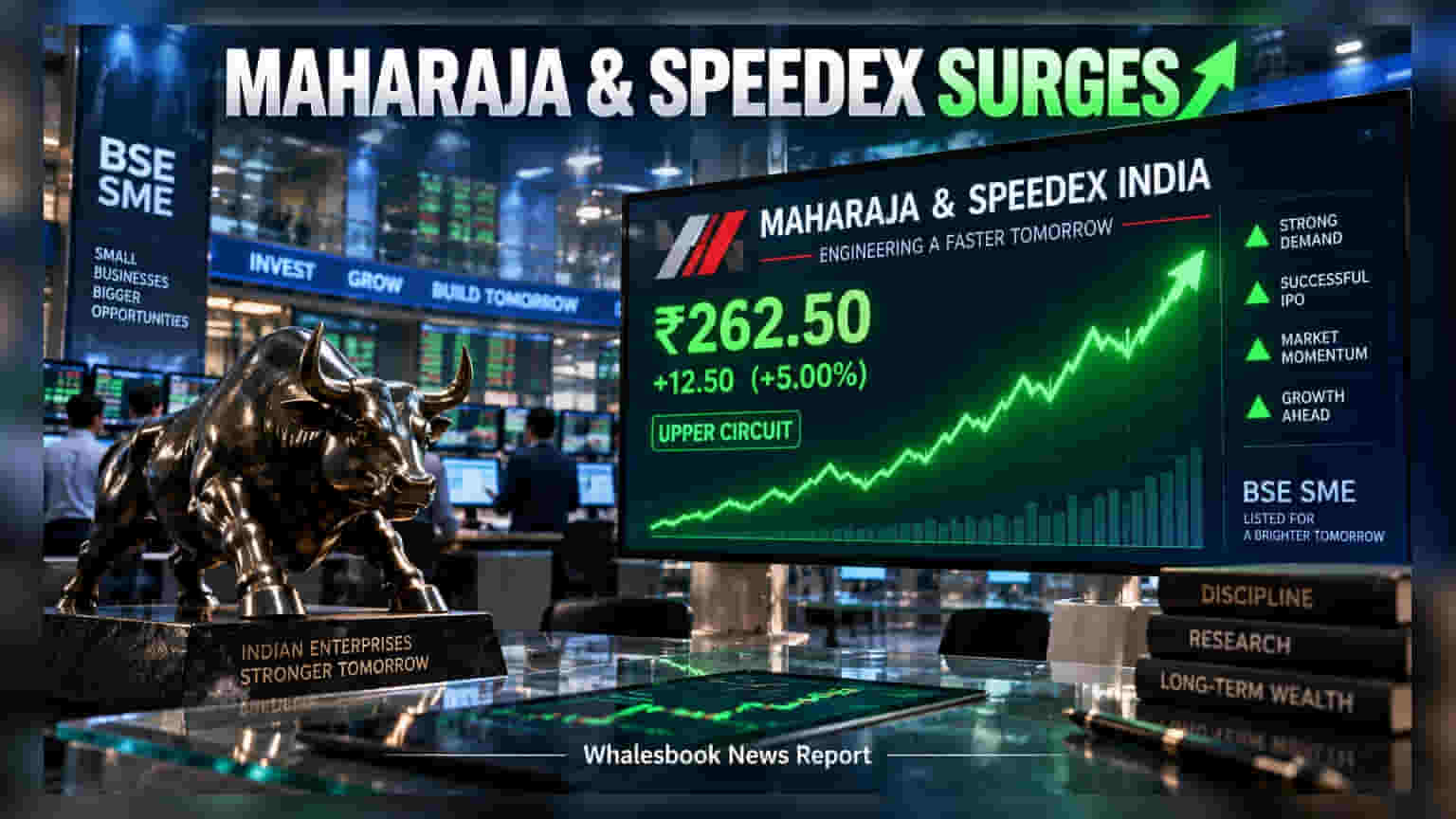
Shares of Maharaja & Speedex India hit the 5% upper circuit at ₹262.50 on the BSE SME platform on Friday, building on a strong 34% listing premium. The IPO was subscribed over 32 times, reflecting healthy investor appetite during the initial offering.
Maharaja & Speedex India shares are trending higher, hitting the 5% upper circuit limit on Friday to reach ₹262.50. This performance continues the momentum from the company’s recent debut on the BSE SME platform, where the stock opened at ₹250, marking a 34% gain over its initial public offering (IPO) price of ₹186 per share.
The company’s IPO, which raised ₹80.13 crore, generated significant attention from various investor categories. The issue saw an overall subscription of 32.41 times. Demand was led by qualified institutional buyers, who subscribed to their portion 48.82 times, while non-institutional investors and retail investors followed with subscription rates of 40.32 times and 19.65 times, respectively. This interest was supported by a pre-listing grey market premium of 15%.
For investors observing this movement, it is important to understand the nature of SME (Small and Medium Enterprise) listings. While a rising stock price and upper circuits can signal strong buyer demand, SME stocks can experience higher volatility than mainboard companies. Because these stocks often have lower trading volumes, it may be more difficult to buy or sell large quantities of shares quickly. The "upper circuit" status indicates that buyer demand significantly outweighs the number of shares available for sale at that price level for the day.
As the company settles into the secondary market, the focus for shareholders will shift to financial performance. The sustainability of this stock movement will likely depend on the company's ability to show consistent earnings growth in upcoming quarterly results. Investors may track the company's operational performance, cash flow, and debt management to determine if the valuation remains supported by the business fundamentals. Furthermore, monitoring liquidity—the ease of trading the stock—is essential, as lower volumes in the SME segment can lead to wider price swings compared to larger, more liquid companies.