

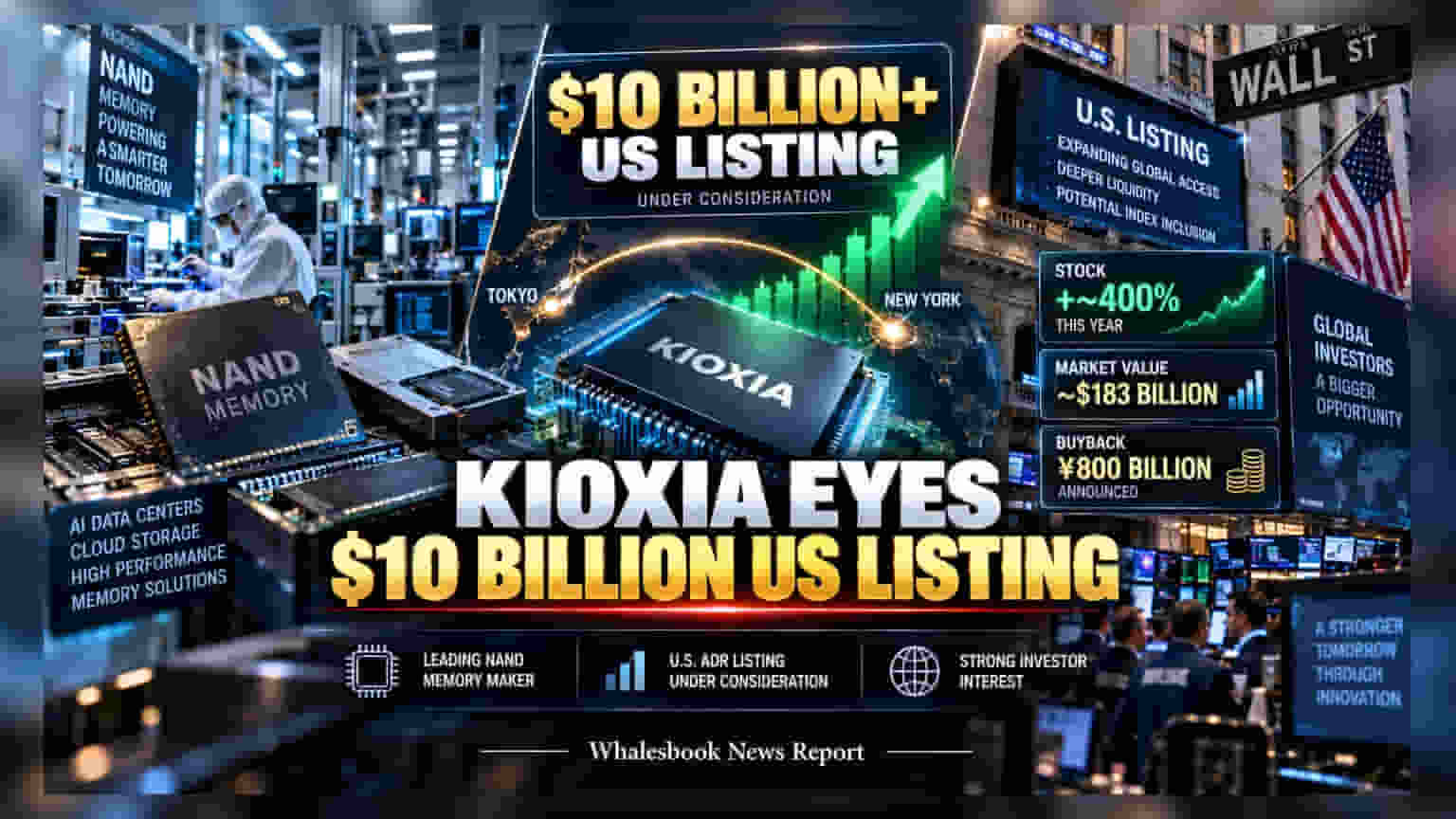
Japanese memory-chip maker Kioxia is exploring a $10 billion U.S. listing via American Depositary Receipts to boost liquidity. While the stock saw massive gains earlier this year, it has since experienced a notable pullback amid sector uncertainty. Investors are now watching how broader memory-chip cycles and AI-driven demand will shape the timing and viability of this potential offering.
Kioxia Holdings is currently evaluating a potential $10 billion fundraising effort through a listing of American Depositary Receipts (ADRs) in the United States. The Japanese NAND memory-chip manufacturer has reportedly held preliminary discussions with major financial institutions, including Bank of America, Goldman Sachs, and JPMorgan, regarding this move. The company has officially confirmed it is preparing for such a listing, though it noted that the schedule and specific method remain undecided.
The primary goal of this potential listing is to improve liquidity and provide a more direct path for U.S.-based investors to trade the stock. By moving toward an ADR program, Kioxia aims to reduce the reliance on its Tokyo-listed shares. Additionally, industry observers note that a U.S. listing could potentially open doors for inclusion in semiconductor-focused stock indices, which often attracts passive and institutional capital.
Volatility follows 2026 surge
This development comes after a period of intense volatility for the company. Kioxia's shares saw a significant climb of nearly 400% earlier in 2026, a rally fueled by the market's enthusiasm for companies linked to the artificial intelligence hardware supply chain. However, this momentum has since cooled, with the stock experiencing a substantial correction from its June peaks. This pullback reflects a broader market shift, where investors have begun to question the sustainability of the rapid spending on AI computing infrastructure.
Sector risks and competition
For investors, the business success of Kioxia remains tied to the cyclical nature of the NAND flash memory market. While demand for data storage in AI data centers remains a key growth driver, the industry is prone to price swings and sudden shifts in inventory levels. Kioxia faces stiff competition from major global rivals such as Samsung and SK Hynix, who are also investing heavily in advanced memory technologies. Any slowdown in global tech spending or excess capacity in the memory market could pressure profit margins and dampen the appetite for a large share sale.
Because the fundraising plans are still in the preliminary stage, the final size, timing, and bank participation are subject to change based on market conditions. The company has previously signaled its interest in offering ADRs, but a successful entry will likely depend on whether the semiconductor market maintains its stability and whether U.S. institutional investors perceive the valuation as attractive after the year's sharp price fluctuations. Investors may continue to track updates on the official filing timeline and management commentary regarding the company's long-term capital strategy.