

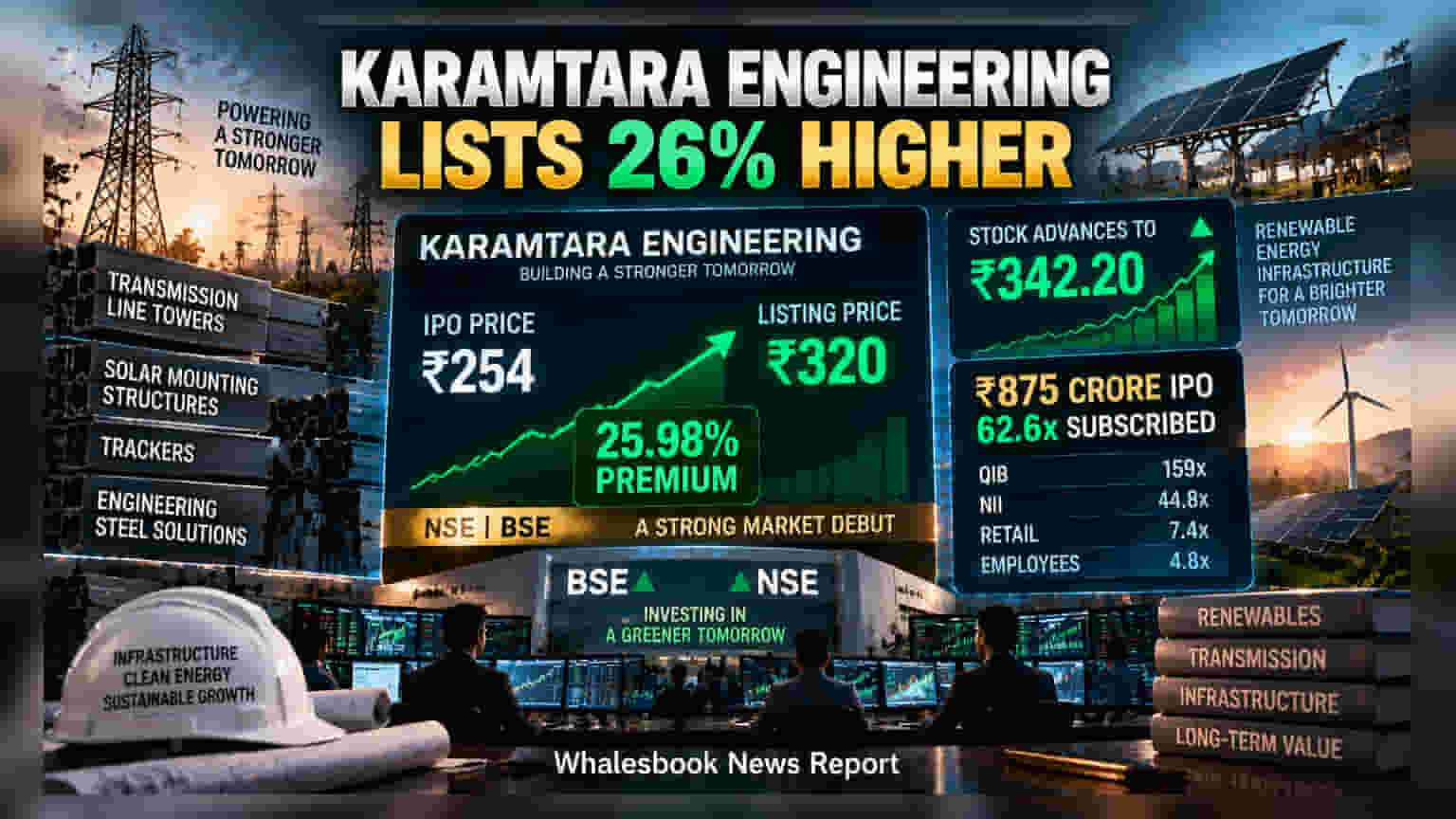
Karamtara Engineering shares made a strong debut on September 17, 2026, listing at ₹320 per share on the NSE and BSE. This represents a 25.98% premium over the final IPO price of ₹254. While the ₹875-crore offering saw massive demand, subscribed over 62 times, investors must now look beyond listing gains to evaluate the company's significant debt levels and thin profit margins in the steel fabrication sector.
Karamtara Engineering shares hit the trading floor on September 17, 2026, listing at ₹320 on the NSE and BSE. This 25.98% premium over the issue price of ₹254 was a surprise to many, as it comfortably outperformed the pre-listing unofficial grey-market signals which had predicted a gain of roughly 16% to 19%. Following the initial opening, the stock price climbed further to touch ₹342.20 during the session.
The ₹875-crore initial public offering (IPO) had drawn intense investor attention, closing with an overall subscription rate of 62.63 times. Institutional demand was particularly strong, with the QIB (Qualified Institutional Buyer) portion subscribed over 159 times, while non-institutional and retail investors also showed active participation.
Karamtara Engineering operates as a manufacturer of various engineering steel products, including solar mounting structures, trackers, and transmission line towers. This business model positions the company within the expanding renewable energy and power transmission infrastructure sectors in both domestic and international markets.
For investors holding the stock for the long term, the focus will now shift from the scarcity of the IPO to the company's operational reality. The financials reveal that the company carries a significant debt burden, with borrowings reaching approximately ₹1,030.13 crore as of fiscal year 2026. Managing this debt level while funding future growth will be a primary challenge for the management.
Furthermore, the company operates with EBITDA margins of around 11.55%. In the competitive steel fabrication and engineering business, these margins can be thin and are often sensitive to volatility in metal prices. Any unexpected rise in the cost of raw materials or a slowdown in the renewable energy sector could place pressure on the company's profitability.
The long-term performance of the stock will depend on how effectively the company can execute its order book and maintain its cost structure. Shareholders should keep a close eye on upcoming quarterly earnings reports for clarity on debt reduction, margin stability, and whether the company can maintain its growth trajectory amid sector-wide competition. The stock valuation will now be driven by earnings and operational performance rather than the initial excitement of the public offering.