

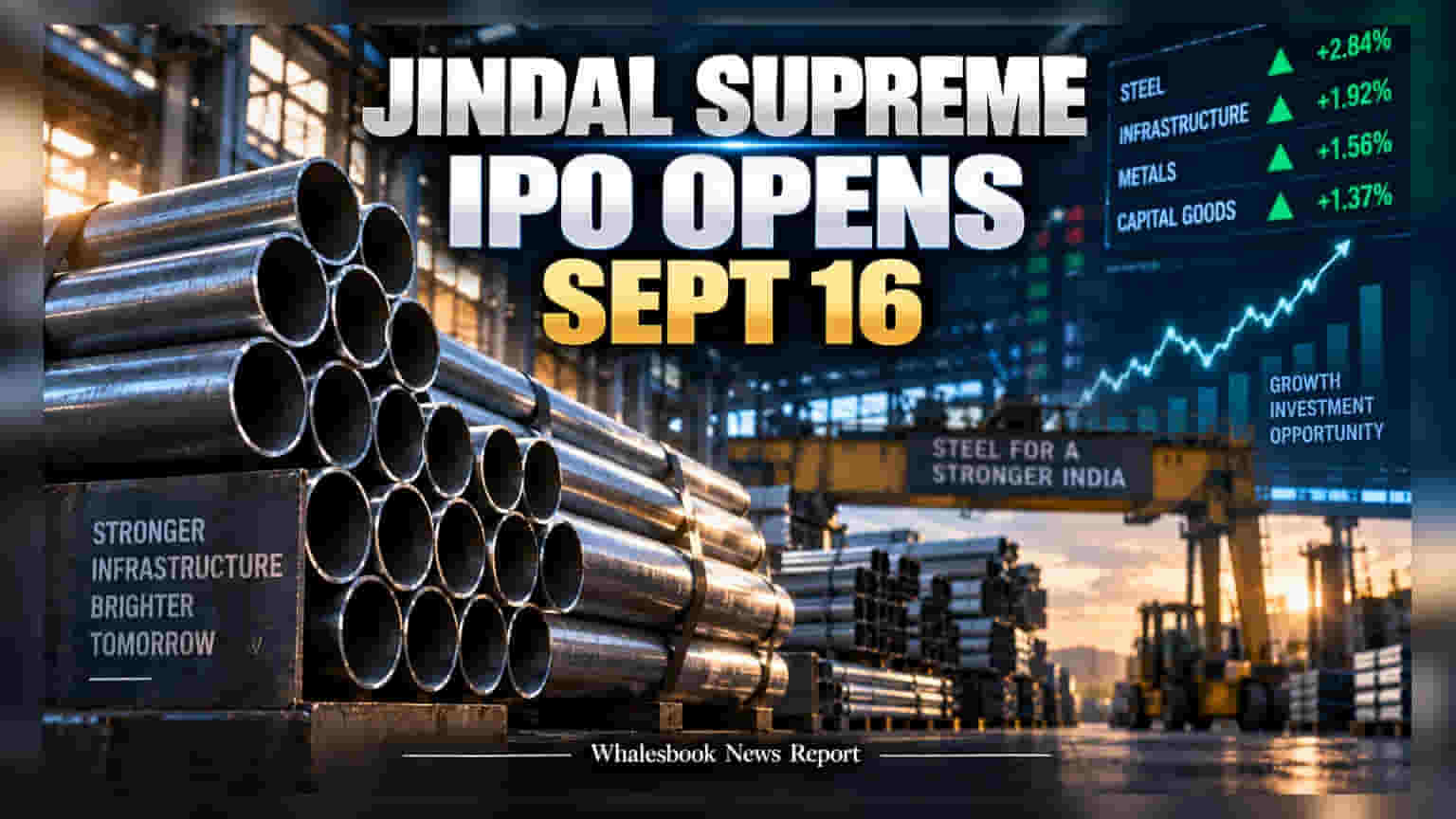
Jindal Supreme (India) Limited has set a price band of ₹88-93 per share for its initial public offering, which opens on September 16, 2026. The company aims to raise approximately ₹124.88 crore, with a significant portion dedicated to reducing its debt burden.
Jindal Supreme (India) Limited is set to enter the public market with its initial public offering scheduled to open on September 16, 2026. The subscription window will remain open for three days, closing on September 18, 2026. The company has fixed a price band of ₹88 to ₹93 per share for the issue, which is expected to list on the BSE and NSE on September 23, 2026.
Issue Structure and Objectives
The public offering consists of a fresh issue of 1.07 crore equity shares alongside an offer-for-sale (OFS) of 26.87 lakh shares held by promoter entity VVJ Enterprise. The total issue size stands at approximately ₹124.88 crore. The company intends to direct ₹77 crore from the fresh issue proceeds toward the repayment or pre-payment of outstanding borrowings. This focus on debt reduction is central to the company’s capital strategy ahead of the listing.
Financial Context
Jindal Supreme, which manufactures steel pipes and tubes for the infrastructure, water supply, and oil and gas sectors, reported revenue of ₹675.4 crore for the fiscal year ended March 2026, with a profit of ₹22.5 crore. The company maintained steady operations in the first quarter of the current fiscal year, reporting a profit of ₹8.28 crore on revenue of ₹190.94 crore for the period ending June 2026.
Market Position and Risks
The company operates in a competitive segment of the industrial steel market. It faces competition from listed entities such as Vibhor Steel Tubes, Sambhv Steel Tubes, and Hi-Tech Pipes. Investors may consider the company's debt position, with a debt-to-equity ratio of approximately 1.24 as of March 2026, as a key factor. Additionally, the company’s business is entirely domestic, meaning its revenue is tied to local demand. The company is also sensitive to fluctuations in the cost of raw materials, particularly hot-rolled coil (HRC) steel, which directly impacts profit margins. The final outcome for shareholders will depend on the company's ability to maintain demand and manage raw material costs effectively while working to lower its debt levels post-listing.