 Whalesbook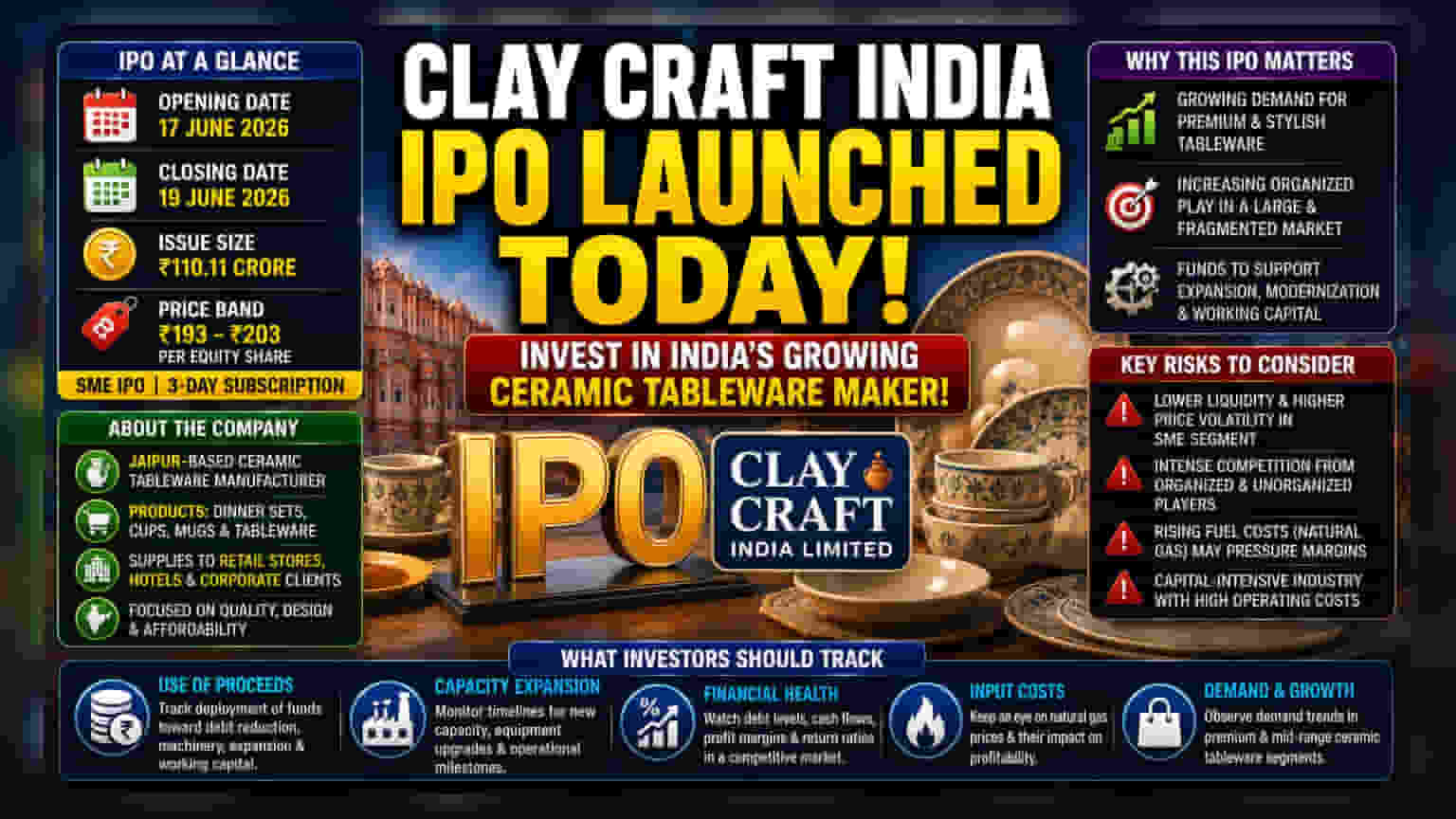


Jaipur-based Clay Craft India Limited has launched its Rs 110.11 crore SME IPO, open for subscription from June 17 to June 19, 2026. Priced between Rs 193 and Rs 203 per share, the company specializes in ceramic tableware. Investors should evaluate the company’s manufacturing capacity, raw material price sensitivity, and the inherent liquidity risks associated with SME-segment listings before committing capital.
What Happened
Ceramic tableware manufacturer Clay Craft India Limited has launched its Initial Public Offering (IPO) today, June 17, 2026. The company is seeking to raise Rs 110.11 crore through this Small and Medium Enterprise (SME) issue. The subscription window will remain open for three business days, closing on June 19, 2026. The price band for the shares has been fixed at Rs 193 to Rs 203 per equity share.
Business Context
Headquartered in Jaipur, Clay Craft India operates in the ceramic tableware manufacturing sector. The company primarily produces a range of ceramic products such as dinner sets, cups, and various tableware items. These products are supplied to both retail consumers and institutional clients, such as hotels and corporate offices. Understanding the business model requires looking at how the company manages its distribution network and how it competes against a large unorganized market that dominates much of the ceramic space in India.
SME IPO Risks and Considerations
Investors should approach SME IPOs with a specific mindset. Unlike mainboard IPOs, SME issues are often characterized by lower liquidity, meaning it can sometimes be more difficult to buy or sell large quantities of shares after listing. Furthermore, SME stocks can experience higher price volatility.
When reviewing an SME IPO, it is important for investors to look beyond the immediate listing excitement. Key areas to analyze include the company’s debt levels, its ability to maintain profit margins in a competitive market, and its historical cash flow generation. The ceramic industry is generally capital-intensive, requiring consistent spending on machinery and energy-efficient kilns.
Sector Pressure and Challenges
The ceramic industry faces specific pressures that investors should be aware of. The cost of fuel, particularly natural gas used in firing ceramic products, is a significant input cost that can directly impact profit margins. If gas prices rise or remain high, companies in this sector may see their margins come under pressure unless they have strong pricing power to pass these costs on to customers. Additionally, the industry deals with intense competition from both domestic peers and the unorganized sector, which often competes on price rather than brand or quality.
What Investors Should Track
For those evaluating the offering, the company’s prospectus provides critical data on where the raised funds will be used. Investors may want to track the intended use of proceeds, such as whether the money is going toward reducing debt, purchasing new machinery, or increasing working capital.
Monitoring the execution of these plans is vital. For instance, if the funds are for capacity expansion, the timeline for when this new capacity becomes operational will be important. Investors may also observe the management's commentary on demand trends for ceramic tableware, especially in the premium and mid-range segments where competition is often focused.