 Whalesbook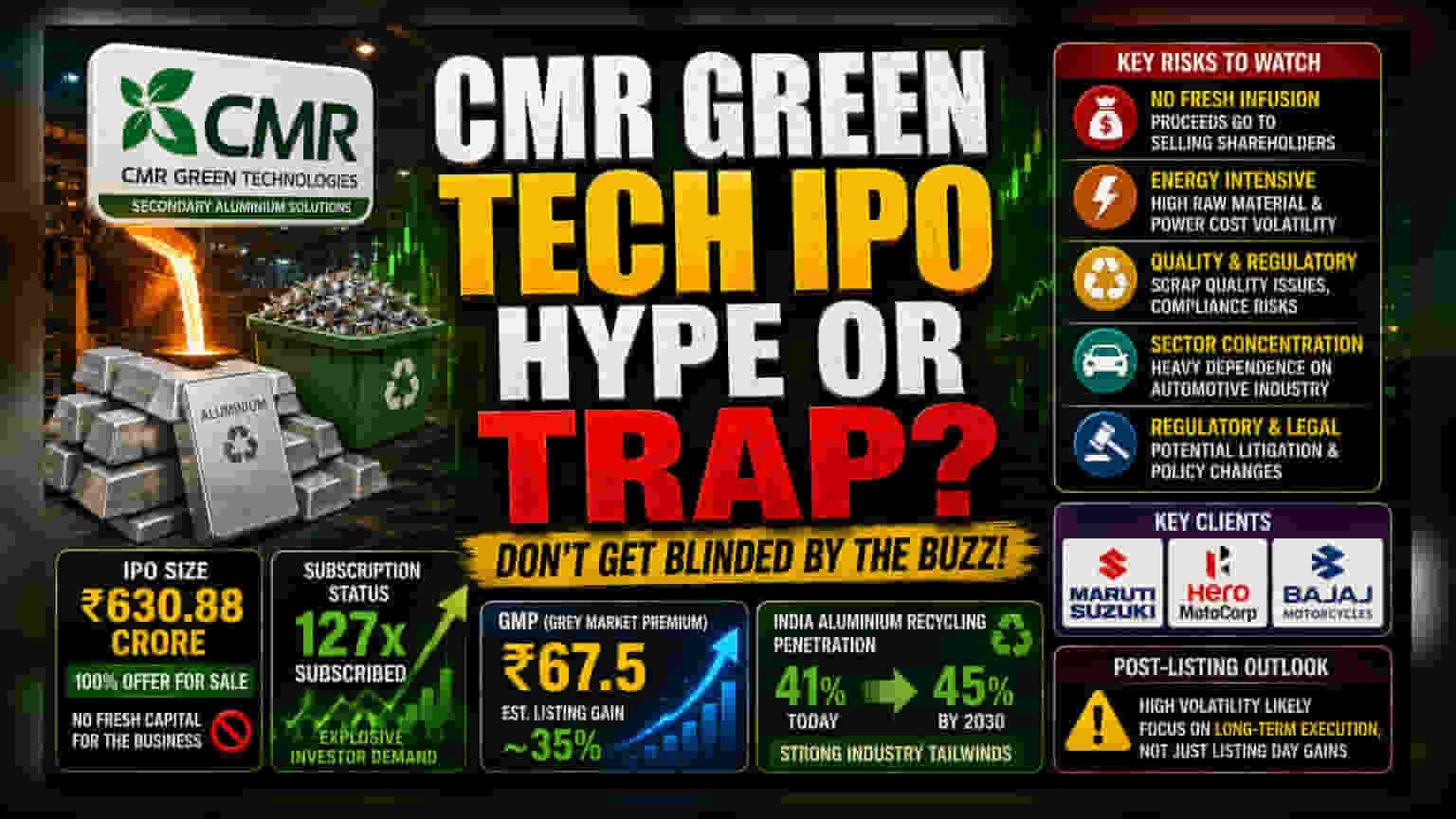


The Capital Mirage
While the 127x subscription rate paints a picture of explosive market enthusiasm, the structural reality of the CMR Green Technologies offering warrants a more sober assessment. The entire ₹630.88 crore issue is an Offer for Sale (OFS), meaning every rupee raised exits the company to enrich existing promoters and selling shareholders rather than fueling capacity expansion or technological upgrades. In an industry where technological prowess—specifically in advanced smelting and pollution control—is a primary competitive moat, the lack of fresh capital infusion leaves the company’s internal investment trajectory unchanged by the public listing.
Sector Benchmarking and Industrial Momentum
CMR Green Technologies currently operates as a cornerstone of India’s secondary aluminum market, supplying die-casting alloys to automotive giants including Maruti Suzuki, Hero MotoCorp, and Bajaj Auto. The broader industry narrative is one of structural transformation; as India moves toward circular economy mandates and industrial decarbonization, the penetration of recycled aluminum is projected to climb from approximately 41% today to 45% by 2030. However, investors should distinguish between industry-wide tailwinds and company-specific execution. Unlike integrated players who control both the supply chain and end-product distribution, secondary recyclers like CMR are frequently exposed to the volatility of global scrap prices and potential regulatory shifts regarding import duties on non-ferrous waste.
The Forensic Bear Case
Beyond the euphoria of subscription numbers, the business faces notable operational risks. Secondary metal production is inherently energy-intensive, and profitability is heavily sensitive to raw material sourcing costs, which are subject to international price fluctuations and supply chain disruptions. Furthermore, the recycling sector in India has historically grappled with quality control issues, where inconsistent scrap sourcing can lead to variable metal purity, potentially alienating high-precision automotive OEM clients. From a risk-averse perspective, the company’s dependence on the automotive sector—an industry notoriously sensitive to macroeconomic cyclicality—introduces a level of concentration risk that is often overlooked during the optimism of a primary market debut. Past litigation or regulatory hurdles common in the waste management and industrial manufacturing sectors often carry the risk of sudden operational stoppages or compliance-related expenditure surges.
Market Outlook and Valuation
Market sentiment currently hinges on the grey market premium of approximately ₹67.5, suggesting a potential listing day gain of around 35%. While institutional appetite remains robust, historical performance of similar recycling-sector listings suggests that immediate post-listing volatility is high as speculative day-traders exit positions. Analysts suggest that for those not solely focused on listing gains, the long-term investment case must rest on the company’s ability to defend its market share against rising competition from larger conglomerates that are increasingly integrating recycling into their core business strategies.