 Whalesbook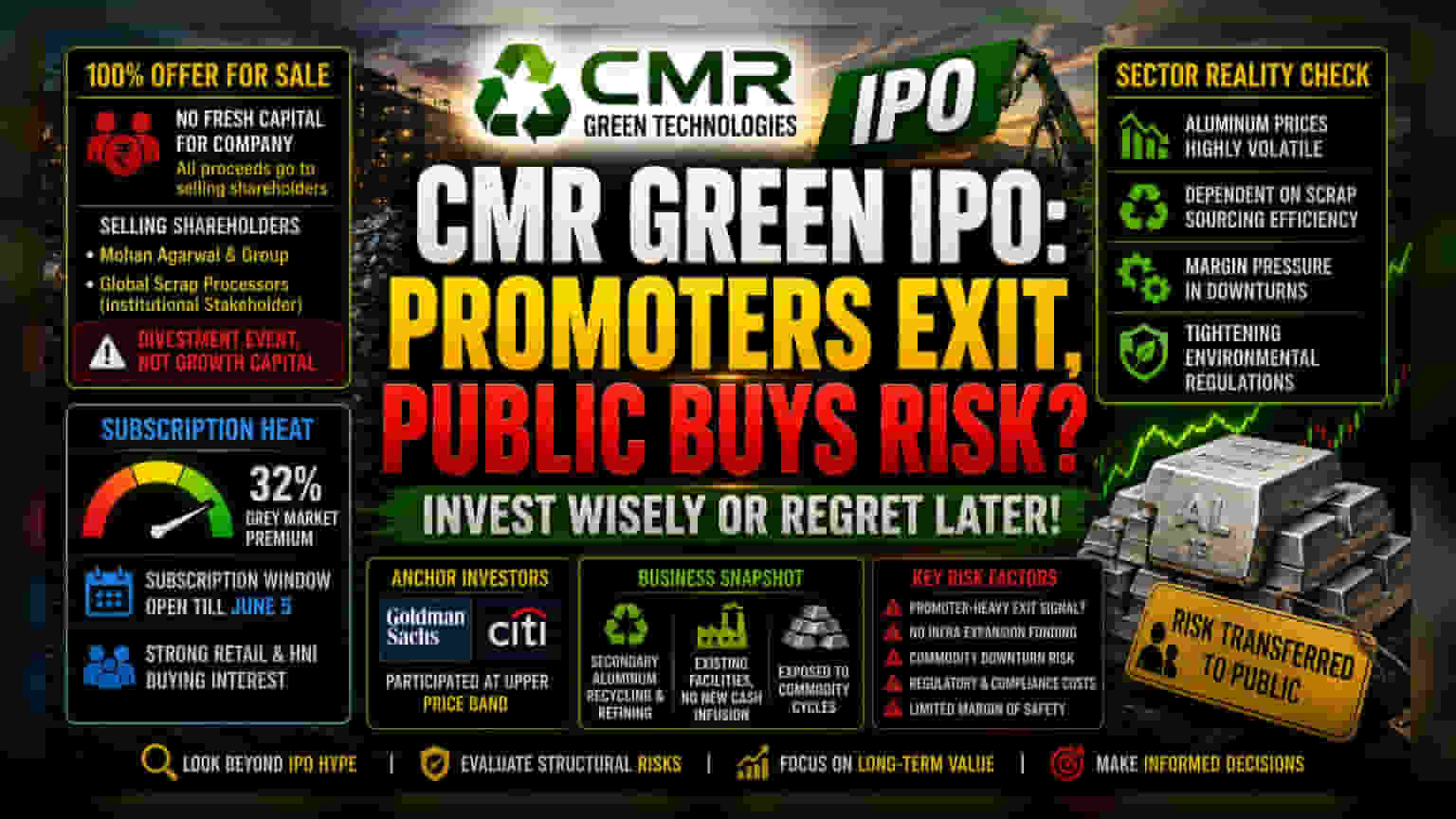


The Capital Structure Reality
Investors evaluating the CMR Green Technologies offering must look past the initial subscription buzz to identify the structural implications of the deal. Because the issue is composed entirely of an offer for sale, the capital raised flows directly to the pockets of promoter group entities like Mohan Agarwal and institutional stakeholders such as Global Scrap Processors. Unlike primary issuances that typically fund capacity expansion or debt reduction, this transaction represents a divestment event. This shift essentially transfers the risks of the secondary aluminum market from founding shareholders to the public, requiring participants to weigh the company's growth trajectory against the motivations of the exiting parties.
Sector Benchmarking and Competitive Standing
Operating within the volatile non-ferrous metal recycling industry, CMR Green faces intense pressure from cyclical commodity prices and margin fluctuations inherent in aluminum processing. When compared to broader industrial metal recyclers, the company's reliance on scrap sourcing efficiency creates a unique operational bottleneck. While the grey market premium of approximately 32% indicates short-term speculative demand, the valuation must be scrutinized against the current volatility in global metal indices. Historically, companies in the secondary smelting space that lack direct upstream ownership of raw scrap materials often face significant margin compression when global aluminum prices dip, a reality that neutral-rated analysts have highlighted as a core concern for long-term holders.
The Forensic Bear Case
Prospective investors should consider the limitations of a business model centered on an exclusively secondary-market offering. The absence of a primary capital injection means the firm remains tethered to its current infrastructure, with no new cash infusion to accelerate technology upgrades or facility expansion. Furthermore, the reliance on promoter-group-heavy divestment can sometimes signal a desire to monetize positions near a cyclical peak in commodity demand. In the event of a global industrial slowdown, players without diversified revenue streams or vertical integration often struggle to maintain the margins projected at the time of listing. Additionally, the regulatory landscape regarding environmental compliance in metal recycling is tightening, posing a consistent, non-zero risk to operational costs if standards for emissions and waste management are further revised by governing bodies.
Future Outlook and Subscription Dynamics
The subscription window remains open until June 5, with the market expected to monitor the anchor investor lock-in periods as a key indicator of institutional confidence. With notable names such as Goldman Sachs and Citigroup participating in the anchor round at the top end of the price band, the near-term floor seems supported by institutional interest. However, retail participants should remain cognizant of the volatility inherent in post-listing debuts, particularly when the IPO's pricing leaves little room for error in a sector where commodity price volatility is the only constant.