

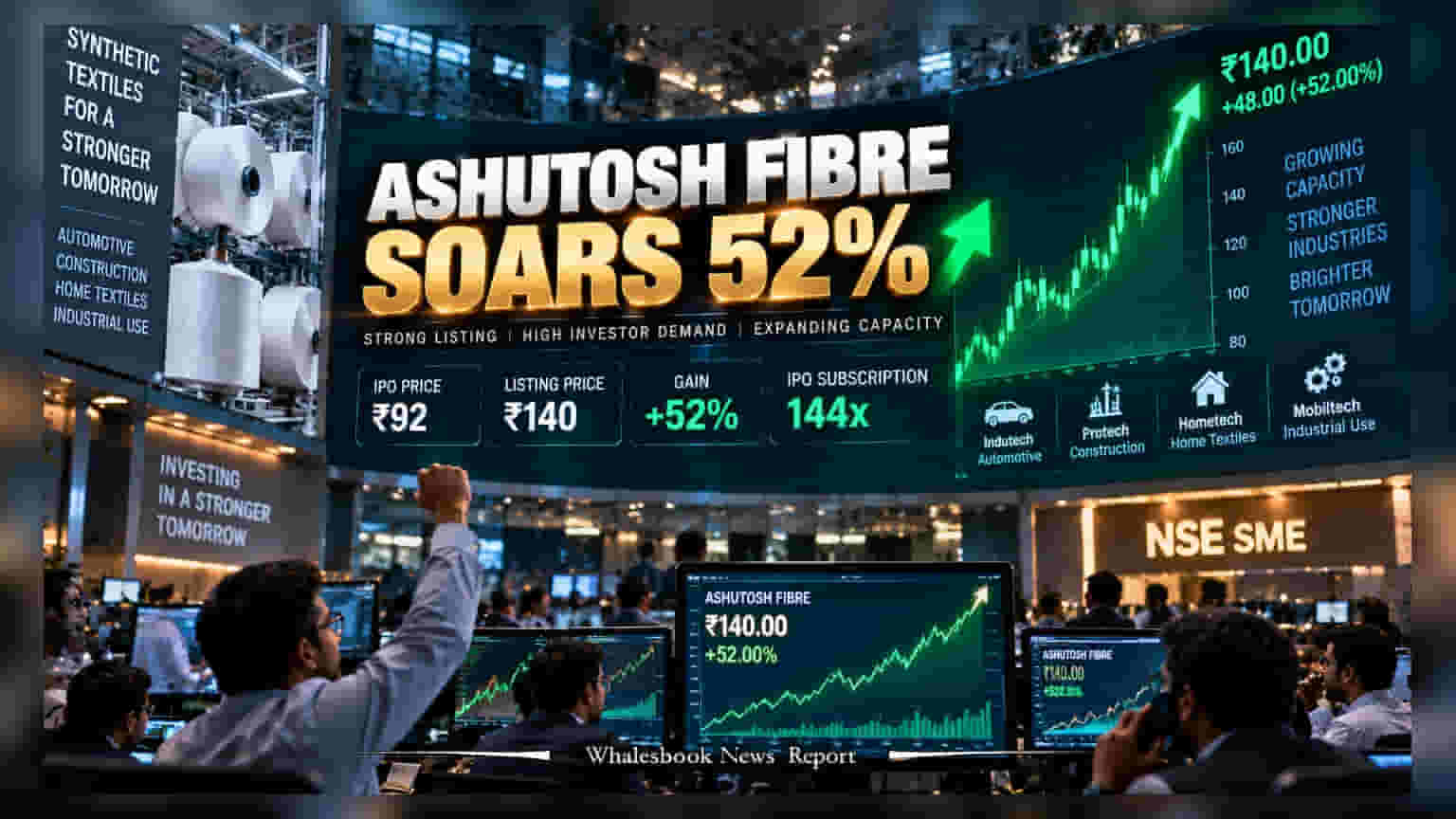
Ashutosh Fibre shares debuted on the NSE SME platform at Rs 140, marking a 52% premium over the IPO price of Rs 92. The company raised Rs 56.35 crore to support its manufacturing expansion and reduce debt.
Ashutosh Fibre began its journey on the National Stock Exchange (NSE) SME platform today with a strong market entry. The shares opened at Rs 140 per share, which is 52% higher than the initial public offering (IPO) price of Rs 92. This debut follows a period of high investor interest, with the IPO being subscribed over 144 times across various investor categories.
The company is a player in the specialized synthetic textile sector, manufacturing polypropylene spun yarns. These products serve diverse industrial needs across sectors such as automotive, construction, and home textiles, categorized by the company as Indutech, Protech, Hometech, and Mobiltech. By raising Rs 56.35 crore through this fresh issue, the firm aims to invest in expanding its manufacturing capabilities.
From a financial perspective, a key use of the proceeds is the repayment of existing loans. For investors, reducing debt is generally seen as a positive step as it can lower interest expenses and free up cash for business growth. However, the actual impact on the company’s financial health will depend on how effectively the management scales operations and utilizes the new capacity.
Investors should keep in mind that SME stocks, unlike larger companies, often experience high price volatility. This means the share price can see sharp swings in the initial trading days. Additionally, the business relies on demand from sectors like automobiles and construction, which can be cyclical and sensitive to economic changes. Raw material costs also play a significant role in determining profit margins for textile manufacturers.
Moving forward, the primary factor for shareholders to track will be the company’s execution. The timeline for the planned expansion and the company's ability to maintain or improve its profit margins despite fluctuating raw material prices will be important. Investors may watch upcoming quarterly financial reports for signs of sustainable growth and effective debt management.