 Whalesbook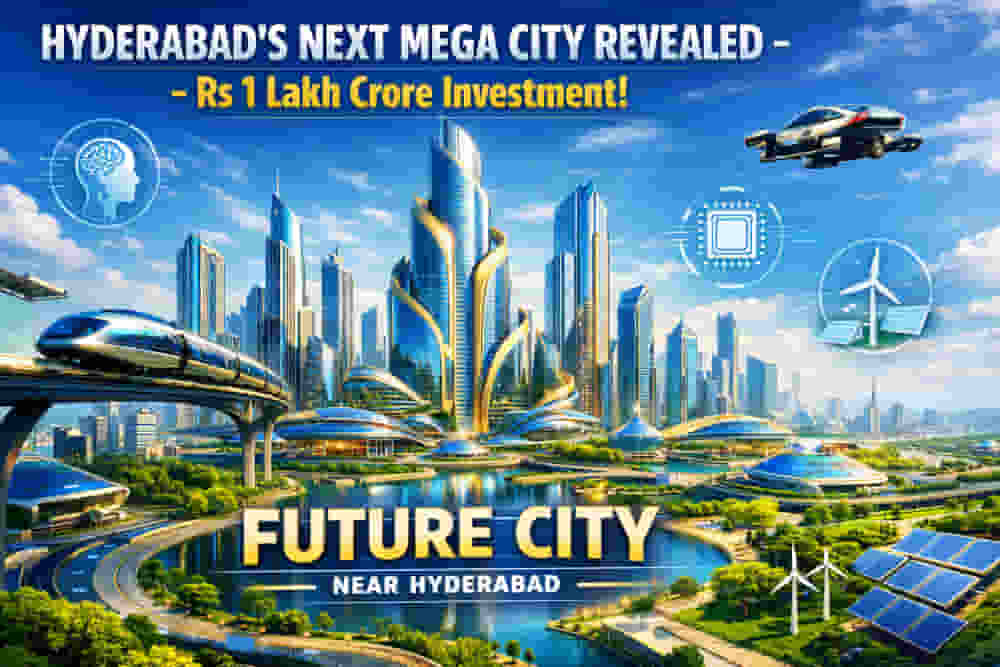
Hyderabad's Ambitious Future City Project Secures Major Investment Interest
Telangana is charting a bold course for its future with the development of 'Future City,' a sprawling urban project designed to be a next-generation economic and innovation hub on the southern outskirts of Hyderabad. Spanning an immense 765 square kilometers along the Hyderabad–Bengaluru corridor, this ambitious undertaking has garnered significant attention following reports that Trump Media plans to invest up to ₹1 lakh crore over the next ten years, potentially catalyzing the project's development.
The Vision for Future City
Also referred to as Bharat Future City, this project is envisioned as a technologically advanced, sustainable, and globally competitive center. It aims to integrate workplaces, housing, social infrastructure, and industrial activities into a cohesive, self-sustaining urban cluster. The Telangana government is backing the 30,000-acre development with extensive infrastructure investment, positioning it as a crucial component of the state's long-term growth strategy and a successor to Hyderabad's successful HITEC City project, but on a much grander scale.
Infrastructure and Connectivity
The plan includes significant investment in high-speed road connectivity linking Future City to Hyderabad and the international airport. Future phases envision metro and rail linkages, ensuring seamless integration. The city will feature dedicated power, water, and waste-management systems, along with robust digital infrastructure to support data-intensive industries. The Hyderabad Metro Rail, operated by L&T, is slated for expansion into the new development.
Investment Landscape
While the state government has not finalized total investment figures, industry estimates suggest Future City could attract $20–30 billion (₹1.6–2.5 lakh crore) over two decades. Trump Media's proposed ₹1 lakh crore investment is anticipated to anchor early momentum, particularly in commercial real estate and digital infrastructure. The initial phase, spanning five to seven years, will focus on core infrastructure, industrial zones, and residential clusters, with larger commercial and integrated township developments planned for later stages. The government has earmarked up to ₹40,000 crore for basic infrastructure development by 2030.
Land Acquisition Hurdles
Despite the grand vision, the project faces challenges. A significant portion of the earmarked land is yet to be acquired, and reports indicate pockets of resistance from farmers and landowners.
Real Estate and Economic Impact
Market observers foresee Future City generating substantial demand across residential, office, IT, mixed-use, industrial, logistics, data centre, and retail segments. Real estate firms like Sumadhura Group have already committed ₹600 crore for a 100-acre industrial and warehousing park, expecting to create over 8,000 jobs. Experts believe Future City could become Hyderabad's next major real estate anchor, provided infrastructure development keeps pace with announcements. Surrounding micro-markets are already experiencing increased developer and investor interest.
Impact
This development is poised to significantly boost the real estate sector, create thousands of jobs, and position Hyderabad as a leading global hub for technology and manufacturing. It could spur ancillary industries and attract substantial foreign and domestic capital. The success hinges on timely infrastructure delivery and land acquisition.
Impact Rating: 9/10
Difficult Terms Explained
- Economic and innovation hub: An area designed to foster business growth, new ideas, and technological advancements.
- Next-generation: Referring to advanced, modern, or future-oriented.
- Urban development project: A large-scale initiative to plan, build, and improve cities or parts of cities.
- IT hubs: Areas with a high concentration of information technology companies and related businesses.
- Self-sustaining urban cluster: A self-contained urban area that can support its population with essential services and amenities.
- Greenfield cities: Newly built cities or developments on undeveloped land, without prior structures.
- Micro-markets: Small, specific geographic areas within a larger real estate market, often with distinct characteristics.
- Institutional investors: Large organizations, such as pension funds or insurance companies, that invest significant amounts of capital.